Protect garden soil through winter by planning a surface cover that fits the time you have left and the crop you intend to plant next. A living cover crop and a removable mulch can both belong in that plan, but they create different spring jobs.
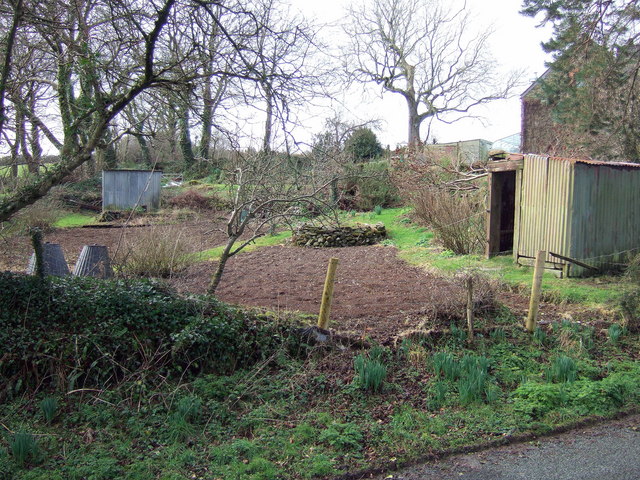
Start with the part of the garden that will actually be empty. An overwintering vegetable, a perennial herb and an unused annual bed should not automatically receive the same treatment.
Your useful decision is a sequence: identify the open area, choose a suitable cover and plan how the next planting will begin. Make all three choices before ordering seed or unloading a truckload of material.
Map the ground that needs protection
Sketch your beds and mark the crops that will stay, the areas you will clear and the paths you still need. Add any place where surface material tends to move during windy or wet weather.
This is a map of work, not a demand to make every bed look identical. You may have one space ready for a cover crop while another still holds a vegetable you expect to harvest later.
Keep the soil-protection decision separate from an unresolved drainage or erosion problem. If water is moving soil off your property or toward a structure, obtain advice suited to the actual site rather than relying on a general garden covering to solve it.
Record when each area will become available. That date is more useful for choosing a cover than the date you first thought about winter preparation.
Choose what you need the cover to do
New Hampshire Extension recommends covering unused garden soil through fall and winter, using a suitable cover crop or organic mulch that can be moved aside in spring. The important starting point is protecting the surface instead of leaving an empty bed without a plan.
Translate that goal into the conditions of your own bed. You might need a removable covering for an early planting, or you may have a longer interval available for a living crop that requires a deliberate ending step.
Do not choose a cover crop solely because a seed bag lists several appealing benefits. Ask whether it can establish in your remaining local window and whether you can manage it before the following vegetable needs the space.
A living cover that never establishes and an excessive pile that blocks your spring access both miss the practical goal. Compare each option against the whole interval, including the work required afterward.

Use local establishment windows
Ask your local Extension service for choices that fit your location, available planting window and next crop. A recommendation written for another region can explain the decision without supplying a suitable date for your backyard.
Minnesota Extension’s cover-crop selection guidance emphasizes fitting the cover to the time between vegetable crops. Its regional examples show why establishment timing and the next planting belong in the same conversation.
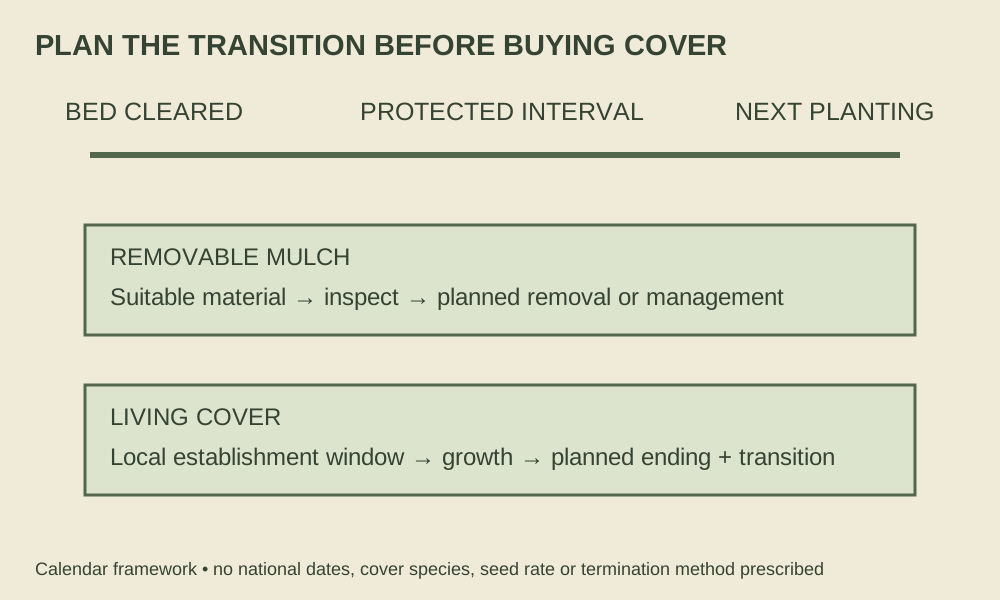
Put your anticipated clearing date and next planting date on the same line. The space between them is the period the covering must fit, and it may be shorter than a general description such as the entire off-season suggests.
When you are already late, ask about a surface-cover alternative instead of assuming seeds will provide immediate protection. The time needed for a living crop to establish is part of the choice, not a detail you can repair by labeling the bed planted.
Plan how a living cover will end
Before buying a cover-crop mix, learn which species are actually in it and how each behaves locally. The word mix does not establish that every component fits your vegetable rotation or your spring schedule.
Minnesota distinguishes covers that winterkill from those that survive and require active termination. It also explains that residue breakdown and the timing of the following crop matter, so a surviving cover creates a different job from a winter-killed one.
Ask for a manageable ending method that suits your tools and garden scale. If the suggested method requires equipment or expertise you do not have, choose another approach rather than assuming you will figure it out at planting time.
Do not let an unfamiliar cover reach seed production while you decide what to do. Include a check date and an actual management plan, using species-specific local instructions instead of a universal mowing or digging recipe.
Plan a removable covering as a separate option
For a mulch option, identify the material and how you will move or manage it before the next sowing. A large delivery is less helpful if you have no place for the material when a small early-season seedbed must be opened.
Check the source and condition before putting unknown material on a food-garden bed. The fact that a neighbor wants to get rid of a pile does not establish its treatment history or suitability for your intended use.
Keep surface covering separate from mixing undecomposed material into the soil. New Hampshire notes that incorporating carbon-rich material can tie up nitrogen, so do not quietly turn a removable mulch plan into an unplanned amendment project.
Mark where irrigation fittings and bed edges lie before they disappear beneath the covering. Leave the access you need for winter inspections and any crops that remain in the garden.
Fit the choice into your next crop
Write the intended spring vegetable beside the cover choice, even if that vegetable is still tentative. A change in the next crop can change the available preparation window, so keep the connection visible.
Minnesota also asks vegetable growers to consider cover-crop families within crop rotation. Use that as a prompt to check the actual species rather than assuming a cover is outside the rotation because you will not harvest it for dinner.
If you have not settled your next planting, favor a plan whose requirements you can describe honestly. It is better to record an unresolved choice than to fill a calendar with a cover you may be unable to manage.
For a small garden, number the beds and keep the same numbers between seasons. You can then explain which area held which crop without relying on a photograph taken from a different angle.
Test the plan against a real spring task
Imagine that one bed will hold your first small sowing and another will not be needed until later. You might choose a removable surface covering for the early bed while investigating a suitable living cover for the later one, rather than forcing both spaces into one purchase.
Now describe the opening day for each bed without skipping an action. For the removable covering, name where the material will go; for the living cover, name the locally appropriate management instructions you will follow and when you will reassess the bed.
If either description ends with figure it out later, resolve that gap before committing to the option. This paper exercise does not predict the weather, but it does reveal whether your plan depends on equipment, storage space or free time you have not actually arranged.
Inspect without restarting the project every week
After significant weather, check from the paths whether the cover remains where you intended. Look for exposed patches, blocked access or displaced material rather than treating the winter plan as finished the moment it is installed.
Record observations separately from actions. For example, note where material collected before deciding whether you need to redistribute it, change the covering or seek site-specific help.
When spring approaches, revisit the plan before sowing day. Confirm the next crop, the condition of the covering and the steps needed to open the bed, leaving enough time for the method you actually selected.
The finished plan should name a protected area, a locally suitable covering and a workable transition to your next planting. That turns winter soil care into part of the growing calendar rather than an unexplained cleanup job waiting for spring.