Prepare a small garden for a short trip by listing the care that will be needed during your actual absence, arranging dependable help and checking the routine before you leave. The number of days alone cannot tell you whether every plant can wait.
Containers, new plantings and established beds create different tasks, and weather can change the workload. Make a plan for the real garden rather than rely on a generic promise that plants will be fine for a week.
Begin early enough to let a helper walk the route or to observe any equipment you intend to use. Your departure morning should confirm a plan that already works, not become the first test of several new devices.
Write down the actual care window
List when you will last check the garden and when you can reasonably check it again. An evening flight and a late return can create a different care interval from the number of nights shown on a hotel reservation.
Include the person who will handle a delayed return if that is possible. Keep their instructions and your contact arrangement clear without assuming that someone who can make one visit is available for an extra week.
Read the local forecast before finalizing the tasks and continue checking as departure approaches. A plan made during mild weather should not be left unchanged when hotter or windier conditions are expected.
Do not assign one safe unattended interval to the entire garden. The purpose of this first list is to identify what needs care, not to prove that every plant can survive without it.
Separate the growing areas
Walk the garden and identify containers, newly planted areas, established beds and anything outside the normal watering route. Give each a recognizable label or map location so that another person can find it.
Iowa State highlights containers and newly planted plants as needing particular attention during absences. It recommends arranging someone to water when you will be away for more than a few days.
Keep indoor plants on a separate list if they are part of the same helper’s task. A clear boundary prevents an outdoor-garden tour from being mistaken for a complete account of everything you expect someone to tend.
Note the current crop and any care already in progress, such as a recently transplanted batch. Avoid beginning a new, demanding planting immediately before you leave unless its care has actually been arranged.
Show a helper the actual routine
Missouri Extension recommends a plant-sitter tour and review of watering needs. It also suggests making equipment and water access convenient, which helps turn a vague request into an understandable visit.
Walk the route together and demonstrate how you normally check the relevant soil or medium before watering. Explain which area is being evaluated so that the helper does not use one pot’s condition as an instruction for every other plant.
Show the water source, ordinary shutoff and the equipment you expect them to use. If an arrangement is complicated enough that you cannot explain it clearly, simplify the task before adding more written instructions.
Agree on what is included: watering, checking a particular system, observing a problem or harvesting identified produce. Do not leave a helper to infer permission to prune, spray or change equipment because they were asked to stop by.
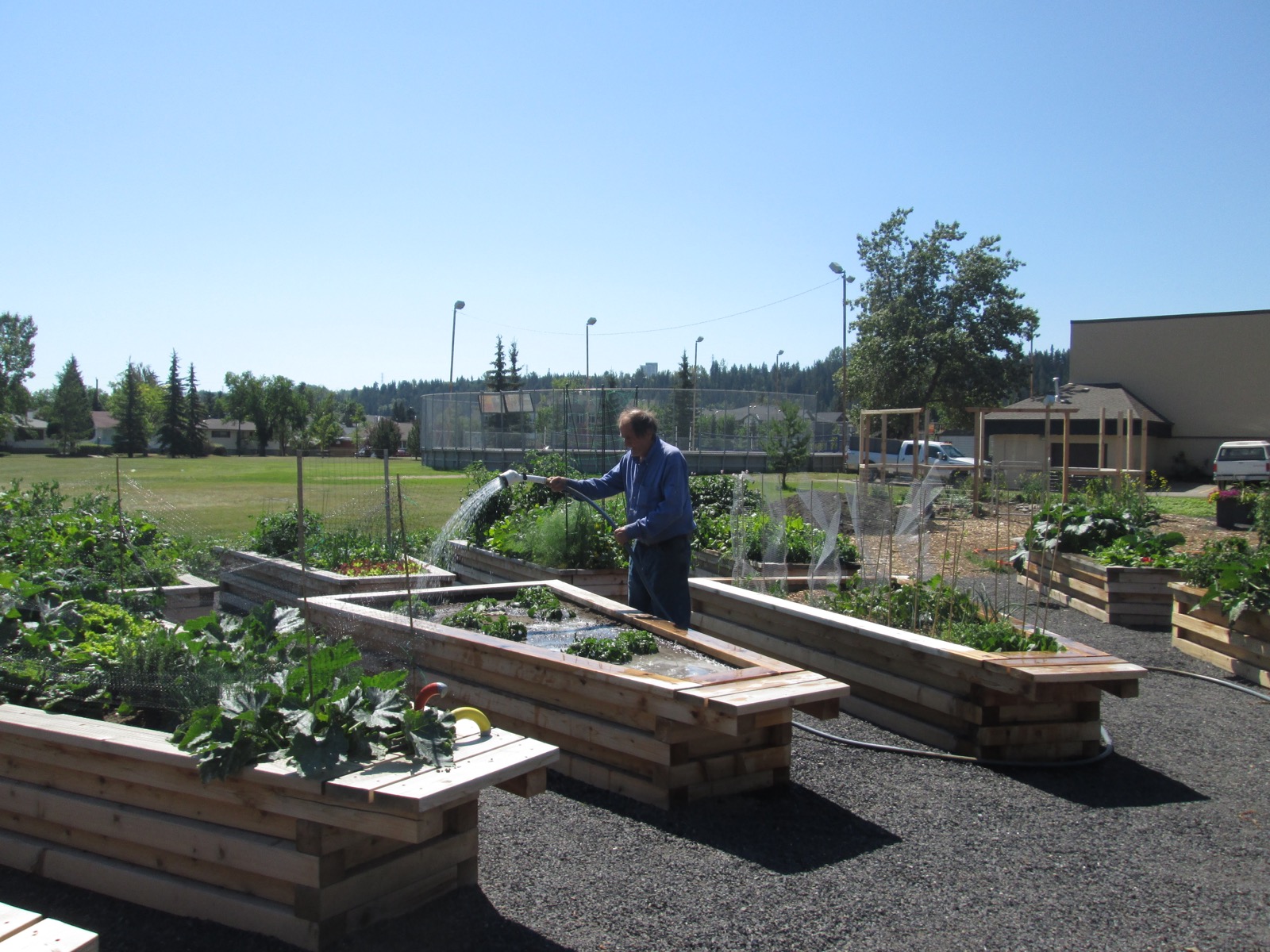

Observe any watering equipment before departure
If an existing system is part of the plan, operate it while you can inspect the complete route. Check the actual planted areas it serves and note any container that still requires a separate manual visit.
UF/IFAS includes checking automatic irrigation and observing local watering restrictions in its vacation planning. A programmed control should remain part of a care plan with oversight, not be treated as proof that water reaches every plant.
Keep the equipment’s actual instructions and relevant settings available for the person responsible. Mark the ordinary control they may use and agree on what to do if the arrangement appears to leak or fails to operate.
Do not install an unfamiliar watering device on the way to the airport and assume its package promise covers your garden. If you cannot observe it under your conditions beforehand, arrange a dependable alternative rather than rely on an untested addition.
Reduce friction without changing the plants’ needs
Place ordinary watering equipment where the helper can find it and reach the plants without dragging it through an obstacle course. Confirm any necessary access arrangements privately with the person involved.
Missouri suggests grouping suitable containers where practical to make care easier. Evaluate the actual plants and handling requirements before moving them; do not assume a large filled pot can be moved safely or that every crop belongs in the same light conditions.
Keep the arrangement familiar enough for the helper to recognize. If you relocate pots, update the map and labels before the final tour rather than leave a note describing their former positions.
Remove ordinary trip obstacles from the care path and keep the working area clear. This is a chance to make the agreed task simpler, not a reason to start an unrelated garden redesign immediately before travel.
Write instructions that support observation
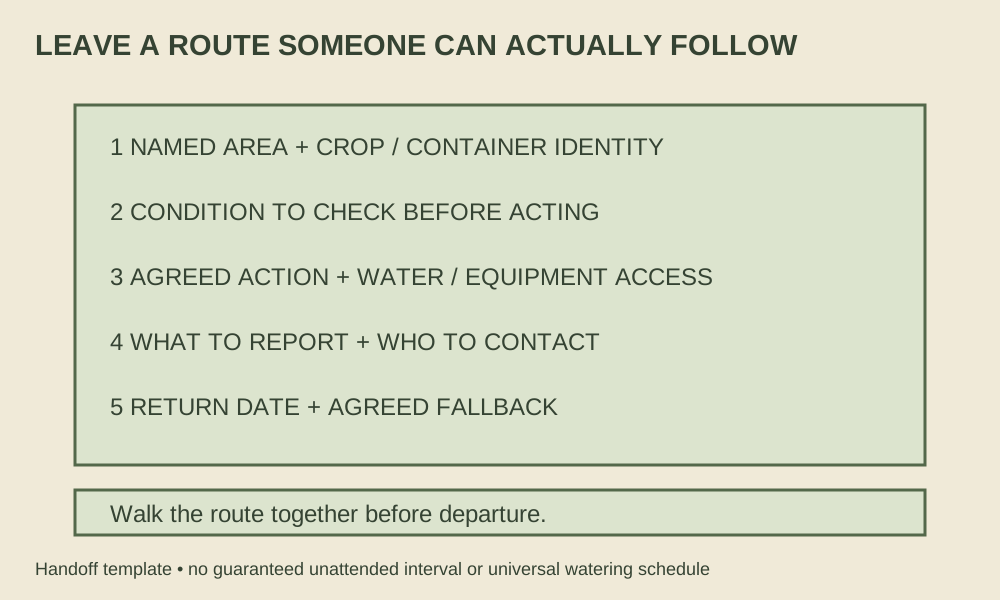
Use one short entry for each growing area: where it is, what to check and what action you have agreed on. Include the crop or container description so a loose label does not become the only way to identify the task.
A useful note says which soil or medium the helper should evaluate and where water should go when needed. A note that says give everything a little water every day may be easy to read while ignoring important differences between plants.
Keep product applications and other specialized jobs outside the routine unless you have explicitly arranged suitable care. Your helper should not have to select a chemical or diagnose a disease to fulfill a basic watering request.
Agree on what information to send if something looks wrong, such as the area name and a clear photograph. That gives you a specific conversation without expecting someone to provide a diagnosis during a quick visit.
Rehearse the handoff once
Suppose you have two beds and several patio pots, with irrigation serving only the beds. Ask the helper to follow the route from your note while you are present, including the separate container check.
If they stop at a missing label or cannot find the correct control, repair the instruction before leaving. The confusion is useful evidence that the handoff needs a small change, not proof that the helper should already know your garden.
Record any adjustment to the map or equipment location in the same note. Keep only the current version available so that two sheets with different directions do not create a new problem.
Agree on a small fallback plan
Ask what should happen if the helper cannot make an agreed visit, and name an alternative only when that person has actually agreed to the task. Put the current contact arrangement with the garden note so it does not depend on finding an old conversation.
Keep the fallback limited to the care you have explained. A clear change of responsibility is more useful than an open-ended instruction to do whatever seems necessary while you are away.
Confirm the plan and review on return
Before departure, check the garden’s actual condition and perform the care it currently needs. Do not compensate for the coming absence by adding arbitrary extra water or a new treatment unrelated to those conditions.
When you return, read any care notes and inspect the growing areas before making changes. Your finished travel plan should leave a dependable routine and a clear handoff, with enough flexibility for weather and the plants rather than a guarantee that nothing can happen while you are away.