Choose between a raised bed and containers by comparing the growing space you can care for, not just the number of plants in a catalog picture. Both can make sense in a small backyard, but they create different commitments.
A bed can organize a permanent planting area, while separate containers let you divide the garden into smaller units. Your best starting point is the combination of crop, location, access, and routine that works in your actual space.
You do not have to choose one format for the whole yard. A modest bed for one planting plan and a few suitable containers elsewhere can be a more useful comparison than imagining two complete gardens you are not ready to manage.
Name the growing system before comparing it
First distinguish an open-bottom bed on the ground from a planter with its own bottom. A tall box on legs may look like a raised bed in a product photograph, yet its growing medium is contained much like the contents of a large pot.
The University of Minnesota’s raised-bed guide describes more than one bed form. That distinction matters when you research materials and soil instead of assuming every raised rectangle is the same system.
Put the actual construction type at the top of your comparison: open-bottom bed, elevated planter, or individual container. Then add the proposed crop and the usable growing dimensions, keeping the whole product’s outside size separate from its interior.
Do not let an attractive frame answer a question about the root environment. You still need to know which medium the setup requires, how drainage works, and whether the intended crop fits the available growing space.
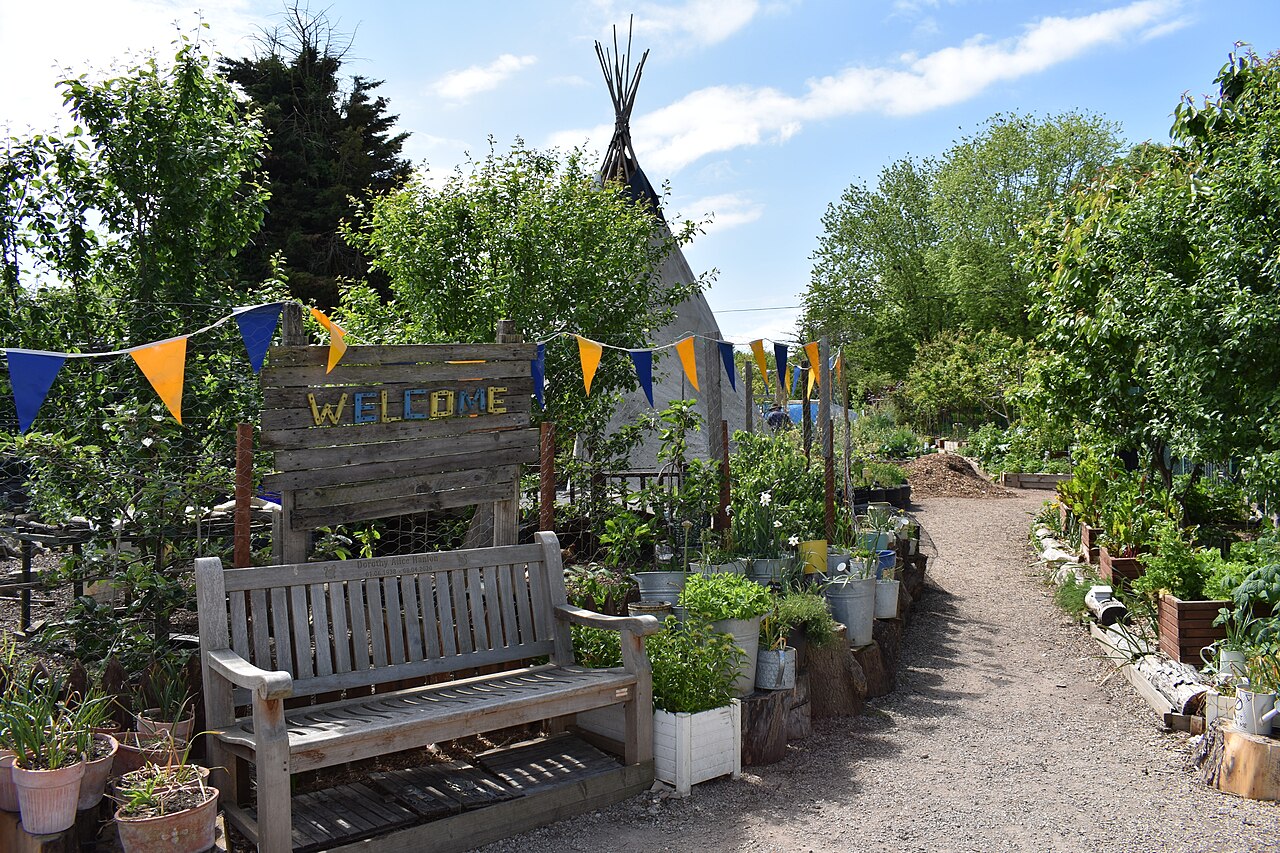

Draw access before drawing more planting area
Sketch the door, gate, water source, existing plants, and the route you use through the yard. Add the proposed bed or containers only after that everyday route is visible, because a garden should remain accessible after you fill it.
For a bed, draw where you will stand to reach the planting. A rectangle that fits between the fence and path can still be an awkward choice if its far side is inaccessible or its placement blocks your usual work route.
For containers, draw the mature planting area as well as each pot’s footprint. UF/IFAS discusses mature plant height and different vegetable forms; the compact look of a young transplant does not represent the final arrangement.
Keep a note about any space you need for ordinary household activities. If you bring a bicycle through the gate every evening, that route belongs on the sketch before you decide there is room for another planter.
Our raised-bed location guide can help you compare light and access at a candidate site. Use the same observations for containers rather than assuming a portable format makes the original location irrelevant.
Be specific about what you expect to move
Containers can offer useful flexibility, and UF/IFAS notes that they can be repositioned for access or changing sunlight. That does not mean every filled planter is a practical object for you to lift or move whenever you want.
Its container-selection guidance suggests planning for the movement of large containers in advance. Treat mobility as a feature of your complete arrangement, including the route and any appropriate support, rather than the word portable on a page.
If your plan depends on moving a tomato planting through a narrow gate, sketch the whole planted setup. Include whatever support the selected crop needs, and consider whether the planned movement still makes sense as the plant grows.
If you expect the planting to stay in one place, say so. You may still prefer containers for dividing crops or starting small, but you do not need to justify that preference with a movement task you will never actually perform.
Compare your watering routine honestly
UF/IFAS explains that container watering needs change with weather, plant size, and container characteristics. Smaller or porous containers can need attention more often, so a row of small pots should not automatically be labeled the low-maintenance option.
Walk from the water source to each proposed planting area with the route in mind. Count the separate stops you would make, and notice whether you have chosen a layout that you can check conveniently on an ordinary workday.
A bed may give you one defined area to visit, while scattered containers create several observation points. Either can work; the question is whether those visits fit your routine and whether you can tell the individual plantings apart when their needs differ.
Use our vegetable-garden watering guide to build observations rather than impose a universal calendar. Neither a bed nor a container makes the same fixed watering interval appropriate for every crop and season.
Budget for the medium and the rest of the setup
The frame or pot is only part of your starting cost. Add the appropriate growing medium, the crop, any support, and the equipment your chosen watering approach actually needs before comparing the two options.
Minnesota Extension distinguishes bagged media by intended use, including the difference between container mixes and heavy garden soil. Do not assume a bag labeled soil is interchangeable across an elevated planter, a pot, and a ground-connected bed.
Write the selected product’s usable volume and intended application on the shopping list. When comparing bag sizes, use the labeled volume instead of assuming two similarly priced bags contain an equivalent amount of material.
For a bed, include delivery access or the effort of carrying materials to its permanent location. For containers, include the number of separate vessels and their combined medium requirements rather than comparing one pot with an entire bed.
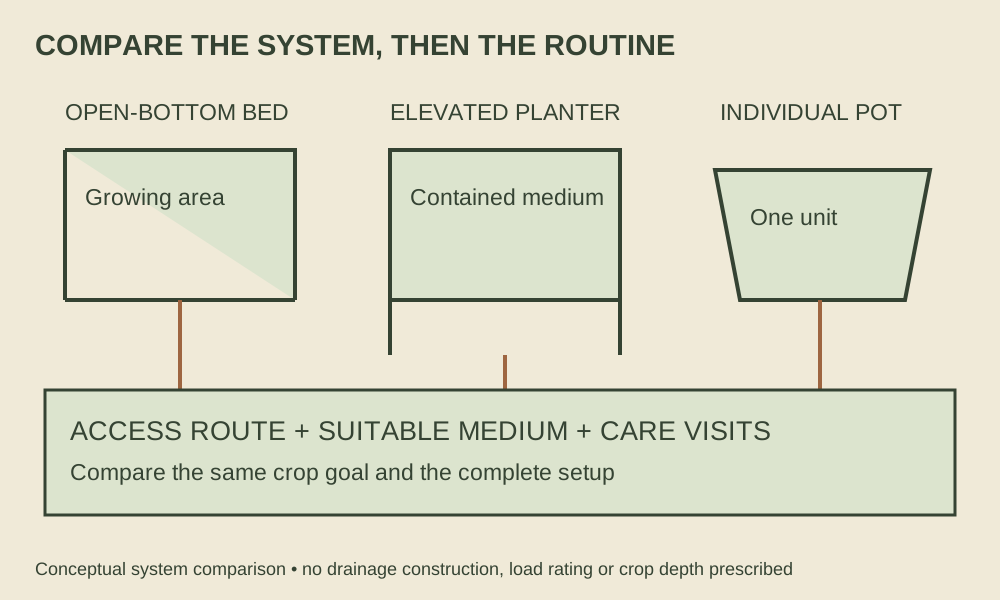
Try a small, real comparison
Imagine that your goal is a few herbs near the kitchen and one vegetable planting in the sunny part of the yard. Start by sketching the containers that could serve that goal, then draw a bed option for the same crops.
Compare the actual shopping lists and care routes. A bed with room for many extra plants is not automatically the better value if those additional plantings were never part of your goal or available time.
Now imagine that the candidate bed site is far from the door you use every morning. A container near a suitable daily route might be easier to notice, while the bed may still suit a separate, deliberately scheduled garden visit.
These are planning examples, not promises about harvest or maintenance time. They help you identify which difference matters in your yard without turning every advantage listed for either format into something you personally need.
If both options remain plausible, begin with the smaller commitment that answers your immediate growing goal. Keep enough information about the unused option that you can reconsider it after a season of actual observations.
Keep the decision visible in your notebook
Record the crop, construction type, growing dimensions, location, medium, access route, and watering approach together. Add one sentence explaining why this format fits your current situation, including the tradeoff you consciously accepted and the requirement you checked, so the reason does not disappear into a collection of product screenshots.
Leave any unresolved requirement clearly labeled instead of silently assuming it will work. A good next action might be checking a crop’s container requirements, measuring a gate, or clarifying the planter manufacturer’s drainage instructions before buying.
Your finished comparison should explain both the choice and its tradeoff. Choose the bed or containers you can place, fill, reach, and care for with a clear plan, then use what you observe to improve the next season.