Plan a cool-season vegetable garden by matching the crop, its growing window and the space that will actually be available. Cool-season is a useful category, but it is not one planting date or a promise that every vegetable tolerates the same cold.
Choose a small group of crops you will use, then check local guidance and the exact varieties before filling a calendar. Your plan needs time for establishment, growth and harvest, not just a blank square labeled planting day.
Keep spring and fall plans distinct. The same crop can face a different sequence of temperatures, daylength and available space depending on which end of the growing season you are using.
Choose the harvest before the seed order
Write down what you want to harvest and how much space you are willing to maintain. A modest lettuce planting you can tend may fit your routine better than a long list of vegetables whose planting and harvest tasks all arrive together.
Decide whether you want one main harvest, repeated picking or several small plantings. Then read the exact crop and variety information to learn what that choice requires rather than assuming every leafy vegetable behaves alike.
Keep a place beside each crop for its intended use in your kitchen. This does not calculate a guaranteed yield; it helps you avoid devoting your limited space to vegetables you admire in a catalog but rarely prepare.
Compare the goal with your available care time. If the plan requires several new sowings while you will be away, change the number or timing of plantings before ordering more seed.
Use the category without flattening the differences
Colorado State’s vegetable planting guide distinguishes hardy and semi-hardy cool-season vegetables. The groups differ in frost tolerance, and its planting information also considers soil temperature and whether spring soil is dry enough to work.
Use that distinction to ask a better question about each crop. A label such as cool-season does not mean you can give a lettuce seedling, a carrot sowing and a broccoli transplant the same treatment on the same morning.
Read the crop’s germination requirements separately from its established-plant tolerance. Surviving some cold later in growth is a different issue from getting seed to establish successfully in the conditions you have now.
Do not copy a minimum temperature from a chart without reading how the measurement was defined. The original guide and local crop advice provide the context that a single number on a handwritten list leaves out.
Build the calendar for your location
Find a local Extension planting guide and confirm which area it covers. State boundaries do not erase differences in elevation, coastlines or inland conditions, so use the most relevant regional advice available.
Maryland’s planting calendar explicitly identifies its central-Maryland scope and explains that timing changes elsewhere in the state. That is a useful model for reading any calendar: keep the location attached to the dates.
Write the source and the year beside your planned window. If a friend sends you a chart without a location, find its origin before treating it as guidance for your backyard.
Bring your site observations into the plan as well. A bed shaded by a nearby structure may offer a different working environment from the open area represented by a regional recommendation.

Treat a spring window as a sequence
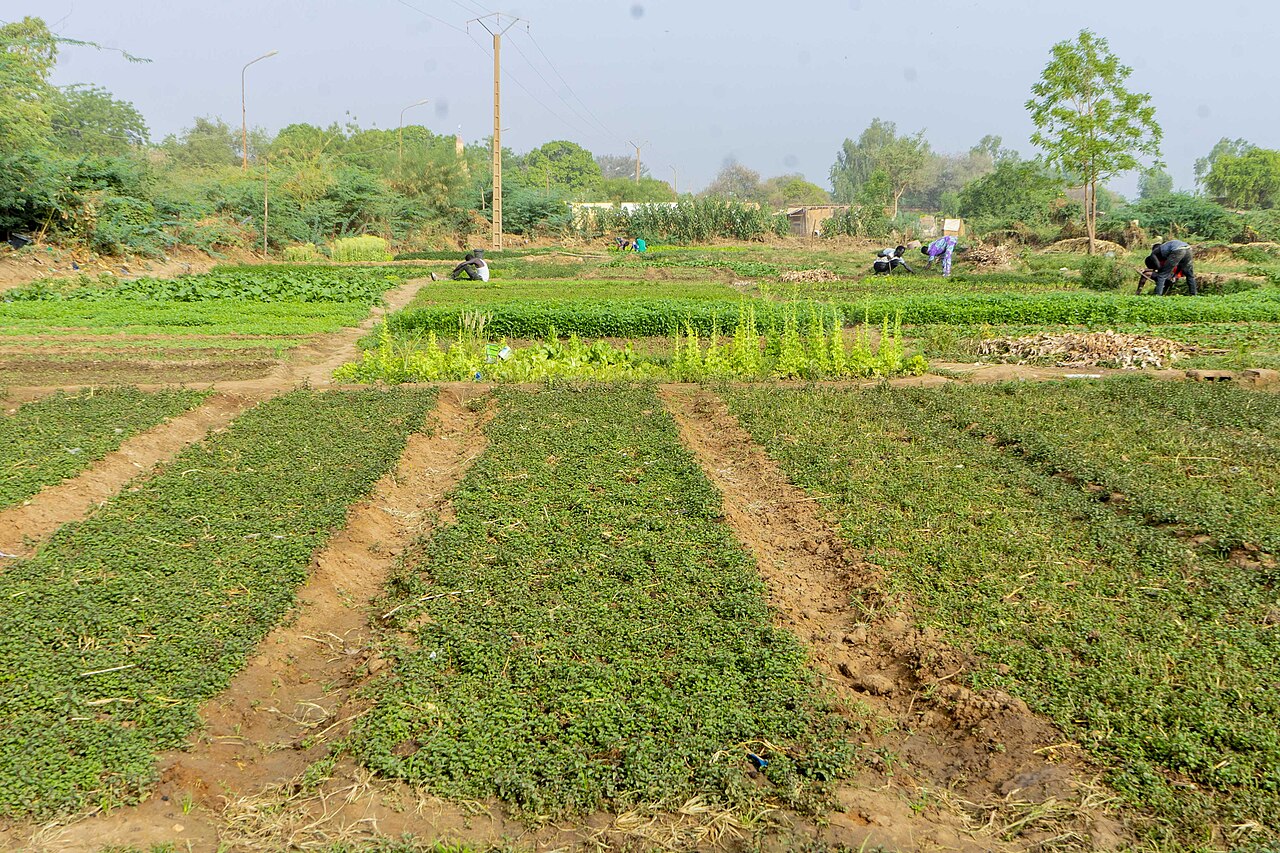
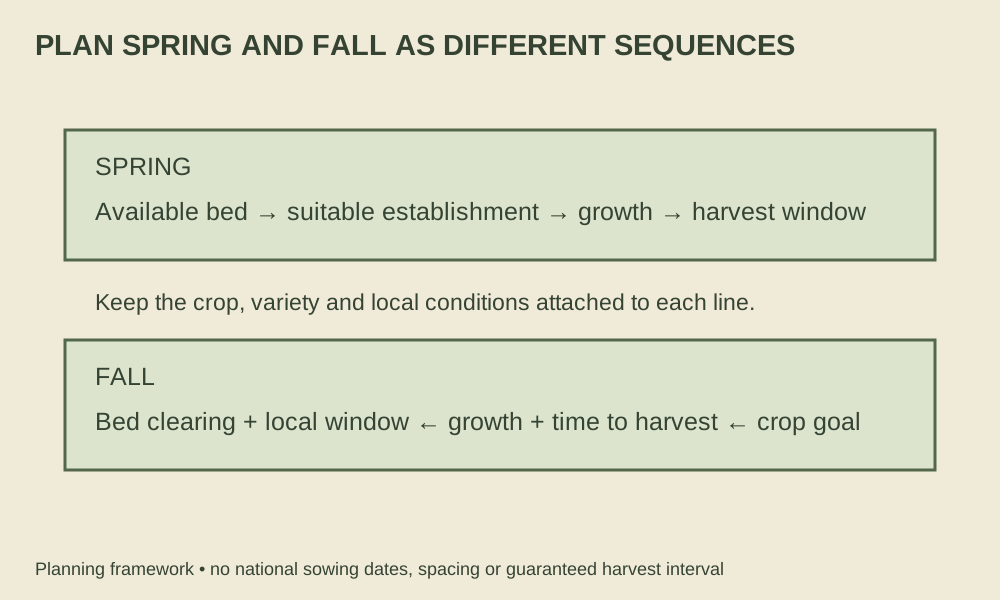
For spring, identify the likely preparation window, the crop’s suitable planting conditions and the period in which you expect to harvest. Put those stages on the calendar separately so that a delayed start does not disappear into an unchanged harvest expectation.
Colorado State notes that cool-season crops often lose quality in hot conditions. That makes variety choice and timing relevant even when you are willing to wait until every risk of cold seems past.
If wet conditions prevent preparation, reconsider the plan instead of forcing the same sowing into a later date without checking the crop. You may choose a different planting, obtain suitable starts or leave the space for another planned crop.
Keep alternatives concrete. An alternate plan should name the crop, the available space and the source of its timing guidance rather than simply say plant something else.
Count backward for fall with room for harvest
Iowa State’s fall-planting guidance starts with time to harvest and works backward, allowing for slower growth and a useful harvest period. It also notes the tradeoff between starting too late for production and too early in summer heat.
Use your actual variety’s information and ask whether its maturity period is counted from sowing or transplanting. A large number on the front of a packet can be misleading if you attach it to the wrong starting event.
Do not transplant Iowa’s frost dates into a garden elsewhere in the country. Use the planning method with your local conditions and the crop’s cold tolerance, and keep any uncertainty visible.
If you want a succession planting, work through each sowing separately. The final sowing may have less useful growing time than the first even when both appear in the same month on your calendar.
Reserve the space through the entire crop
Mark which bed or container each crop will occupy and when you expect the space to become available. A summer crop that remains productive can delay a fall planting you drew into the same area months earlier.
Use actual bed numbers and a rough sketch of mature plant space. The amount of seed in a packet does not determine how many plants the bed can support at the spacing recommended for the chosen crop and variety.
Consider access for harvest and routine care before adding another row. A plan that fills the only clear path can turn a small planting into an awkward task every time you want to pick a few leaves.
When two crops compete for the same space, make the choice explicit. Decide which planting matters more rather than counting both in a harvest plan that requires them to occupy one place at once.
Compare two possible plantings on paper
Suppose you have one bed that will be free early and another that may remain occupied by a summer crop. Draw the cool-season plan for the first bed as a committed planting, then label the second as conditional rather than ordering enough starts for both without a destination.
For each proposed crop, list the seed or transplant source, the locally appropriate window, the expected mature footprint and the work you will need to do before planting. If the conditional bed becomes available too late, the list gives you a clear point at which to drop that planting instead of crowding it into the first bed.
This comparison does not establish that one crop will perform better. It simply keeps the available area and the timing honest, so you can spend your care time on the planting that actually fits.
Review the plan against the real season
Before sowing, compare current conditions with the assumptions you recorded. A calendar organizes decisions; it does not overrule unsuitable soil, an unexpected forecast or a bed that is not yet available.
For example, you might discover that the bed intended for a fall crop still holds a later harvest. Record the change, choose a suitable alternative space if you have one, or reduce the plan instead of pretending the original schedule happened.
After harvest, record the variety, actual sowing or transplanting date and the period when you picked it. Add a short note about what made care difficult so that next season’s revision addresses the real obstacle.
Your finished cool-season plan should connect a useful crop to a local window, an available growing space and a realistic harvest period. That gives you a garden you can adjust as the season develops, rather than a collection of dates borrowed from unrelated places.