Set up container tomatoes by choosing the variety, suitable container and growing location together, then arranging support and routine care before you plant. Buying a pot first and hoping every tomato fits can leave the most important decisions until the plant is already waiting.
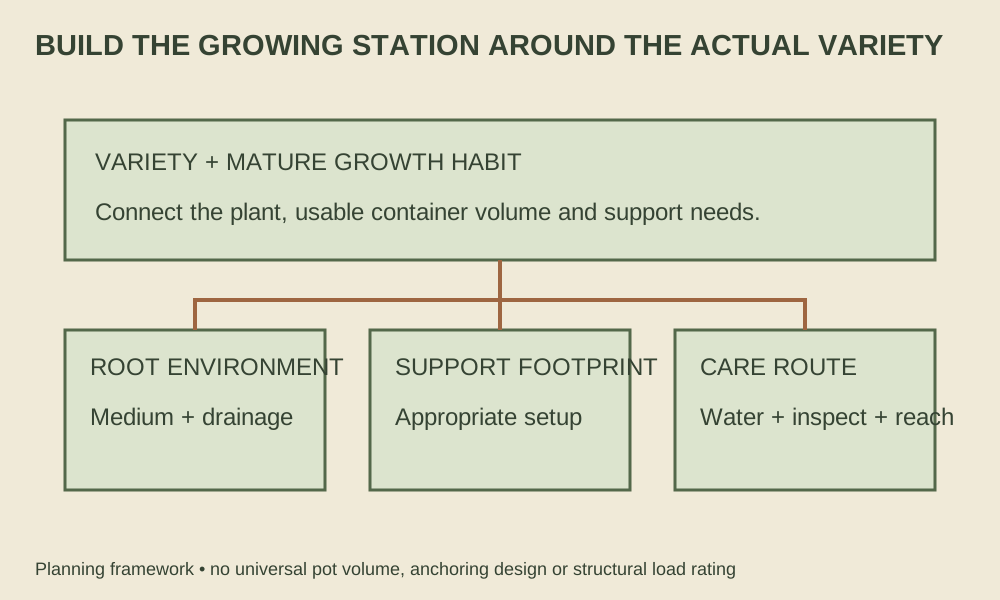
Think of the setup as a complete growing station. You need room for the mature plant, a suitable root environment, reliable access to water and a way to reach the crop as it develops.
Start with one location you can maintain comfortably. A single planned container gives you a clearer beginning than several pots scattered wherever a temporary gap happens to exist.
Match the variety to the growing station
Read the exact variety description and retain the plant tag or seed information. Fruit size and plant growth habit are different features, so a small tomato fruit does not establish that the plant carrying it will stay small.
Iowa State notes that determinate and dwarf types tend to fit containers more readily because they are less likely to outgrow the available space. That is a starting point for comparing varieties, not a guarantee that every compact label fits every pot.
Write down the expected growth habit and support requirements for the variety you choose. If the tag is incomplete, obtain that information before committing to a container and a position beside a doorway or railing.
Keep your harvest goal alongside the plant choice. You may prefer a variety that suits your available space and ordinary meals rather than choose a large plant because a catalog photograph makes its fruit look appealing.
Observe the location before filling the pot
Look at direct sun, access and the space around the proposed container through the relevant part of the day. A place that looks open at noon can be shaded at another time by the house, trees or nearby structures.
Iowa State identifies a full-sun location as important for container tomato production. Use the actual crop guidance with your observations, keeping the growing environment separate from a claim that any bright-looking patio will be adequate.
Mark the mature plant and support footprint on a rough sketch, including the route you use to reach other parts of the garden. Do not count a narrow passage as growing space if you will need it for daily access.
If the location is on a deck, balcony or another structure, resolve its permitted use and load suitability separately. A gardening plan does not establish what a structure can safely support when containers, wet medium and people are present.
Choose a container for the actual plant
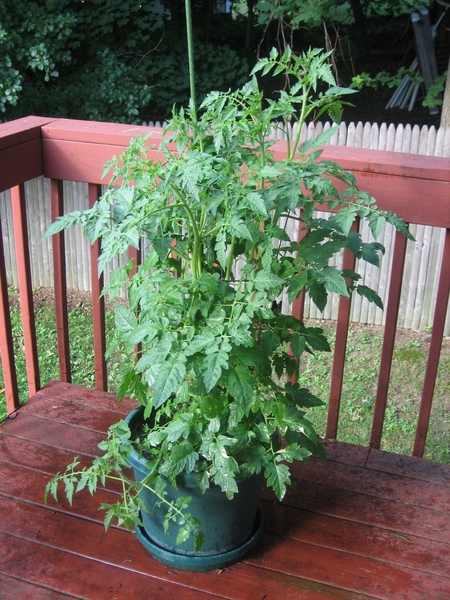
Compare the manufacturer’s usable capacity and drainage arrangement, then use tomato guidance appropriate to the chosen variety. The outside rim diameter alone does not describe the root space inside a tapered or shallow container.
New Hampshire Extension emphasizes adequate drainage and a suitable large container. Its container section also distinguishes an appropriate potting mix from regular garden topsoil or homemade compost used alone.
Keep the entire setup in the comparison: the plant, container, intended medium and support. Do not borrow the smallest container mentioned for another tomato type and treat it as a universal minimum for your variety.
Place the empty container where you intend to use it and check access before filling. If it must move later, plan a suitable handling method rather than assuming a large filled pot will be as easy to reposition as the empty shell.
Read the medium and feeding information
Choose a growing medium intended for the container application and read its instructions before filling. Keep a photograph of the product name, ingredients and any fertilizer information with the container’s record.
Iowa State describes the importance of a container medium that drains while retaining useful moisture. Avoid treating heavy garden soil as an automatic equivalent because its volume is inexpensive or already available in the yard.
If the medium includes fertilizer, record what its label says without assuming the charge supplies a complete plan for the whole season. Keep later feeding decisions tied to the actual product directions and crop guidance.
Calculate the fill you need from the usable container space and the labeled bag volume. A material’s weight and its volume answer different shopping questions, so do not count a heavier bag as more fill without reading the label.
Arrange support before the plant becomes large
Find a support method appropriate to the growth habit you selected and the container arrangement. The plant’s small size on purchase day should not be the only reference for a cage or stake.
New Hampshire recommends installing stakes or cages at planting time instead of waiting until roots are established. Put that job on the initial setup list so that support does not become an improvised rescue later.
Check the manufacturer’s requirements for any purchased support, including its intended anchoring and setup. A garden sketch is not a structural rating, and an object that looks sturdy is not automatically an appropriate anchor.
Leave a usable way to inspect and harvest the plant. A support that occupies the only reachable side of a crowded container station may be physically present while making ordinary care unnecessarily difficult.
Plan the visits before choosing more plants
Container tomatoes need an attentive watering plan because their root environment differs from open garden soil. New Hampshire specifically notes that they cannot draw on the same deep soil reservoir of moisture and nutrients.
Identify the water source and the route you will use, then decide how you will observe the actual medium and drainage. Keep the watering decision based on the plant and conditions rather than assign every pot an unchanging calendar interval.
If you use irrigation, install and inspect the actual system before depending on it. Observe whether water reaches the intended container instead of assuming that a timer program confirms delivery.
Think about the busiest part of your season, including trips away. Reducing the number of plants may be a more useful choice than assembling a collection whose routine care you have not arranged.
Compare two locations before the final setup
Suppose one patio corner offers a convenient faucet route but blocks a frequently used door, while another candidate area has clear access but an uncertain sun pattern. Write those two problems separately instead of choosing the easier watering route and ignoring the blocked doorway.
Observe the second area and investigate whether it meets the crop’s light needs. If it does, compare the complete watering route there; if it does not, reconsider the plant or location rather than force a container into an unsuitable space.
Use the same chosen variety and container requirements in both comparisons. Otherwise, a change to a smaller plant in one sketch can make a location seem better without revealing what you changed.
Recheck a substitution before you plant
If the planned variety or container is unavailable, revisit the pairing instead of accepting a replacement by appearance alone. A different growth habit or usable pot volume can change the support, placement and care questions you already answered.
Update the actual names on the setup list before buying fill or assembling support. That keeps the final station tied to the plant you will really grow, rather than a convenient description of an earlier plan.
Finish the station before planting day
Have the container, suitable medium, support components, plant labels and care plan ready together. Confirm the local planting window and the transplant’s outdoor acclimation before moving it into its final place.
Save the actual variety, container identity and medium label, then note any departure from the plan. Your finished setup should explain why this particular tomato belongs in this particular growing station, with enough access and care to support the season ahead.