Wooden raised beds offer durable, natural-looking solutions for growing vegetables, herbs, and flowers. This guide highlights five well-rated options that balance size, durability, and ease of setup. Each product features sturdy wood construction, practical drainage, and user-friendly assembly to help you create productive outdoor growing spaces. Read on to compare layouts, materials, and design tweaks to find the best fit for patios, backyards, and balconies.
| Product | Size / Dimensions | Material Notes | Key Benefit |
|---|---|---|---|
| Yaheetech 8x4ft Divisible Raised Bed | 93 x 48 x 10 in | Natural wood, divisible sections | Flexible planting areas |
| Yaheetech 8x2ft Divisible Raised Bed | 95 x 25 x 11 in | Natural wood, detachable baffle | Two separate growing zones |
| MIXC Wooden Raised Bed With Legs | 48” L x 24” W x 31” H | Untreated fir wood; reinforced columns | Strong, tall design with liner option |
| SPECRAFT 8×4 Ft Wood Bed | 8 x 4 ft footprint, 15 in depth | Wood with open base | Excellent drainage and open-root access |
| Best Choice Products 8x2ft Bed | 8 ft long, 2 ft wide, elevated | Natural Chinese fir; pre-sanded panels | Quick, sturdy assembly |
Yaheetech 8x4ft Divisible Raised Bed

The Yaheetech 8x4ft wooden raised garden bed features a divisible design that splits into two growing areas, allowing different plantings or methods in a single bed. The baffle can be removed to form a larger single bed, offering flexibility for crop rotation or season-long planning. This model is designed for outdoor use in patios, yards, or greenhouses and emphasizes straightforward assembly with heavy-duty screws and solid connections. The natural wood finish blends with most outdoor spaces, and the bed is suitable for vegetables, herbs, or flowers.
Key features include: a two-section layout for separate plant groups, easy assembly with stable construction, and practical use for vegetable, flower, or herb cultivation. The bed’s modular approach enables creative layouts by combining multiple units to form larger beds. Maintenance considerations include treating the wood to extend life and ensuring proper drainage with base clearance. With proper setup, this bed can support a productive growing season for a variety of crops.
Yaheetech 8x2ft Divisible Raised Bed (Dark Brown)
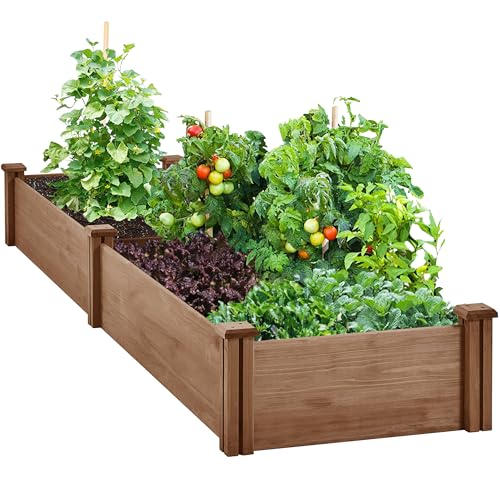
This 8x2ft bed mirrors the dual-zone concept in a more compact footprint, making it especially suitable for small patios or balcony spaces. Its multifunctional design divides into two growing areas, and the baffle can be removed to create a larger single bed. The bed is described as convenient for cultivating vegetables, flowers, and herbs and comes with upgraded corner posts to increase slotting flexibility. It supports scalable layouts by pairing multiple beds to build a larger garden system.
Key considerations include the ease of customization, the potential for DIY expansion, and the need to ensure adequate drainage. The design emphasizes practical cultivation space and adaptability—ideal for experimenting with crop calendars or succession planting in limited outdoor areas.
MIXC Wooden Raised Garden Bed With Legs
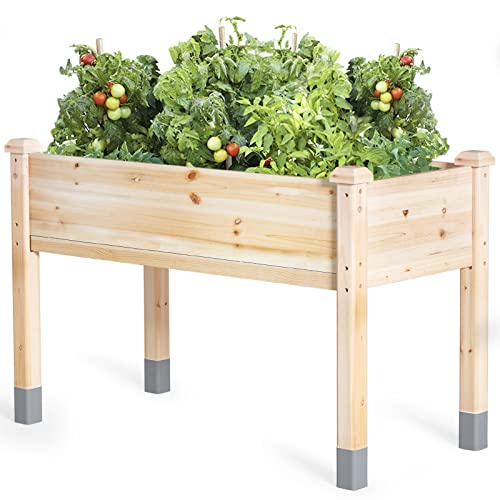
The MIXC raised garden bed with legs uses a beam-and-column structure to provide reinforced support, offering a sturdy, tall design that elevates the planting area for easy access and improved drainage. The bed includes four drainage holes and a waterproof liner to protect wood from soil moisture and extending life outdoors. The wood is untreated fir, selected for durability in outdoor conditions, with a design intended to resist warping and splitting better than some other softwoods. A liner is included for soil protection and moisture retention.
Key considerations include the balance between height for ergonomic use and stability in windy conditions, the liner’s role in soil management, and the bed’s overall service life. Users can expect a robust platform for vegetables, herbs, and flowers, with the option to add a waterproof liner for added longevity. This design supports long-term outdoor use and a raised-growing environment that minimizes soil compaction near ground level.
SPECRAFT 8×4 Ft Wood Raised Garden Bed

The SPECRAFT 8×4 ft raised garden bed stands out with a generous planting area and a deep 1.5 feet, providing ample space for a wide range of vegetables, herbs, and flowers. Its open-base design promotes drainage and root health by allowing excess water to escape and air to circulate beneath the soil. The bed uses a mortise-and-tenon structure with a central divider, delivering a sturdy, tool-free assembly in about 15 minutes. The design emphasizes accessibility and drainage, improving long-term plant health.
Important considerations include drainage reliability, depth suitability for root crops, and the ease of assembly. Open-base beds are advantageous for preventing waterlogging, but they may require additional soil management to prevent erosion. This bed is suitable for gardeners seeking a spacious, high-capacity option with straightforward setup and reliable drainage.
Best Choice Products 8x2ft Raised Garden Bed

This Best Choice Products model emphasizes rugged, long-lasting construction with natural Chinese fir wood designed to withstand seasonal changes. It features pre-sanded panels and dovetail joints that slide together, locking securely with screw-fastened posts for quick assembly. A bed liner is included to maintain wood integrity by separating soil from wood, which helps preserve the bed’s condition over time. The 8x2ft footprint provides ample growing space for a range of crops, with a focus on durability and ease of setup.
Key considerations include the ease of assembly, the liner’s protective role, and how well the bed blends with outdoor décor. The natural fir wood is durable outdoors, and the inclusion of a liner supports soil health and wood longevity. Gardeners seeking a straightforward, reliable option with proven assembly methods will find this bed suitable for vegetables, herbs, and ornamentals alike.
Buying Guide: Key Purchase Considerations and Comparisons
- Size and layout: Evaluate bed footprint and whether you prefer single large beds or divisible designs to separate crops. Tall designs improve ergonomics for back health, while split beds support crop rotation and companion planting.
- Wood type and finish: Untreated fir or other softwoods are common; consider wood treated for weather resistance or adding a liner to extend life and prevent wood-soil contact.
- Drainage and depth: Beds with open bases or deeper planting zones support root health, especially for tomatoes or root crops. Ensure adequate drainage holes and consider liners for moisture control.
- Assembly and stability: Look for modular or gasketed joints, pre-drilled holes, and robust corner posts. A simple, tool-free setup reduces installation time and errors.
- Maintenance and longevity: Consider whether the bed comes with a liner, whether it needs periodic resealing, and how wood may warp or crack over time in your climate.
- Future expansion: If you plan to grow more, choose designs that allow pairing multiple beds or adding legs for height and improved accessibility.
- Installation considerations: Ensure the ground is flat, protect wood from ground moisture, and plan for accessibility paths and drainage to prevent water pooling near foundations.
- Plant suitability: Match bed depth to plant needs (leafy greens and herbs versus deep-rooting vegetables like carrots or tomatoes) to maximize yields per square foot.