Need a reliable screen to protect vegetables, fruits, and flowers from birds, pests, and harsh sun? The right garden netting provides a simple, reusable barrier that lets water, light, and air reach plants while keeping unwanted visitors at bay. This guide highlights five top netting products, ideal for raised beds, greenhouses, and open gardens. Each selection targets different needs—from lightweight, easy-install solutions to heavy-duty, long-lasting barriers. Perfect for gardeners seeking a low-maintenance, scalable protection strategy.
Summary table of chosen products:
| Product | Best For | Size / Coverage | Key Benefit |
|---|---|---|---|
| Garden Barrier Netting, 10x10Ft Ultra Fine Mesh | Any vegetable garden; small pests and birds | 10×10 ft | Ultra-fine mesh, see-through, water through |
| Garden Netting Pest Barrier: 4’x10′ | Raised beds and row covers | 4×10 ft | 100% HDPE, UV-resistant, durable |
| 2 Pack 6.5x10ft Garden Netting | Multiple beds; budget-friendly pair | 6.5×10 ft each | Prevents animals; maintains light and water flow |
| 10 X 50FT Garden Mesh Netting | Large gardens and fruit trees | 50 ft roll | Long, wide coverage; ultra-fine mesh |
| Bird Netting for Garden Protection – 4 Pack | Orchards and stone fruit projects | Each 3.3×2.7 ft, pack of 4 | Drawstring; pliable, easy adjustments |
Garden Barrier Netting, 10x10Ft Ultra Fine Mesh Netting

Best for small- to mid-sized vegetable plots where birds and insects threaten seedlings and fruiting crops. The netting features a 0.8mm x 1mm ultra-fine mesh that blocks pests while remaining see-through enough to monitor plant growth. It’s lightweight, easy to drape over frames, and water and fertilizer can pass directly through without removal. This is a strong choice for organic or pesticide-conscious gardens seeking a simple, low-touch barrier.
Who it’s best for: home gardeners with raised beds or small plots who want quick coverage and ongoing access for irrigation. Why selected: the combination of ultra-fine mesh and high breathability supports healthy plant development without microclimate disruption. Caution: ensure frame or hoops are used to prevent wind damage on exposed sites.
Garden Netting Pest Barrier: 4’x10′
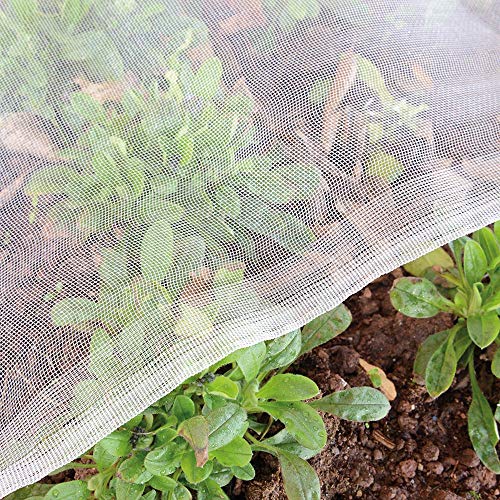
Best for raised beds and row covers in moderate climates where pests like aphids and carrot flies threaten early-season crops. This netting uses 100% new HDPE, UV-resistant material with a tight selvedge to resist unraveling. It provides a durable barrier while allowing water, air, and light to reach plants. Caution: this option does not include poles or hoops, so plan to provide a frame or structure for installation.
Who it’s best for: gardeners who want a sturdy, reusable barrier for single or several raised beds. Why selected: excellent balance of durability and permeability, with explicit protection against a wide range of pests. Choose this if you’re focusing on long-term use and consistent coverage.
2 Pack 6.5x10ft Garden Netting

Best for budget-conscious gardeners managing multiple beds. The two-pack design delivers value while covering a practical size for greenhouse or raised-bed setups. Made from high-quality PE with UV resistance, it maintains permeability for soil moisture and photosynthesis. Caution: note that supports poles are not included, so you’ll need hoops or frames to hold the netting above plants.
Who it’s best for: gardeners expanding coverage across several beds without investing in separate nets. Why selected: provides a straightforward, reusable solution that preserves light and water access while deterring pests. Avoid if you require built-in frame components in the package.
10 X 50FT Garden Mesh Netting Barrier

Best for large-scale gardens or fruit trees needing a long, continuous barrier. The 0.8mm x 1mm ultra-fine mesh allows water and sunlight to pass through while keeping birds and small animals away from developing fruit and vegetables. It’s light enough to cover long rows but durable enough for year-round use. Caution: handling a 50-foot roll requires space and minor planning for edges and securing points.
Who it’s best for: gardeners with sprawling plots or several fruit trees who want a single, wide covering option. Why selected: large coverage per roll reduces the number of seams and potential entry points for pests. Choose this when you need extensive protection with minimal assembly.
Bird Netting for Garden Protection – 4 Pack

Best for orchards, blueberries, and dense fruit crops where birds and larger pests are a consistent issue. The set includes four nets with a drawstring design for easy adjustment around individual plants and clusters. The netting is transparent, allowing visibility of plant growth while preventing intrusion by birds and insects. Caution: ensure the drawstring is secured tightly to prevent gaps at the base, which pests could exploit.
Who it’s best for: gardeners needing adaptable coverage across multiple trees or shrubs and who appreciate adjustable fit. Why selected: the drawstring design makes installation and removal simpler, especially for irregular plant shapes. Avoid if you need a rigid, non-adjustable barrier for fixed-frame installations.
Buying Guide
What size should I choose?
Match the netting size to your bed or plant area. For raised beds, 6.5×10 ft or 10×10 ft nets work well. Long rolls such as 10×50 ft cover larger rows with fewer seams. Consider overlap and frame compatibility when selecting a size.
Which mesh density is right for my garden?
Ultra-fine mesh (around 0.8mm x 1mm) blocks small pests and many insects but still allows water, sunlight, and air through. If you face larger pests, ensure the mesh is sturdy enough to deter them and consider using a frame to maintain distance from plant foliage.
Do I need a frame or hoops?
Nearly all products benefit from support structures like hoops, frames, or tunnels. This prevents wind damage and keeps the netting off the foliage. Some kits include hoops; others require separate purchases. Plan ahead for installation space and anchoring methods.
Is this netting reusable?
Most garden netting is designed for multiple seasons with proper care. Drying and clean storage after use helps extend its lifespan. Inspect for tears or frayed edges and repair promptly to maintain effectiveness.
How do I install and maintain it?
Lay netting over the plants, secure the edges with pegs, ties, or weights, and ensure there are no gaps at the base. When watering, you can apply liquid feeds directly through the mesh. Check for gathered leaves or debris that could block airflow and light.
What about visibility and plant health?
Transparent mesh minimizes shading. The design should support photosynthesis by allowing adequate light. If you notice reduced growth, verify the mesh density and ensure it’s not overly restricting air movement.
Choosing between one large net vs. multiple smaller nets
Large nets reduce seams but can be harder to store and install. Smaller nets offer flexibility for irregularly shaped plants and easier storage. Consider your garden layout, storage space, and how often you need to adjust coverage.
Usage scenarios to consider
- Raised beds with compact layouts benefit from 6.5×10 ft nets for individual bed coverage.
- Fruit trees and shrubs may require longer runs or 50 ft nets for uninterrupted protection.
- Orchards and multiple beds can benefit from multi-pack options for scalable protection.
FAQ
- Q: Will these nets block essential pollinators? A: They are designed to allow airflow and light; many gardeners use nets during non-flowering periods to minimize pollinator disruption. Remove or temporarily open nets during pollination if needed.
- Q: Can I cut the netting to fit irregular shapes? A: Yes. Most nets can be trimmed; ensure edges won’t unravel and re-secure with appropriate fasteners.
- Q: Are these nets safe around kids and pets? A: They are lightweight and non-toxic; store nets properly to avoid tripping hazards.
- Q: Will this affect irrigation? A: Water and liquid feeds can pass through the mesh, but ensure adequate coverage to prevent run-off or pooling in dense areas.
- Q: How long do these nets last? A: With proper storage and care, nets can be reused across growing seasons, though UV exposure and physical wear may reduce lifespan.
- Q: Do I need to buy poles or hoops separately? A: Some products include frames; others require separate purchase. Check the product description carefully.