Searching for red cedar decking oil that protects wood while preserving its warm, natural look? This guide highlights top options, explains who each product suits, and shows how to choose the right oil for your cedar deck. Whether you want a pure cedar aroma, a long-lasting stain with UV protection, or a versatile wood finish, these picks cover a range of needs—from DIY homeowners to professional crews. The featured products lean toward exterior use, UV resistance, and clear or cedar-toned finishes to maintain wood grain and color.
Quick comparison at a glance
| Product | Main Benefit | Best For | Key Note |
|---|---|---|---|
| Fox Creek Cedar Oil | Pure cedar aroma, no additives | Purist cedar lovers, aromatherapy uses | 100% cedar essential oil |
| Penofin Cedar Red Label | High UV protection, exterior ready | Long-lasting exterior decks | Non-film forming |
| Performance Coatings Red 250 GL | UV protection, exterior use | Budget-friendly cedar finishes | Non-film forming |
| Giles & Kendall Cedar Oil 8 oz | Small-area cedar oil application | Spot treatments, scent projects | 8 oz can |
| Wood Defender Cedar Tone | Oil-based, long-lasting color | Fences, decks, exterior wood | High UV pigment system |
Fox Creek Cedar Oil Can — 8oz
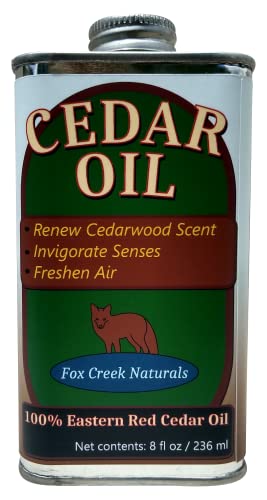
What this product is best for: purists who want a 100% cedar essential oil with no fillers. This oil is ideal for scent projects or small touch-ups where the user prioritizes authentic Eastern Red Cedar aroma and pure ingredients. It works well for aromatic finishes around cedar furniture or decorative accents close to decking but is used here to illustrate purity alongside wood care options. The absence of additives means you’ll rely on cedar’s natural scent and properties rather than a staining system with built-in UV protection.
Why selected for this guide: it demonstrates the baseline cedar-oil option—no fillers, steam-distilled, and true to cedar wood. This makes it a good reference point when comparing more complex finishes. Best for buyers who want a natural oil without color change or film-forming properties.
Who should avoid or caution: not ideal as a full exterior stain when you need UV protection or a scalable coating routine. Since it’s a pure oil, it may require additional protective steps if your goal is long-term deck color retention or water repellency.
Key specifications and considerations
- Pure essential oil: 100% Juniperus Virginiana (Eastern Red Cedar).
- No fillers or additives; all-natural ingredients.
- Steam distilled at atmospheric pressure to preserve aroma.
Bottom line: Choose this if you want a natural cedar aroma and a pure oil baseline. Best for small projects or for aromatherapy-related uses tied to cedar wood, not as a primary exterior stain.
Penofin Cedar Red Label Ultra Premium Stain

What this product is best for: exterior decks that require strong UV protection and a durable finish. The Cedar Red Label is designed for long-lasting color and exterior performance, making it well suited for larger cedar decks exposed to sun and weather. It’s a non-film forming finish, which helps maintain the wood’s breathability and grain while delivering color protection.
Why selected for this guide: it represents a premium, exterior-focused cedar stain option with high UV defense, suitable for homeowners seeking fewer reapplications and a steady color over time. The 1-gallon size is convenient for moderate-to-large projects.
Who should consider this: best for those who want a robust exterior finish with enduring color and UV resistance, and who don’t mind a coating that builds to a durable film over the wood’s surface.
Limitations to note: as a non-film forming product, you may experience longer maintenance cycles but with less continuous film buildup. If a glossy or film-like finish is desired, this may not meet that preference.
What to know about application
- Exteriors require proper surface cleaning and dry conditions.
- One coat may suffice for some projects, with re-coats as needed for color retention.
- Oil-based formulation provides color depth and water resistance but can require solvent cleanup.
Bottom line: Opt for this Cedar Red Label stain when exterior longevity and UV protection are priorities, especially on high-traffic or sun-exposed cedar decks.
STAIN RED 250 CEDAR GL

What this product is best for: exterior cedar finishing with strong UV protection and a non-film forming approach. It’s designed to enhance cedar color while allowing the wood to breathe, which can help reduce cracking or peeling in some environments. This makes it suitable for decks that require a lightweight protective layer without a heavy film buildup.
Why selected for this guide: provides a straightforward oil-based or non-film option for cedar that prioritizes UV defense and exterior suitability. It offers a practical balance between appearance and durability for budget-conscious projects.
Who should consider this: homeowners looking for a simple, exterior-use cedar finish that enhances natural grain without a heavy topcoat. If you need quick reapplication, this can be a convenient choice.
Caution or limitation: as a non-film coating, it may need more frequent maintenance on decks with intense sun exposure or heavy wear.
Performance notes
- Non-film forming; emphasizes wood grain and color depth.
- 99% UV protection; exterior use recommended.
Bottom line: best for straightforward exterior cedar finishes where UV protection is valued but film buildup is not desired.
Cedar Oil 8 OZ Can (A) — Giles & Kendall
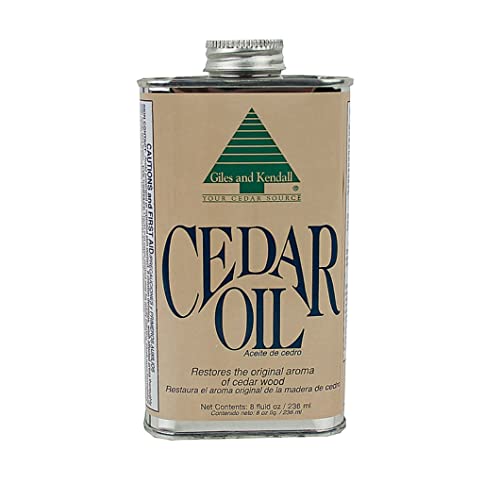
What this product is best for: small spots and applications where cedar oil is the primary finish. This can is well suited for quick touch-ups, scent projects, or minimal cedar oil treatments on outdoor wood that needs conditioning without heavy staining. It highlights the natural characteristics of cedar rather than adding significant color or film.
Why chosen for this guide: introduces a compact cedar oil option, useful for precision work and for users who want a practical, small-volume solution. It demonstrates how cedar oil can be used beyond full-deck coatings into maintenance or aroma-based projects.
Who should consider this: DIYers working on a few boards, small surfaces, or aroma-related cedar treatments where a quick, light oil is preferred.
Limitations to note: limited coverage per can and minimal color protection or water resistance compared with heavier exterior stains.
Application tips
- Ideal for localized conditioning or scent enhancements.
- Best applied to clean, dry wood with a cloth or brush.
Bottom line: a practical option for small-scale cedar oil needs or scent-focused projects rather than full-deck finishes.
Fox Creek Naturals 1oz Cedar Essential Oil

What this product is best for: small aroma projects, DIY fragrance blends, or personal care formulations where cedar scent is the primary goal. It is a pure essential oil with no fillers, making it a versatile option for crafting or light decoration around cedar wood finishes.
Why selected for this guide: demonstrates the breadth of cedar oil products, from pure essential oils to practical finishes. It helps readers understand how cedar oil can function beyond decks, guiding decision-making for scented or aromatherapy applications tied to cedar.
Who should consider this: buyers seeking a high-purity cedar oil for aromatics, soaps, candles, or custom finishes that rely on cedar fragrance rather than color protection.
Limitations to note: not a protective exterior finish; lacks UV protection and surface coating capabilities required for deck use.
Usage ideas
- Use in diffuser blends or soaps for cedar aroma.
- Add to small woodworking finishes where a cedar scent is desired.
Bottom line: best for scent-driven projects and small-batch formulations rather than exterior deck protection.
Wood Defender Cedar Tone 1-Gallon

What this product is best for: exterior fence and deck coating with long-lasting color protection. The Cedar Tone is pigment-rich, designed to highlight grain while delivering UV resistance and durable color. It’s particularly suitable for cedar fences and decks facing sunlight and weather exposure, where longevity matters.
Why selected for this guide: this option showcases a practical, pigment-based finish that offers color stability and UV protection. It aligns with buyers who want a reliable exterior coating that preserves cedar’s natural beauty while adding lasting color.
Who should consider this: homeowners and contractors seeking a robust, oil-based exterior finish that provides color and protection in one step, especially on cedar projects exposed to outdoor elements.
Caution or limitation: as an oil-based coat with pigments, it may require longer drying times and careful cleanup. Film buildup is a consideration for more frequent maintenance in high-traffic areas.
Application guidance
- Follow surface prep for best adhesion and color uniformity.
- Apply evenly to avoid runs; one coat provides initial coverage with potential touch-ups later.
- Protect surrounding areas during staining to prevent overspray on unintended surfaces.
Bottom line: choose Wood Defender Cedar Tone if you want a color-rich, exterior-grade finish with good UV protection for cedar surfaces.
Buying Guide: Red Cedar Decking Oil
What to consider when choosing?
- Purpose: do you want a pure cedar oil, a color-rich stain, or a scented/essential oil for aroma uses?
- Exterior durability: evaluate UV protection, film-forming vs. non-film formulations, and recoat intervals.
- Coverage and maintenance: larger decks require products with longer-lasting color or easier reapplication schedules.
- Wood condition: weather exposure, moisture, and existing finishes influence prep and product choice.
- Maintenance preferences: some finishes require solvent cleanup, while others offer easier, soap-and-water cleanup.
Technique tips
- Prepare cedar surfaces by cleaning and drying; sand rough areas if needed for even absorption.
- Test a small area before full application to gauge color and absorption.
- Apply with the grain, in thin, even coats; avoid pooling on surfaces and in joints.
Application frequency and longevity
- Pure cedar oil often requires more frequent reapplication for weathered areas.
- UV-protective stains typically last longer but may require periodic maintenance to refresh color.
- Non-film forming finishes preserve wood breathability; film-forming finishes offer stronger color but may peel over time if not properly maintained.
Safety and compatibility
- Follow manufacturer recommendations for ventilation and surface compatibility with existing coatings.
- Avoid combining products that conflict in chemistry (e.g., applying a film-forming stain over an incompatible oil).
Decision cheat sheet
- Want pure cedar aroma? Fox Creek Cedar Oil Can is ideal.
- Need long-lasting exterior color and UV protection? Penofin Cedar Red Label or Wood Defender Cedar Tone fit best.
- Decorative or scented projects? Consider Giles & Kendall Cedar Oil for small applications.
FAQ
- Q: What is the difference between a film-forming and a non-film forming cedar finish? A: Film-forming finishes create a surface layer that can peel over time; non-film forming allow wood to breathe but may require more frequent reapplication for color protection.
- Q: Do I need a primer for cedar decking oil? A: Most cedar finishes do not require primer; however, surface cleaning and proper prep improve adhesion and color uniformity.
- Q: How often should cedar decks be re-coated? A: Recoat intervals vary by product and exposure; UV-resistant stains generally last longer, while pure oils may need more frequent refreshment.
- Q: Can I use essential cedar oil on a deck? A: Essential cedar oil is not a protective exterior finish and should be used for aroma or small-scale decorative tasks, not as a primary deck sealant.
- Q: Is cedar oil safe for outdoor use around plants? A: Many cedar oils are natural, but always verify product directions and avoid splashing on vegetation or waterways.
- Q: Should I test a stain before full deck application? A: Yes, test on a small area to confirm color, absorption, and finish behavior before applying broadly.