Answering the common question, these outdoor pond heaters are designed to create a breathable opening in ice and maintain a safe environment for fish during freezing weather. They’re ideal for small to mid-sized ponds, liners, and Koi or goldfish habitats where oxygen exchange and safe breathing holes matter most. Choose based on pond volume, placement, and your climate. The following selections are among the most relevant options for American backyard ponds, with reasons each is best for certain setups.
| Product | Best For | Why It Works |
|---|---|---|
| HITOP 300W Outdoor Pond Heater | Small to medium outdoor ponds (80-160 gal) | Fast heating near the heater; floats to stay above mud; maintains 68-72°F locally |
| HITOP 600W Outdoor Pond Heater | Larger ponds (160-320 gal) | Higher wattage for bigger water volumes; same floating, automatic temperature control |
| HiTauing 300W Submersible Aquarium Heater | Precise temp control; intelligent sensor; explosion-proof glass for safety | |
| K&H Deluxe Thermo-Pond 250W | Ponds with mixed liner/plastic setups | Thermostatically controlled; floating or submersible use; energy-conscious |
| Laguna PowerHeat 315W | Outdoor ponds with visible ice risk | LED indicator; thermostat protection; safe for various pond materials |
HITOP Outdoor Pond Heater — 300W

The HITOP 300W model is designed to heat surrounding water enough to prevent a full pond freeze. It creates a melt hole to preserve gas exchange for fish. Best for small to mid-sized ponds around 80-160 gallons, particularly where rapid local heating is beneficial. It floats via a durable foam, keeping the heater above pond mud and reducing direct contact with sediment. A caution: avoid plastic ponds where the device may not interact safely with non-membrane liners. This heater’s thermostat maintains water near 68-72°F, automatically starting or stopping as needed. Best for ponds where a quick breathing hole is preferred and there is space for a floating unit.
- Best for small to medium outdoor ponds that need a quick ice hole
- Better for ponds closer to the heater to ensure effective warmth
- Choose this if you want a simple, auto-maintaining de-icer with floatable foam
Selected for compact ponds where ease of use and reliable auto operation matter most. Suitable for fish that require regular gas exchange during winter.
HITOP Outdoor Pond Heater — 600W

The 600W HITOP heater targets larger outdoor ponds and can heat surrounding water to keep holes open in ponds sized roughly 160-320 gallons. Like the 300W version, it uses an upgraded foam float to keep the unit buoyant and away from muddy pond bottoms. The constant temperature range remains 68-72°F and the unit automatically regulates itself according to pond conditions. Best for pond owners who need more heating capacity without moving to a larger, more complex system. Caution: heavier wattage means higher electricity use; plan accordingly for budget and energy consumption.
- Best for larger outdoor ponds that still need localized ice control
- Better for settings where a floating design is preferred
- Choose this if your pond is closer to the upper end of the 160-320 gallon range
Selected for bigger spaces and a straightforward upgrade path from the 300W model.
HiTauing Submersible Aquarium Heater
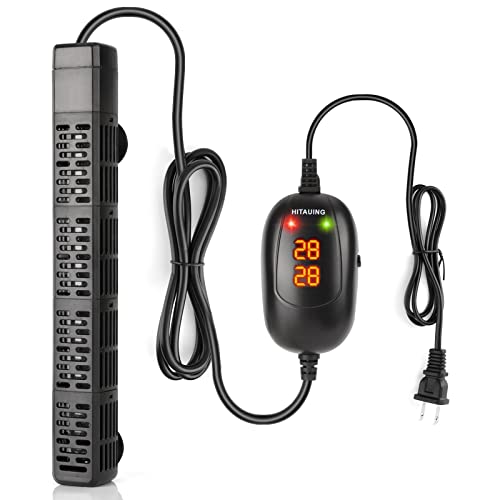
HiTauing’s 300W heater is designed to heat aquatic environments in fish tanks and can be employed in compatible pond settings. It offers rapid heating, a two-temperature control system (Celsius/Fahrenheit), and a smart water sensor that stops heating when out of water or when the target temperature is reached. It uses explosion-proof quartz glass and a robust nickel-chromium element for safety and durability. Best for owners who want precise temperature control and strong safety features in a smaller footprint. A potential limitation is that it’s primarily marketed for tanks; verify pond compatibility and submersion depth for your setup.
- Best for precise temp control in compact water bodies
- Better for safety-minded users who want automatic shutoffs
- Choose this if you prefer a robust sensor system and durable glass enclosure
Selected for accuracy and protective features, suitable for small, fish-focused outdoor environments.
K&H Deluxe Thermo-Pond 250W

The K&H Deluxe Thermo-Pond is a versatile deicer with three wattage options in their family. The 250W model is thermostatically controlled to turn on and off as needed to prevent icing. It can be used floating on the pond surface or converted to a submersible unit quickly. This flexibility makes it suitable for ponds with varying shapes and liner configurations. A note: verify zone and pond size to ensure the selected wattage aligns with your climate and pond type. It’s a good pick for energy-conscious homeowners seeking simple operation and dependable ice prevention.
- Best for versatile use with floating or submersible setups
- Better for energy-conscious users who want thermostatic control
- Choose this if your pond has a liner or plastic components requiring careful placement
Selected for its adaptability and straightforward control, especially in mixed pond environments.
Laguna PowerHeat 315W Floating Heater

The Laguna PowerHeat 315W is a floating de-icer designed for outdoor ponds. It features a simple thermostat and a visible LED indicator to show when the unit is on. It’s suitable for ponds with thin-liner materials or plastic components, offering a straightforward approach to keep a breathing hole ice-free. Best for ponds that require a clear status indicator and easy placement. Limitation: floating units may be less effective in very large water bodies or in extreme cold pockets.
- Best for visible status and simple operation
- Better for plastic or liner ponds where floating protection is advantageous
- Choose this if you want a compact, easy-to-view de-icer
Selected for straightforward visibility and reliability in modestly sized, non-rocky pond setups.
Farm Innovators 1250W Floating Pond De-Icer

This heavy-hitting option is designed to float on top of ponds and create a protective hole in the ice, especially useful in freezing northern climates. Its cast aluminum construction emphasizes durability and efficiency, and a built-in thermostat helps ensure the device only runs when necessary. Best for large or very cold ponds where strong performance is required. A drawback: higher wattage means greater energy use; plan for power access and cost considerations. It’s an effective option when reliability in extreme cold is a priority.
- Best for cold climates needing high-capacity ice prevention
- Better for durability and simple thermostatic control
- Choose this if your pond tends to freeze deeply or for extended periods
Selected for heavy-duty performance in challenging winter environments and larger pond sizes.
Buying Guide
What size pond do you have? Measure in gallons and match it to the heater’s effective range (often noted as suitable gallons). For larger ponds, you may prefer higher-wattage models to ensure a sufficient ice hole is maintained.
Where will the heater be placed? Floating de-icers work well on open water, while submersible units suit deeper or heavily vegetated ponds. In liners or plastic ponds, floatation can help, but confirm compatibility with the material to avoid damage.
How important is temperature control? Thermostatic or auto-cutoff models help preserve energy and prevent overheating. If your fish are sensitive to temperature swings, pick a model with precise control and a clear indicator.
Is energy use a concern? Higher wattage equals higher electricity consumption. For small ponds in moderate winter climates, 150-300W units are often sufficient. In harsher climates, you may opt for 315-1250W options with careful power planning.
What safety features matter? Look for auto shutoff when water is low or if the unit is out of water. Explosion-proof housing or robust ABS casings add durability where submersion and cold conditions are severe.
Material and durability considerations: Aluminum and corrosion-resistant housings resist winter moisture. Ensure the foam floatation remains buoyant and that the cord and connectors are rated for outdoor use to reduce risk of failures.
Frequently Asked Questions
- What is the primary purpose of an outdoor pond heater?
To create a breathable hole in ice, maintain gas exchange, and protect aquatic life during freezing weather.
- Can I use a pond heater in a plastic or liner pond?
Yes, but choose models with floating capability and verify compatibility with liner materials to avoid damage.
- How do I choose the right wattage?
Base it on pond volume and climate. Smaller ponds in milder climates may do well with 150-300W; larger or colder ponds require higher wattages for effective ice management.
- Are there safety concerns with submersible heaters?
Yes. Ensure proper submersion depth, keep devices above mud where possible, and use models with automatic shutoffs and robust insulation.
- Is automatic temperature control necessary?
It helps prevent sudden temperature drops or spikes, protecting fish and reducing energy use.
- Do these units heat the entire pond?
No. They melt a hole to allow gas exchange; the rest of the water may remain near ambient temperature.