Answering your search for reliable organic potash fertilizer suppliers, this guide highlights five top options that balance organic credibility with strong potassium delivery. These picks are best for home gardeners, small farms, hydroponic setups, and container growers seeking steady potassium to improve color, resilience, and yields. Each product is selected for clarity of ingredients, practical use, and suitability for organic or minimally processed gardening needs. Use the comparison below to choose the right option for your plants and growing system.
Summary table of selected products:
| Product | Best For | Key Benefit |
|---|---|---|
| Organic Sulfate of Potash 0-0-50 (3 lb) – Cz Garden Supply | Indoor/outdoor flowers, fruits, vegetables | Water-soluble, OMRI-listed for organic use |
| Muriate of Potash 0-0-60 (5 lb) – Cz Garden Supply | Dense blooms, fruit set, lawns | High potassium concentration, resealable pouch |
| Muriate of Potash 0-0-60 (5 lb) – The Grow Co | Lawns, shrubs, vegetables | 0-0-60 ratio for robust potassium |
| Espoma Potash 0-0-60 – Flagline | Trees, shrubs, vegetables, flowers | Granular, easy application, ready-to-use |
| Muriate of Potash 0-0-62 (5 lb) – Cz Garden Supply | Indoor/outdoor plants, lawns, gardens | High-purity, resealable packaging |
Organic Sulfate of Potash 0-0-50 — Cz Garden Supply
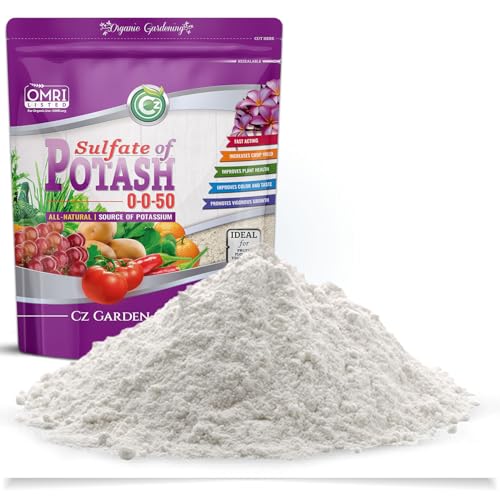
Best for: Home gardeners and indoor/outdoor growers who want a soluble, organically approved potassium source. This product is OMRI-listed, making it suitable for certified organic production and processing. It is particularly useful for hydroponic reservoirs and fertigation due to its water-soluble, pH-neutral powder nature.
Why selected: The OMRI listing signals compliance with organic standards, while its water-soluble format allows for rapid uptake and even distribution. The emphasis on color, texture, and taste improvement aligns with fruiting crops and flowering plants.
Limitations: Fine powder can require careful handling to avoid dust, and you should monitor solution pH to prevent unintended shifts during precise nutrient programs.
Muriate of Potash 0-0-60 — Cz Garden Supply

Best for: Gardeners seeking a high-potassium fertilizer to boost flower density, fruit set, and overall plant vigor in both indoor and outdoor settings. The formulation is designed to support carbohydrate metabolism and protein synthesis for larger yields.
Why selected: The 0-0-60 ratio focuses on potassium without additional nitrogen or phosphorus, making it a precise option for late-season bloom and fruit development. The resealable pouch helps preserve quality between uses.
Caution: High potassium levels can interact with other nutrient programs; avoid over-application without considering soil or substrate potassium status.
Muriate of Potash 0-0-60 — The Grow Co

Best for: Gardeners who want a strong potassium boost for flowering, fruit development, and drought resilience in diverse plantings, including turf and ornamental plants.
Why selected: This product emphasizes potassium’s role in carbohydrate metabolism and structural strength, aiding plants during stress and helping to sustain growth during challenging conditions.
Limitation: As with other MOP products, ensure compatibility with irrigation schedules and avoid foliar contact with high-salt formulations in sensitive crops.
Espoma Potash 0-0-60 — Flagline

Best for: Home gardeners looking for an easy-to-use, granular potassium supplement for trees, shrubs, vegetables, and flowers. It provides rapid release with long-lasting availability, suitable for broad plant needs.
Why selected: The 0-0-60 analysis makes it a straightforward replacement for general potassium supplementation without added nitrogen or phosphorus, simplifying fertilizer planning. Ready-to-use formatting eliminates mixing steps.
Limitation: Granular applications should consider soil texture and moisture to avoid uneven distribution or leaching in sandy soils.
Muriate of Potash 0-0-62 — Cz Garden Supply

Best for: Gardeners seeking a high-purity, US-made potassium source for a wide range of crops and lawn care. The slightly higher potassium level supports plants through growth spurts and stress periods.
Why selected: The 0-0-62 formulation delivers strong potassium delivery with premium ingredients and a resealable pouch for convenient storage. It’s suitable for ongoing nutrient plans in varied landscapes.
Caution: Monitor salt index in sensitive soils to prevent potential buildup; supplement with soil tests for balanced nutrition.
Buying Guide: Key Potash Purchase Considerations
- Organic compatibility: If you require certified organic inputs, prioritize products with an OMRI listing and clear organic-use guidelines.
- Potassium level: Choose a 0-0-50 to 0-0-62 range depending on crop stage. Higher potassium supports fruiting and flowering; lower levels may be better for established lawns or balanced feeds.
- Solubility and application method: Water-soluble formulas work well with hydroponics or fertigation. Granular options suit soil-based beds, lawns, and container gardening.
- Packaging and storage: Resealable pouches help preserve potency; consider shelf life and storage conditions to prevent caking or moisture exposure.
- Soil and crop context: Test soil to tailor potassium recommendations. Some soils may already have adequate potassium; in other cases, staged applications prevent nutrient imbalances.
- Plant type considerations: Trees and shrubs may need slower-release or targeted applications, while annuals and vegetables can benefit from more frequent, smaller doses.
- Potential cautions: Excessive potassium can interfere with magnesium or calcium uptake. Balance with other nutrients and monitor plant response.
- Safety and handling: Use appropriate protective gear when handling fine powders. Follow label instructions for mixing and irrigation integration.
Frequently Asked Questions
- What does 0-0-60 mean in fertilizer? It indicates 0% nitrogen, 0% phosphorus, and 60% potassium by weight, focusing on potassium delivery.
- Can I use potash fertilizers indoors? Yes, particularly water-soluble forms for hydroponics and foliar feeds; follow manufacturer guidelines for dilution and timing.
- Is organic potash fertilizer better than conventional? Organic options are preferred for certified organic systems, but the choice depends on your crop needs and growing method.
- How often should I apply potash? Frequency depends on crop, soil potassium levels, and growth stage. Test soil and follow product guidance for timing.
- What plants benefit most from potassium? Flowering crops, fruiting plants, and crops under heat or drought stress often benefit from extra potassium to improve resilience and yield.
- Are there risks with high-potassium fertilizers? Over-application can disrupt calcium and magnesium uptake and may cause salt stress in sensitive soils; always calibrate with soil tests.