The right heavy duty netting can significantly extend your garden’s productivity by keeping out birds, deer, and other wildlife while staying gentle on plants. This article reviews top heavy duty garden nets, highlighting strength, size, mesh, installation, and versatility to help American gardeners choose a practical solution for fruit trees, vegetables, and shrubs. Each option below offers robust construction, UV resistance, and long-term reuse, making them suitable for year-after-year use in diverse climates.
| Product | Size / Mesh | Key Strengths | Best Use |
|---|---|---|---|
| ORIVOGAS Deer Fence Netting | 6.5×50 ft; 5/8″ square mesh | 55 gsm, reinforced edges, tangle-free setup | Deer and larger animals, temporary fencing |
| Junkogo Bird Netting 7.5×100 Ft | 7.5×100 ft; 1/2″ mesh | Heavy duty woven net, high UV resistance, reusable | Fruit trees, vegetables, general garden protection |
| Bird Netting For Garden – 13×40 Ft (RIFNY) | 13×40 ft; 1/2″ mesh | HDPE, UV resistant, rot resistant, anti-aging | Broad plant protection in small to medium beds |
| Threekia Heavy Duty Aviary Netting | 25×50 ft; 1″ mesh | 0.8mm HDPE, UV stabilized, durable | Poultry enclosure and garden protection |
| JUNKOGO Bird Netting 25×50 Ft | 25×50 ft; 1″ mesh | Heavy duty woven, reusable, high elasticity | Birds, deer, small mammals protection |
Overview: The following sections provide detailed product insights, focusing on installation ease, material quality, mesh size, and suitability for common American garden scenarios—from protecting berry bushes to safeguarding tomato beds and fruit trees.
ORIVOGAS Deer Fence Netting For Gardens

ORIVOGAS offers a reinforced 5/8-inch square mesh designed to deter deer, dogs, and larger wildlife while remaining manageable for garden setups. The netting weighs 55 gsm in a high-strength HDPE weave, delivering tear resistance and UV protection. Its edges are upgraded with reinforced and encrypted ropes for quick, tangle-free installation, whether securing to posts or staking to ground. Beyond garden protection, this netting doubles as a temporary barrier for pools, kids’ play areas, or a safe perimeter around delicate plantings. The combination of durability and versatility makes it a practical all-season solution for homeowners facing varied wildlife pressure.
Pros: Durable 2–3x heavier than standard nets, strong ground anchors, multi-use functionality. Cons: Larger mammals with sharp teeth may still test the boundary over time; may require staking for long edges. Suitable scenarios include protecting berry patches, vegetable rows, and ornamental shrubs in suburban and rural settings.
Junkogo Bird Netting 7.5×100 Ft
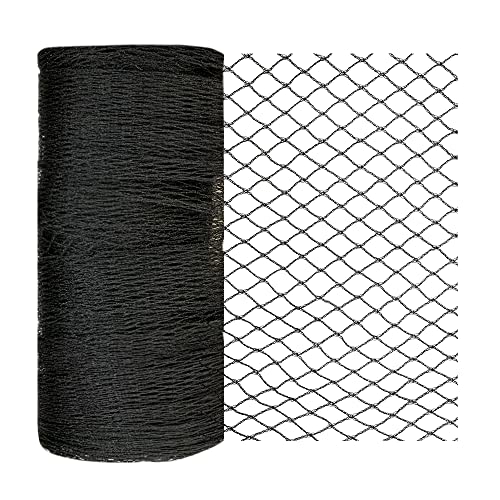
This heavy duty woven netting from Junkogo features a 1/2-inch mesh and a substantial 1 oz/m² weight, making it a robust barrier against birds, deer, squirrels, and rabbits. The netting is UV resistant, corrosion resistant, and designed for reuse across multiple growing seasons. Its elasticity and strength help it resist tearing while remaining pliable enough to cover irregular canopies and trellises. It’s easy to deploy—unfold, place, and stake or tie at the edges. The netting is suitable for fruit trees, vegetable patches, and covered beds, and can be cut to fit specific shapes.
Pros: Very strong weave, long-lasting under sun exposure, easy handling. Cons: Heavier nets may require extra installation effort for large areas. Ideal for protecting trees, vines, and trellised crops in home orchards and backyard plots.
RIFNY Bird Netting For Garden – 13×40 Ft

RIFNY’s netting uses HDPE with a 1/2-inch mesh, designed to withstand extreme weather from -58°F to 212°F. Its lightweight yet sturdy construction makes it easy to cover beds or plants without impeding airflow or light. The mesh size is optimized to block most birds while allowing water and nutrients to pass through. The netting can be cut to fit irregular layouts and can serve multiple seasons with proper storage. It’s particularly effective for small to medium garden beds, fruit trees, and bushy plant groupings.
Pros: Excellent weather tolerance, easy to trim, keeps crops accessible to water. Cons: Slightly smaller canopy coverage per roll; may require multiple sheets for larger plots. Best for seasonal crops, berry patches, and compact orchards in temperate climates.
Threekia Heavy Duty Aviary Netting

Threekia’s aviary netting offers a heavier duty option with a 1-inch mesh and 0.8 mm HDPE fibers. UV stabilizers extend life in sun-exposed yards, and the material resists weathering, making it suitable for long-term use in chicken runs or garden borders. The breathable design supports sunlight and rainfall while acting as a deterrent to hawks and other predators. The netting is described as easy to install, with the possibility of layering for extra thickness and protection around delicate crops. It’s a practical choice for poultry protection within mixed-use garden spaces.
Pros: Strong UV-stabilized material, easy setup, can be layered for thicker barriers. Cons: Larger 1″ mesh may let through very small birds; may need additional securing for windy sites. Ideal for chicken coops and larger garden perimeters facing predation risk.
JUNKOGO Bird Netting 25×50 Ft – 1 Inch Mesh
This Junkogo netting combines heavy duty weaving with a larger 1-inch mesh, designed to deter birds such as pigeons while still providing access for pollinators and water. Its elasticity supports durable protection against deer and other larger animals, and its UV resistance helps extend service life. The netting is easy to unfold and cut to size, and it’s suitable for safeguarding fruit trees, vegetables, and garden beds. It’s a versatile option for farmers with mid-sized plots or homeowners who want a straightforward, reusable barrier that can be repositioned as crops grow.
Pros: Large mesh covers more area quickly, strong weave with long life, easy trimming and storage. Cons: 1″ mesh may be too permissive for very small birds; ensure it matches your crop protection needs. Best used for orchard margins, trellised vines, and perimeters around beds with heavy bird activity.
Buying Guide: Key Purchase Considerations
Choosing the right heavy duty garden netting involves evaluating how you garden, what pests you encounter, and how you want to install and maintain the barrier over time. Consider the following factors to select a netting that fits your landscape and crop protection goals.
- Mesh size: Smaller meshes (1/2 inch) block most birds and smaller pests, while larger meshes (1 inch) are easier to handle and better for larger openings but may allow smaller pests through. For berries and leafy greens, 1/2 inch is often ideal.
- Material and durability: HDPE nets with UV stabilization resist sun damage and weathering. Look for reinforced edges or ropes for easier installation and longer life, especially in high-wind areas.
- Coverage and shape: Measure beds, trees, and trellises to determine how many nets you need and whether you’ll require multiple panels or a single continuous sheet. Consider layered approaches for extra protection on high-value crops.
- Installation simplicity: Nets with tangle-free edges and easy fastening options reduce setup time. Stakes, ties, and posts help secure borders in uneven terrain.
- Reuse and storage: Choose nets that can be rolled or folded without tangling, with colors or labels to indicate size. Proper cleaning and dry storage extend life between seasons.
- Impact on pollinators and plant growth: Most nets allow sunlight and rain through while blocking pests; ensure mesh size and material do not hinder pollinators or plant health.
- Versatility: Some nets double as temporary fences, poultry barriers, or snow fences. If you need flexibility across seasons, prioritize multi-use features and durable construction.
Overall, the best heavy duty netting combines durability, appropriate mesh size, and easy installation for your specific garden layout. Families with fruit trees and vegetable plots benefit from heavier, UV-stable nets that can withstand seasonal exposure, while urban gardeners may prioritize ease of handling and reusability. By matching mesh size, material quality, and installation options to your local wildlife pressure, you can protect crops effectively without compromising plant health or garden aesthetics.