Choosing the right corrugated plastic panels for a greenhouse can extend the growing season, improve light diffusion, and resist harsh weather. This guide highlights five top options, drawing on polycarbonate panels known for impact resistance, UV protection, and easy cutting for custom greenhouse shapes. Each product below is chosen for reliability, size versatility, and durability under American climates. Read on to compare features, installation notes, and how to pick panels that balance light transmission with insulation.
| Product | Brand | Size | Thickness | Key Benefit |
|---|---|---|---|---|
| Hotop 6 Pcs Polycarbonate Panels | Hotop | 4′ x 2′ (each) | 0.24″ (6 mm) | Bright, clear coverage with cuttable flexibility |
| UMIG 6 Pcs 6′ x 2′ Panels | UMIG | 6′ x 2′ (each) | 0.24″ | Double-sided UV coating for longevity |
| Sinimaka 10 Pack 8′ x 4′ | Sinimaka | 8′ x 4′ (each) | 0.24″ | High transparency with robust weather resistance |
| UMIG 12 Pcs 4′ x 2′ Panels | UMIG | 4′ x 2′ (each) | 0.24″ | Improved insulation and easy installation |
| Quibbay 8 Pack 8′ x 6′ Panels | Quibbay | 8′ x 6′ (each) | 0.16″ | Lightweight, high light transmission with twin-wall design |
Hotop Polycarbonate Greenhouse Panels Review

Hotop offers double-layer polycarbonate roof panels that are lightweight yet strong. The panels are designed to resist impact and are cuttable to fit various greenhouse shapes. The clear design helps maximize natural light while maintaining a bright interior environment conducive to plant growth. Users can cut panels with professional tools due to the material’s hardness, making them adaptable for custom frames.
UMIG Twin-Wall Panels For Greenhouses

UMIG’s panels feature UV protection on both sides and a twin-wall design to minimize temperature swings. The 6′ x 2′ panels install with fewer seams, reducing potential leaks in wet seasons. They are lightweight and adaptable to curved or arched frames, making them a strong choice for varied greenhouse geometries. The overall construction prioritizes durability against hail, heavy rain, and wind.
Sinimaka All-Weather Greenhouse Panels

Sinimaka provides ten 8′ x 4′ panels with a twin-wall, high-transparency construction and UV coating. The design emphasizes weather resistance, with a wide operating temperature range from -40°C to 120°C. Blocked UV rays and strong light diffusion create a stable environment for photosynthesis while protecting plants from harsh sun exposure. These panels are well-suited for year-round greenhouses in variable climates.
UMIG 12 Pieces For Large Greenhouses

This UMIG bundle expands coverage with a double-layer, UV-protected design. The panels are designed for easier cutting and installation across diverse greenhouse shapes. Their high-clarity surface ensures ample light penetration while helping to moderate interior temperatures. The panels’ durability helps resist everyday wear and environmental stressors in American climates.
Quibbay 8 Pack 8′ x 6′ Panels
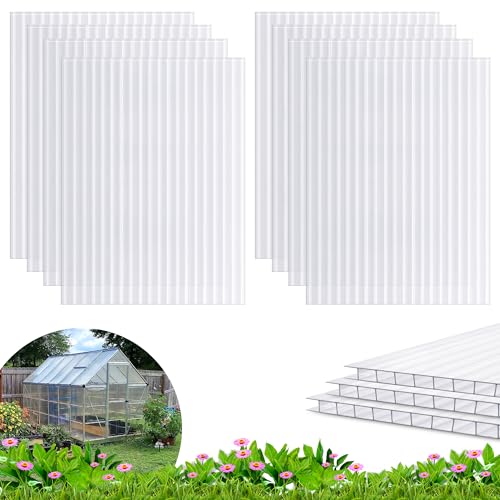
Quibbay’s 8′ x 6′ panels feature a UV-protected double-wall polycarbonate construction with a high light transmission rate. The panels are designed to diffuse light effectively, supporting robust plant growth while offering strong resistance to weather extremes. The lightweight nature of the panels simplifies handling and installation in larger greenhouse frames, though cutting is required to fit specific shapes.
Quibbay 8PCS 10′ x 6′ Panels

This larger Quibbay option emphasizes maximum light transmission with a durable, UV-protected polycarbonate structure. The longer panels can cover expansive greenhouse sections with fewer seams, which minimizes potential leak points. Like the other Quibbay panels, these are lightweight and designed to endure weather fluctuations while supporting consistent plant growth.
Buying Guide: Key Considerations For Greenhouse Panels
Material: Polycarbonate panels offer a strong balance of light transmission, impact resistance, and insulation. Twin-wall designs improve insulation and diffuse light for even plant growth, while single-layer versions may be lighter and more affordable.
UV Protection: UV coatings on both sides extend panel life and protect plants from excessive UV exposure. UV stability is crucial for longevity in sunny American climates.
Light Transmission: Higher light transmission supports photosynthesis, but diffusion matters too. Twin-wall panels diffuse light to reduce hotspots and provide more uniform shading inside the greenhouse.
Thermal Performance: Panels with better insulation keep cooler in summer and warmer in winter. Choose thicker panels or double-layer designs if you experience wide seasonal swings.
Size And Fit: Panels come in various sizes. Check your greenhouse dimensions and framing before purchasing. Compatibility with curved or arched frames may require cuttable panels and careful handling.
Durability And Weather Resistance: Panels should withstand hail, heavy rain, wind, and temperature extremes. Look for impact resistance ratings and a robust mounting system to minimize leaks and shrinkage.
Ease Of Installation: Lightweight panels with simple cutting guidelines save time, especially for DIY greenhouse projects. Professional cutting tools may be required for precise sizing.
Maintenance: Polycarbonate panels are relatively low-maintenance but can benefit from periodic cleaning to maintain light transmission. Verify compatibility with standard cleaning products to avoid clouding or damage.
Cost Versus Longevity: While price matters, consider total cost of ownership—durability, panel life, and potential energy savings from better insulation can justify higher upfront costs.
When selecting panels, balance light diffusion with insulation needs for your local climate. For areas with intense sun and heat, a slightly higher insulation rating can help reduce cooling demands. In colder regions, emphasis on thermal retention helps protect delicate crops in winter. For varied shapes, opt for cuttable, flexible panels or a modular kit that minimizes waste.
In summary, the highlighted products provide a mix of durability, UV protection, and installation practicality. Hotop and UMIG panels offer reliable standard options for typical greenhouses, while Sinimaka and Quibbay provide higher transparency and larger panel formats for expansive structures. Depending on your frame design and climate, one of these panels can help maintain optimal growing conditions throughout the year.