Keep a useful crop-rotation record by giving each growing area a permanent name and recording the plant family as well as the crop. Then use that history to plan the next planting without pretending a small garden can always provide an ideal separation.
A simple accurate record is more useful than a complicated rotation chart that never gets updated. You need to know what actually grew where, including changes made after the original plan.
Start with the current season if earlier details are missing. Mark unknown history as unknown instead of reconstructing several confident years from an uncertain memory.
Know what the record is meant to support
Wisconsin Extension describes crop rotation as changing vegetable locations between seasons. Its explanation connects the practice with pest, disease and fertility management and groups crops by botanical family.
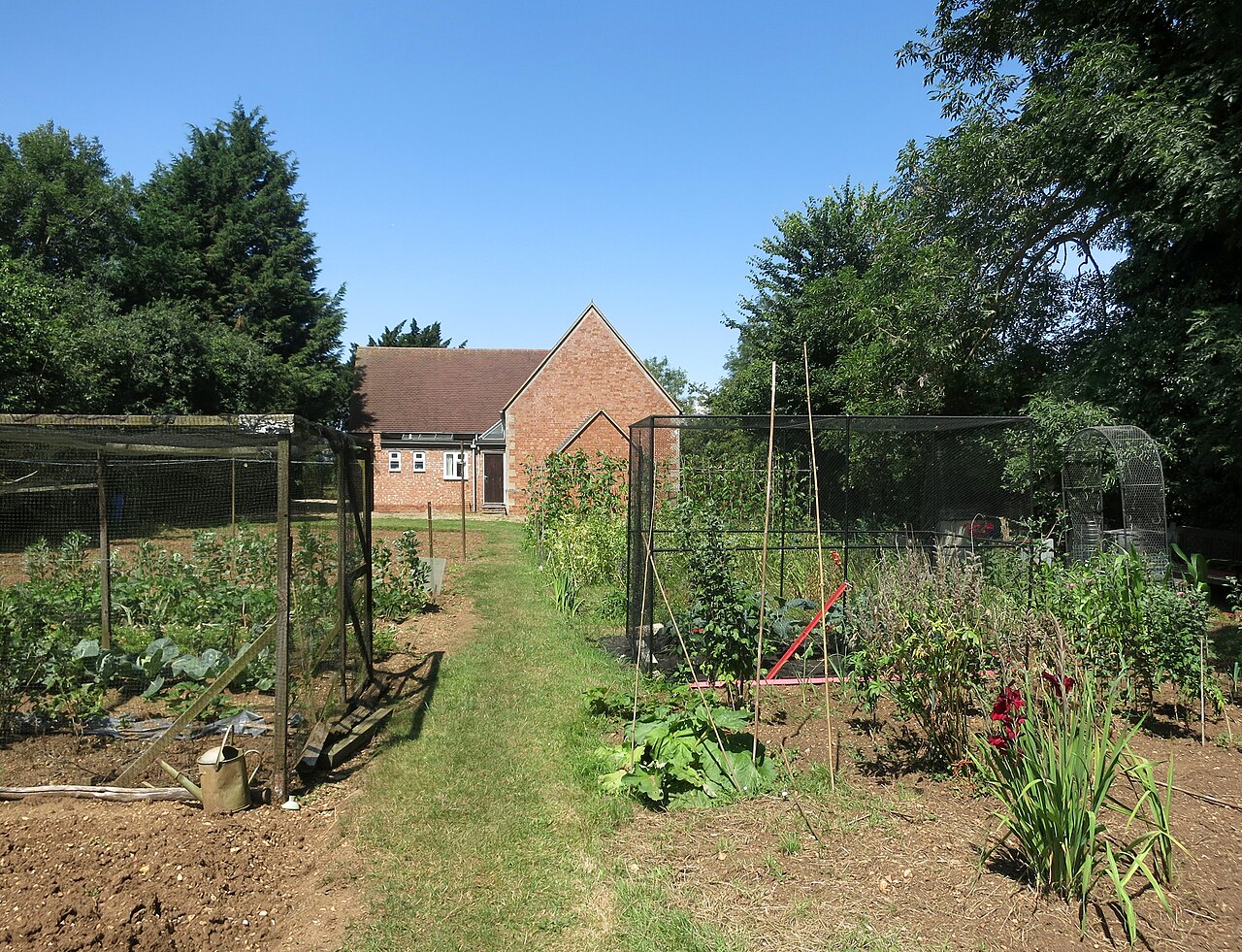
Use that purpose to decide what belongs in the record. A decorative garden photograph can help, but a photograph without identifiable bed locations or crop names may not answer the next season’s planning question.
Do not treat rotation as a diagnosis or a guarantee of healthy plants. If a crop has a disease or pest problem, obtain an appropriate identification and management recommendation rather than assuming any move to another corner resolves it.
Keep fertility decisions separate as well. A family label and last year’s crop history do not replace an actual soil-test recommendation or establish how much of a nutrient the next planting needs.
Create bed names that survive a season
Draw a basic map with the house, fence or another fixed landmark so that you can orient it later. Name the growing areas consistently, using simple identifiers such as Bed A or Patio Container Group rather than changing names with each crop.
For a large single plot, show the zones you can actually distinguish. Mark their boundaries honestly and note if work mixes soil across them, instead of drawing lines that imply more separation than exists.
Iowa State notes that cultivating one plot can mix soil between zones and limit the benefit of a rotation based on those divisions. A map helps organize the history, but it cannot create a physical distinction that your management erases.
Save one clear reference photograph from the same viewpoint when practical. Put the bed names on a separate copy or sketch so that the labels remain readable without altering your only original photograph.
Record crop names and family names together
Write the crop and variety, then check its family in a reliable vegetable-family reference. Keep both names because the family helps planning while the crop name explains what you actually planted and harvested.
Wisconsin’s guide groups tomatoes, peppers, eggplants and potatoes in the nightshade family. Moving from a tomato to a pepper therefore changes the crop name without necessarily creating the family change you intended.
Do not guess a family from a vegetable’s appearance or its use in the kitchen. When the identity is unclear, leave a question mark and verify it before the next plan depends on that entry.
Use one consistent reference for the family’s current classification and keep the link with your record. If a label in an older source differs from a newer one, resolve the mapping rather than treating a renamed group as an entirely different crop history.

Include more than the first crop of the year
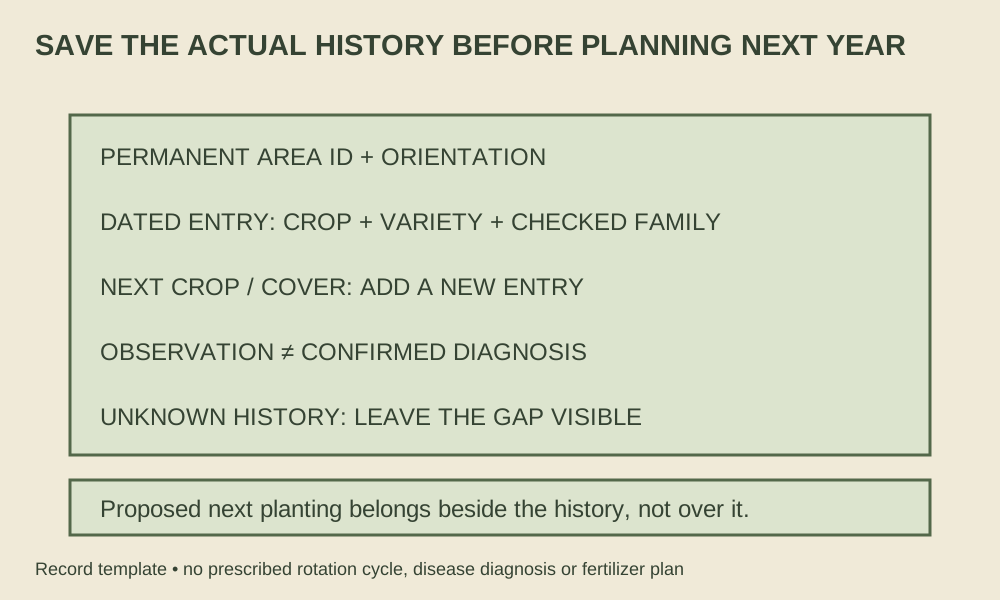
Add the actual sowing or transplanting date and the crop’s removal or last-occupation date when you know them. If another crop follows in the same space, give it a separate entry rather than overwriting the first.
Include relevant cover crops and note extensive volunteer growth or weeds when they matter to a management question. Iowa State emphasizes that cover crops and weeds can belong to the same families as vegetables and serve as alternate hosts.
Keep observations such as an unidentified symptom separate from a confirmed diagnosis. A record that says leaf spotting observed is more honest and more useful than an unverified disease name repeated through several future plans.
Write down major changes as they happen, including a crop moved into an unexpected bed. The final history should describe the actual garden, even when it no longer resembles your original spring drawing.
Be honest about small-garden limits
Wisconsin describes a multi-year family rotation as a useful objective while acknowledging the difficulty in a small garden. Iowa State similarly advises doing the best rotation your available space supports rather than abandoning the practice because the setup is imperfect.
Record the constraint that prevents a preferred move: suitable light, available soil space, a permanent structure or another actual limitation. That helps you investigate a specific alternative rather than assume the map alone supplies a solution.
If you consider a container or another growing area, assess its full suitability and care requirements. A different location is only useful if the crop can grow there and you can maintain it.
Do not label a small shift as complete disease control. For an identified problem, ask local Extension staff what rotation or other measures are meaningful for that particular organism and situation.
Test next season’s idea against the history
Imagine Bed A held tomatoes and later received a cover crop, while Bed B held a different vegetable family. Your first planning step is to identify both recorded families and the actual space and timing available, not simply swap the words tomato and pepper on a drawing.
Make a proposed next-season column beside the completed history, leaving the old entries intact. You can then see a conflict without accidentally rewriting the evidence you are using to find it.
If a proposed crop cannot move to a suitable area, record that limitation and seek advice about the specific concern. You may revise the crop list or the growing arrangement rather than pretend the preferred rotation occurred.
The example is a way to check a plan, not a recommended two-bed cycle. Your crop families, local conditions and any diagnosed problem determine what information matters next.
Handle gaps without inventing a history
If you inherit a garden or lose an old notebook, begin with what you can verify. A dated photograph may identify a crop in one bed, while another part of the same image remains too unclear to interpret; record those levels of certainty separately.
Ask a previous gardener for specific information if that conversation is available, but distinguish a recalled crop from a confirmed bed location. A memory that tomatoes grew somewhere in the yard does not tell you which of several beds held them.
Keep unknown areas visible in the next planning conversation, especially if an identified plant problem makes earlier hosts relevant. A local adviser can then work with the real uncertainty rather than a neat but invented multi-year rotation.
Once you start a reliable current record, maintain it through changes in the growing season. You do not need to manufacture a perfect past to make the next year’s history more useful.
Keep the record small enough to maintain
Use one page or a simple file you can update during ordinary garden visits. The essential entries are area identity, date or season, actual crop, checked family and a short note about relevant changes.
At season’s end, compare the original plan with the completed record and correct missing entries while you can still verify them. Save the date of that review so that later additions remain distinguishable from notes made during the growing season.
Your finished rotation record should preserve a credible history and reveal the next decision’s limits. That gives you something useful to bring to a planning conversation without claiming that a chart has solved every pest, disease or soil question in the garden.