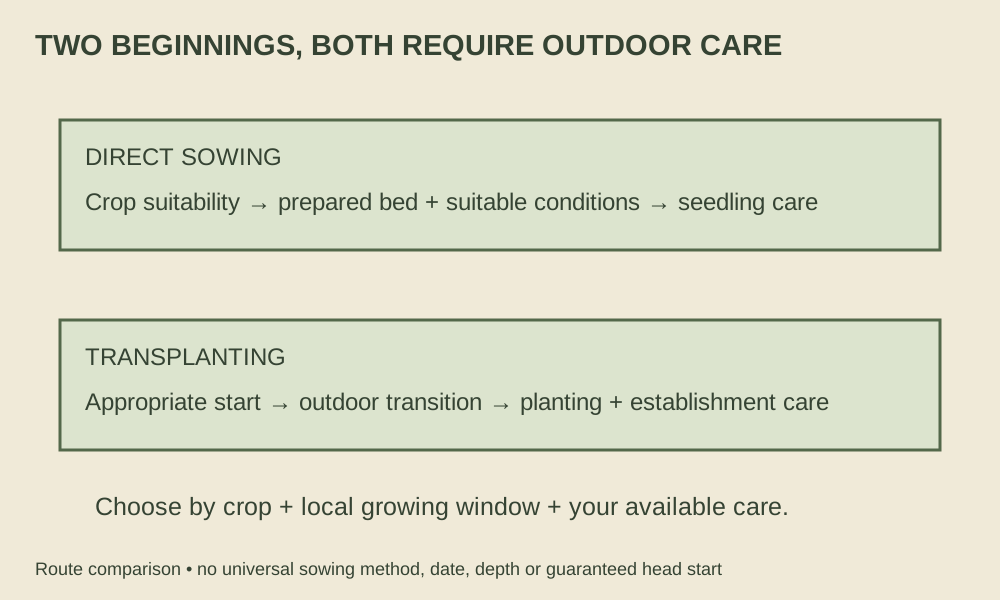
Choose direct sowing or transplanting for each crop by checking how it handles the move, the time available and the care you can provide. Neither method is automatically easier for every vegetable or every garden.
Direct sowing starts the seed where the crop will grow, while transplanting moves a young plant into that destination. Compare the complete sequence, including establishment and later care, rather than only the convenience of planting day.
Start with the exact crop and variety you intend to grow. Then use local planting guidance to decide whether the suitable outdoor window and your available resources support that method.
Check whether the crop suits the method
UF/IFAS describes different transplant abilities among common vegetables. Its guidance treats sowing and transplanting as crop-dependent choices, with some plants moving readily and others requiring greater care.
Look up the actual crop rather than relying on a rule that every small seed belongs indoors or every large seed belongs outdoors. The size of the seed packet does not describe the plant’s response to root disturbance or its growing-season needs.
Read a table’s headings and notes before using its crop name as an answer. A category that allows a carefully grown containerized transplant does not mean that a bare-root plant or an overgrown plug is equivalent.
If two sources appear to disagree, compare their crop, stage and growing conditions. Ask local Extension staff about the actual method you are considering instead of assuming the shortest statement applies in every setting.
Compare the available growing window
Identify the crop’s suitable outdoor planting period and the time it needs to reach the harvest you want. Keep the maturity information attached to its starting event, since days counted from transplanting are different from days counted from sowing.
Maryland Extension explains why some long-season crops are started indoors: their seed-to-harvest period may be long compared with the appropriate outdoor season. Its calendar distinguishes direct-sown and transplanted crops while retaining its regional scope.
Use that reasoning with a local calendar rather than importing Maryland’s dates. You may find that a head start matters for one crop while another has a straightforward outdoor sowing window.
For a late planting, count forward from the actual date available now. A method that would have fit your original spring plan may no longer leave enough suitable growing time after an unexpected delay.
Understand the work in direct sowing
Iowa State defines direct sowing as planting seed in the garden when outdoor conditions are favorable. It highlights quick-maturing crops and crops that are difficult to transplant as useful candidates.
The method avoids an indoor growing stage, but the seeded area still needs preparation and attentive care. You need to locate the rows, follow the actual depth and spacing instructions and distinguish the crop seedlings from weeds.
Think about whether you can check the area during establishment. A planting beside your normal garden route may be easier to monitor than a new patch you rarely visit, even when the crop is a good direct-sowing candidate.
Do not interpret a packet’s seed count as a reason to sow the entire contents into a small space. Use the actual instructions and include thinning in your plan when the crop requires it.

Count the whole transplant route
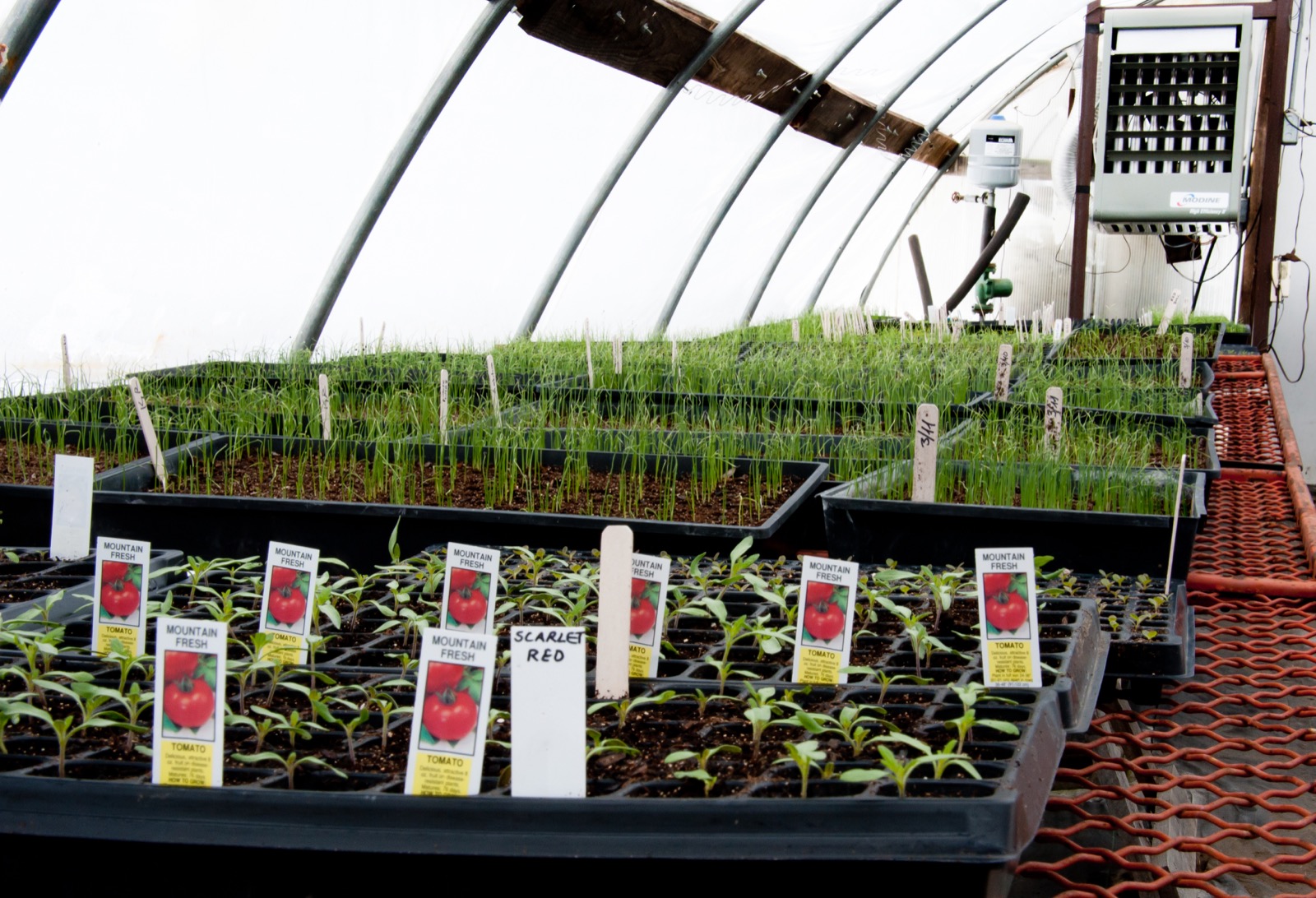
If you grow your own starts, include the growing medium, suitable containers, lighting, care time and later space. Our indoor-space plan helps you check the larger-container stage before you start more plants than the setup can hold.
If you buy starts, inspect the actual plants and confirm the variety and intended planting window. A nursery display is an opportunity to obtain a plant, not evidence that your bed and weather are already suitable.
Include the transition outdoors and the work after planting in either case. A transplant does not stop needing attention when it leaves the pot, so compare that care with the establishment work a direct sowing would require.
Keep a backup option for plants that arrive or become ready before the destination is available. Buying starts early does not create extra space or improve a forecast that conflicts with the crop’s needs.
Choose the care you can maintain
Compare the busiest part of each route with your actual schedule. Indoor starts may need space and visits before the outdoor garden begins, while a direct-sown row needs attention where it was planted.
UF/IFAS notes that direct sowing can leave you thinning excess seedlings or dealing with fewer plants than expected. Treat that uncertainty as part of the plan rather than a reason to promise yourself a fixed number of mature plants from every sowing.
Transplants create a different count at planting time, but you still should not describe their future establishment or harvest as guaranteed. Compare what you can observe now and the care required next.
If you will be away during a critical period, change the timing where crop guidance allows or arrange appropriate help. Choosing a method does not remove its tasks merely because they fall during an inconvenient week.
Compare two crops without imposing one rule
Imagine you have one short row for a crop normally direct-sown and another space for a crop that benefits from a locally appropriate head start. Make separate method cards rather than deciding the whole garden must use one approach.
On the first card, record the actual seed instructions, outdoor window and visits needed for establishment and thinning. On the second, record the start source, transition plan, destination date and available care after transplanting.
Now compare both cards with your time and space. You may keep the first as a direct sowing and buy a limited number of suitable starts for the second, avoiding an indoor setup you cannot support this season.
This example organizes the decision without naming a universal best method. The useful result is that each crop has a reasoned route instead of inheriting the method you happened to use for another vegetable.
Compare costs for the same planted goal
Compare both methods against the same desired planting, not one packet against one individual start. A packet may contain more seed than you will use, while a tray of purchased plants may contain more transplants than your measured space can accommodate.
For the indoor route, include only the equipment and supplies you actually need to obtain, distinguishing reusable purchases from items used this season. Keep your existing equipment in the capacity check even when its purchase cost is already past.
For direct sowing, include the care and thinning work you have planned rather than treating the method as no further effort after the seed goes into the soil. You do not need to assign a dollar value to every visit to recognize that a plan may conflict with your available time.
Then choose the route whose complete requirements fit your crop and garden. A lower checkout total is useful information, but it cannot make an unsuitable method appropriate for the plant.
Save the method and the actual dates
Record the variety, method, sowing date and any transplanting date separately. Include the date of the harvest you actually used, so next season’s comparison does not depend on an expectation copied from a packet.
Note any practical difficulty, such as too many plants waiting indoors or a direct-sown row that was hard to identify. Those observations point to a specific change you can make without declaring the entire method a success or failure.
Your final choice should connect crop suitability, local timing and manageable care. That gives each vegetable a workable beginning while leaving you free to use different establishment methods within the same small garden.