Sun-loving yellow perennials bring warmth and cheer to borders, meadows, and pollinator-friendly gardens. The following selections are well-suited to full sun and offer long-lasting bloom, drought tolerance, and wildlife appeal. Below you’ll find five reliable options, each highlighted with quick insights and cultivation notes to help you choose plants that thrive in American gardens.
Summary of chosen products:
| Product | Brand | Type | Key Benefits |
|---|---|---|---|
| American Gold Rush Rudbeckia | Perennial Farm Marketplace | Live perennial | Bright yellow blooms, deer resistant, long bloom, full sun |
| Black Eyed Susan Seeds (1500+) | Generic | Seed packet | Vibrant yellow with dark centers, drought-tolerant, pollinator-friendly |
| Groundio Rudbeckia Seeds | Groundio | Seed packet | Fast-growing clusters, drought-tolerant, easy care |
| Dutch Master Narcissus Daffodil | Garden Elements | Bulbs | Classic yellow trumpets, spring color, easy to grow |
| Sedum Kamtschaticum ‘Cutting Edge’ | Perennial Farm Marketplace | Live plant | Yellow-edged leaves, mid-summer yellow blooms, drought tolerant |
American Gold Rush Rudbeckia: Bright Yellow, Long-Blooming Perennial

Rudbeckia x ‘American Gold Rush’ is a robust perennial known for its sunny, gold-yellow composite flowers with a dark center. Ideal for full sun, it forms a compact, mounded clump that reaches about 22-26 inches tall, making it a staple for borders and mass plantings. The plant is hardy in USDA zones 4-9 and features a long bloom period from mid to late summer into early fall. Its relatively tidy foliage helps it perform well in mixed borders, where it can act as a bright focal point or blend with other native wildflowers. While the plant is versatile, it benefits from good drainage and occasional pruning to maintain vigor.
Growing tips: space plants about 36 inches apart for air circulation, mulch to reduce moisture fluctuations, and monitor for common fungal issues in humid summers. The variety’s drought tolerance supports low-water landscapes once established, though regular watering during establishment helps ensure strong roots. This pick is a classic choice for pollinators and wildlife-friendly gardens, especially in sunny, open sites where the bright yellow flowers rise above midsize foliage.
1500+ Black Eyed Susan Seeds: Perennial Yellow Flowers
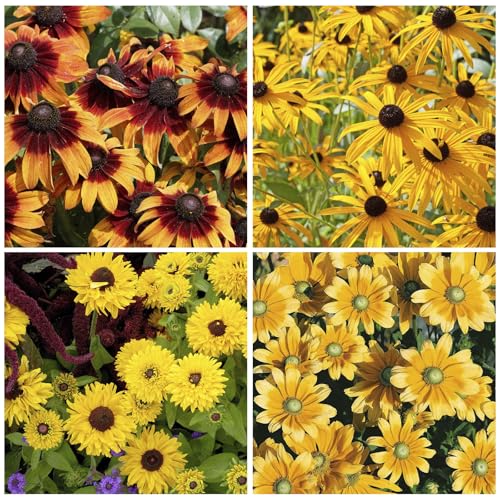
This seed lot focuses on Erigeron/ Rudbeckia-type Yellow perennials ideal for quick coverage and naturalistic planting schemes. Black-eyed Susans (Rudbeckia) deliver vibrant yellow petals around dark centers, bringing cheerful contrast to borders and meadows. They tolerate drought once established and attract pollinators, including bees and butterflies. Seed buyers should note that germination times can vary with soil conditions and climate, but many gardeners report reliable sprouting within a few weeks in warm, sunny soils. With enough sun, these plants become a dependable source of late-summer color.
Care considerations include well-drained soil and moderate fertility. Once established, they require minimal supplemental irrigation. They’re well-suited for mass plantings or mixed borders, where their bright color helps unify diverse plantings and extends visual interest through the season.
Groundio Black Eyed Susan Seeds: Easy Perennial Growers

Groundio offers a robust Rudbeckia seed option described as hardy and fast-growing, with vibrant yellow flowers that form dense clusters. The seeds target full sun and are suitable for USDA zones 3-9, promoting an easy-care perennial footprint. The product emphasizes drought tolerance and versatile planting for ground cover or borders. Gardeners should note it prefers well-drained soil and may benefit from thinning or spacing to prevent overcrowding as plants mature. Germination is typically within a few weeks under optimal warmth and moisture.
Its tall but compact habit makes it a practical choice for edging sidewalks, borders, or wildflower meadows. This seed set supports pollinator health and contributes to a bright, sunny garden palette throughout the blooming season.
Dutch Master Narcissus Daffodil: Bright Yellow Spring Bulbs

Garden Elements’ Dutch Master narcissus bulbs produce classic trumpet-shaped, golden-yellow blooms that herald spring. Planting in fall enables strong root development for spring displays that brighten borders, walkways, or container arrangements. These bulbs are well-suited to full sun to partial shade with well-drained soil. In ideal conditions, they rise 16–22 inches tall with a 4–6 inch spread, delivering reliable early-season color that pairs well with later perennials. After flowering, foliage should be left to feed the bulbs for next season’s growth.
Prospective gardeners should consider space planning for spring color, soil drainage, and cold-treatment periods required by bulbs. Narcissus are typically low-maintenance, making them a convenient option for beginners seeking a cheerful, long-lived yellow accent in sunlit beds.
Sedum Kamtschaticum ‘Cutting Edge’: Groundcover With Yellow Blooms

Perennial Farm Marketplace offers Sedum kamtschaticum ‘Cutting Edge’, a compact groundcover with yellow-edged green leaves and mid-summer yellow flowers. This cultivar thrives in full sun and is drought-tolerant once established, making it ideal for low-water zones or rock gardens. Its rosettes stay tidy, spreading to cover ground and suppress weeds, while attracting butterflies with late-season color. The plant is hardy across multiple zones (4-8) and prefers well-drained soil. It’s an excellent option for edging, slopes, or containers where durable foliage is valued as much as seasonal blooms.
When planning plantings, consider spacing to allow for eventual ground cover, and provide afternoon shade in hotter climates if summers are intense. This sedum adds a soft yellow accent that complements taller perennials and grasses in sun-drenched gardens.
Buying Guide: Key Purchase Considerations For Yellow Perennials In Full Sun
- Light and site: Verify sun exposure (full sun generally means at least 6 hours of direct sun daily) and soil drainage. Many yellow perennials tolerate drought once established but need good drainage to prevent root rot.
- Flowering season and succession: Mix a early-season daffodil or narcissus with mid-season rudbeckias to maintain color from spring through late summer. Seed options may require more patience but can yield bold, natural-looking displays.
- Plant form and growth habit: Consider whether you want tall focal plants (Rudbeckia), mounding borders, or groundcovers (Sedum). Proper spacing supports air circulation and reduces disease risk.
- Hardiness and maintenance: Check USDA zones for winter-hardiness and understand that perennials may need pruning, deadheading, or division to maintain vigor. Sedums and bulbous plants often require minimal ongoing care.
- Pollinator appeal: Yellow flowers attract bees and butterflies, boosting garden biodiversity. Seed packets and live plants vary in bloom longevity; plan to stagger purchases for continuous color.
- Watering needs: Newly planted perennials need regular moisture, while established plants are drought-tolerant. In hot climates, occasional shading or mulching helps conserve moisture.
- Cost and longevity: Seed packets are cost-effective but slower to establish; live perennials or bulbs offer immediate impact with potentially longer life but higher initial cost.
Overall, a yellow sun-loving palette combines cheerful color with practical garden performance. The five selections above provide a blend of bulbs, seeds, and live perennials, enabling flexible design options—from bright focal points to low-maintenance groundcovers. By combining taxa with staggered bloom times, you can maintain vibrant, year-round interest in sunny beds across American landscapes.