Answering the top buyer questions: these wooden garden beds and planters are designed for easy assembly, durable outdoor use, and flexible growing layouts. They’re best for homeowners who want raised growing spaces that minimize bending, improve drainage, and organize herbs, vegetables, and flowers in patios, backyards, or balconies. The leading picks below offer two-tier designs, open-base drainage, and modular layouts to suit small spaces or larger gardens. The table below highlights the featured products and who they’re best for.
| Product | Best For |
|---|---|
| Yaheetech 8x2ft Dark Brown | Large, two-section beds for vegetables and flowers; spacious layout for backyards |
| Yaheetech 8×2ft Natural Wood | Two-area design with flexible DIY assembly for varied planting zones |
| SPECRAFT 8×4 Ft | Deeper, wider bed with open-base drainage; great for mixed crops |
| Best Choice 48x24x30 | Balanced, elevated bed with bed liner; ideal for patios and balconies |
| Yaheetech 34x18x30 | Compact, two-tier design with storage shelf; good for small spaces |
Yaheetech 8x2ft Dark Brown Elevated Garden Bed
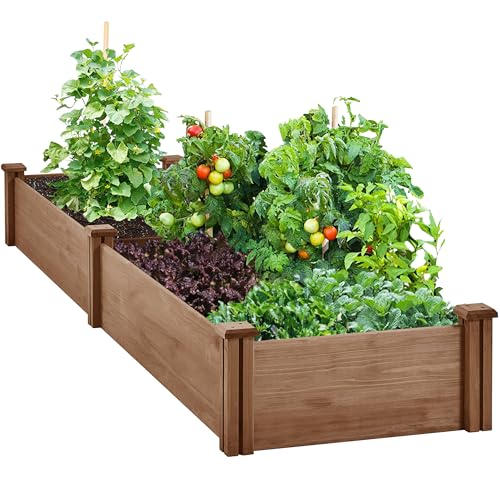
Best for: Large, back-yard vegetable plots and flower borders. This divisible design creates two growing zones that can be separated or combined by removing the internal baffle. The corner posts use a four-face slot system for flexible, stable assembly, making it suitable for modular garden designs. The bed supports multi-season planting, with ample depth for root systems in vegetables and perennials. Caution: assembly requires aligning multiple parts; ensure all fasteners are tightened to prevent wobble.
Yaheetech 8×2ft Natural Wood Raised Bed

Best for: Gardeners who want a natural wood aesthetic with two planting zones and easy DIY expansion. This version mirrors the dark brown model with the same dual-compartment design and removable divider for larger beds. It favors users who plan to rotate crops or separate herbs from vegetables. Caution: ensure the bed sits on a stable surface to prevent shifting when adding soil.
SPECRAFT 8×4 Ft Wood Raised Bed

Best for: Those needing a deeper planting area and open-base drainage. At 8×4 feet with 1.5 feet of depth, it accommodates a wider variety of vegetables, herbs, and flowering plants. The central divider aids organization, and tool-free assembly speeds setup. Caution: larger footprint requires stable ground and careful positioning to avoid tipping in windy areas.
Best Choice 48x24x30 Raised Garden Bed
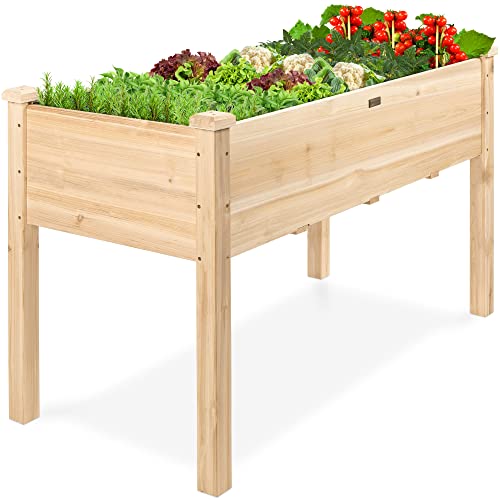
Best for: Patio, balcony, or backyard spaces that need a durable, all-wood solution with bed liner included. The long bed design provides ample planting space (about 5 cubic feet) and supports better drainage to prevent root rot. Caution: Chinese fir wood requires maintenance to protect against weathering over time.
Yaheetech 34x18x30 Raised Bed With Legs

Best for: Small-space gardeners who want a two-tier design with a storage shelf. The elevated top planting box is ideal for veggies, herbs, or flowers, while the lower shelf keeps tools and pots organized. Caution: taller beds can be top-heavy in very windy conditions; ensure secure anchoring on outdoor surfaces.
Buying Guide: Wooden Garden Beds And Planters
- Space and layout: Choose two-tier or single-bed designs based on your available patio, balcony, or yard footprint. For small spaces, a compact 34x18x30 model with a shelf can maximize vertical utility without crowding.
- Material and durability: Most beds use fir or other softwoods. Look for smooth, burr-free surfaces, and consider the need for weatherproofing or liners to protect against rot and moisture.
- Drainage design: Open-base beds promote drainage and healthy roots. If drainage holes are absent, plan for a liner or extra drainage planning to avoid waterlogging.
- Assembly and modularity: Beds with upgraded corner posts or modular connections enable easy expansion and reconfiguration as your garden grows.
- Maintenance: Consider wood treatment needs, sealing, and whether you will re-stain or repaint over time to maintain appearance and longevity.
- Intended use: If you want to rotate crops or separate herbs from vegetables, a divided design or removable partition offers practical flexibility.
- Weight and soil capacity: Pay attention to the bed’s stated capacity and depth. Deeper beds (around 9–12 inches) better support root crops and leafy greens with richer soil.
Frequently Asked Questions
Do wooden garden beds require weatherproofing?
Wood beds benefit from weatherproofing with sealant or waterproof paint to extend life, especially in damp climates.
Is an open-base design essential?
Open-base designs promote drainage and healthier roots, though liners can be used to control moisture if needed.
Are these beds easy to assemble for beginners?
Most options include straightforward, tool-assisted assembly and modular parts for quick setup.
Can these beds hold large plants or crops?
Yes, but depth and width influence which crops perform best. Deeper beds support root vegetables well.
What maintenance is required?
Regular checks on fasteners and surface sealing help maintain stability. Re-staining can preserve appearance and wood integrity.