Wood vertical garden planters offer compact growing power for patios, balconies, sunrooms, and small yards. This guide compares five top options to help urban gardeners choose wisely. Each pick suits different spaces, plant types, and assembly preferences, from freestanding stands to multi-tier beds. Whether you’re growing herbs, vegetables, or flowering plants, these sturdy wooden planters optimize sunlight exposure and airflow while saving floor space. The table below highlights what each product is best for so you can quickly compare options at a glance.
| Product | Best For | Key Benefit |
|---|---|---|
| Dawnyard 3-Tiers Wooden Raised Garden Bed Planter Box | Small patios and balconies | Three-tier, adjustable sunlight with drainage per tier |
| Giantex 5-Tier Wooden Vertical Raised Garden Bed | Larger balcony or yard spaces | Five tiers with ladder design for broad planting |
| RHINEINMIST 5-Tier Vertical Planter Bed | Dense urban balconies | Five-planter layout with inner lining and drainage |
| DoCred Vertical Wooden Raised Garden Bed, 5 Tier | Herbs and mixed vegetables | Five divided boxes with durable fir wood |
| FILWH Wooden Raised Garden Bed, 4-Tier | Indoor or outdoor small spaces | Versatile four-tier, freestanding |
Dawnyard 3-Tiers Wooden Raised Garden Bed Planter Box

This 3-tier planter fits tight spaces while enabling separate plantings in each tier. The trapezoidal shape improves sunlight exposure to all plants, and drainage holes in each tier help prevent root rot. Best for compact patios, balconies, or entryways where you want to separate herbs, flowers, and compact vegetables. Limitations include a smaller footprint that may not support larger vegetables at full height.
Giantex 5-Tier Wooden Vertical Raised Garden Bed

The Giantex model provides a spacious 5-tier growing area and a ladder-like design that improves sunlight access and airflow across all levels. It uses premium fir wood with a splinter-free surface for durability in outdoor use. Choose this if you want a larger vertical footprint with straightforward access to each row for watering and maintenance. A caveat is that the taller height may require stable mounting or careful placement on uneven ground.
viewcare Raised Garden Bed, 3 Tier
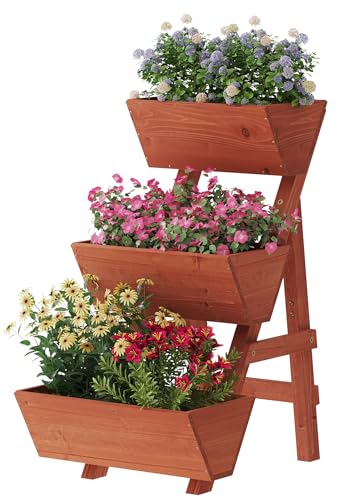
This three-tier vertical planter offers a compact option for herbs, flowers, and small vegetables. The sturdy wood frame supports stable indoor or outdoor use, with a design that facilitates organized planting. Best for urban gardeners who want a balanced height with clear sections; keep in mind the overall capacity is moderate, so very large plants may need larger beds.
RHINEINMIST Vertical Wooden Raised Garden Bed
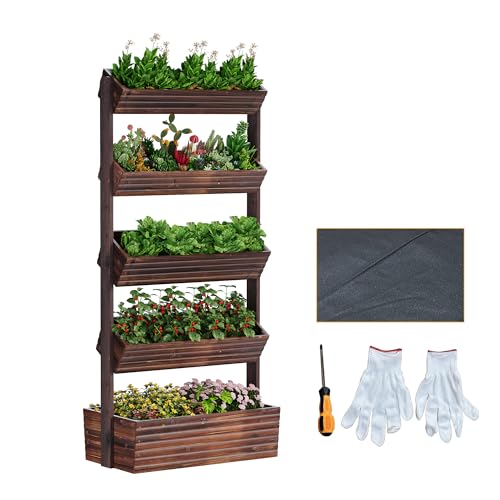
The five-planter design of this unit is space-efficient and suited for balconies or compact indoor-outdoor spaces. It includes a non-woven inner lining to help retain soil and moisture and a base drainage system to prevent overwatering. It’s ideal for herb and flower mixes as well as compact vegetables. A potential limitation is the need for regular checking of drainage to prevent water pooling in humid climates.
DoCred Vertical Wooden Raised Garden Bed, 5 Tier

DoCred offers five divided planter boxes, enabling you to grow a variety of plants without crowding. The fir wood construction is designed for outdoor resilience, and the five sections provide ample separation for herbs, leafy greens, and small vegetables. Choose this if you want multiple discrete plantings in one freestanding unit. A limitation is that assembly may require careful alignment of all five boxes to maintain stability.
FILWH Wooden Raised Garden Bed, 4-Tier
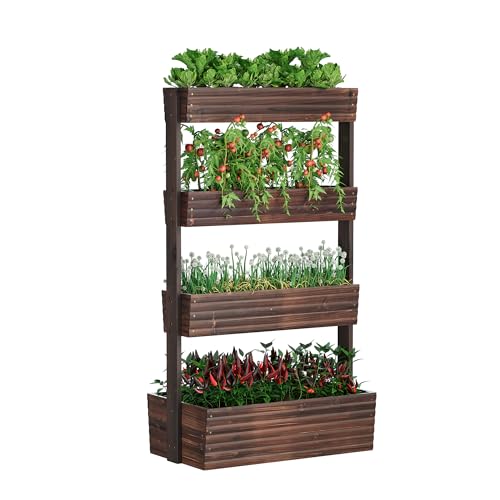
FILWH’s four-tier option favors space-saving indoor or outdoor use with a freestanding design that accommodates herbs, flowers, and small vegetables. The carbonized finish offers a rustic look suitable for various decors. Best for mixed plantings in tighter spaces; the trade-off is that the taller configuration may require more careful watering and maintenance planning.
Buying Guide: Key Purchase Considerations
Material and finish: Solid fir wood is common and durable for outdoor use. Check for smooth surfaces free of splinters and a finish that suits your decor (natural, carbonized, or stained).)
Capacity and footprint: Decide how many tiers you need and how much horizontal space you can dedicate. More tiers mean more planting zones but can require more stability and care in windy areas.
Drainage and moisture: Look for built-in drainage or moisture-retaining liners. Proper drainage reduces root rot and keeps soil healthier for longer.
Assembly: Some models come with hardware and instructions; others may require additional tools. Consider your comfort level with DIY assembly and whether you want pre-drilled pieces.
Maintenance: Consider the ease of cleaning and whether the wood can handle exposure to sun and rain. Some finishes wear over time; plan for upkeep and potential refinishing.
Frequently Asked Questions
- What is the best wood for vertical garden planters?
Fir wood is common due to its durability and smooth surface; it resists warping better than some softwoods. - Are these planters suitable for indoor use?
Yes, most models are designed for both indoor and outdoor use, but ensure adequate light and humidity control indoors. - How many plants can I grow in a 5-tier planter?
That depends on your plant sizes, but you can typically fit a mix of herbs, small vegetables, and flowers across five levels. - Do these planters require assembly?
Most do; check the product page for included hardware and instructions to assess ease of assembly. - Is drainage necessary for all tiers?
Drainage is essential to prevent root rot; choose models with drainage holes or liners to manage moisture. - Can I move these planters easily?
Freestanding units are portable but may be heavy when filled; consider caster options or lightweight configurations if you plan to relocate often.