Discover the best wood garden planter boxes that balance durability, ease of assembly, and versatile growing space. This guide helps buyers choose planters suited for vegetables, flowers, and herbs in yards, patios, or greenhouses. The top picks below are selected for different use cases: large, divided beds for multi-cunk planting; open-base beds for drainage; and compact raised beds for small spaces. Read on to find the right fit for you, whether you’re building a backyard vegetable patch or a decorative flower border.
| Product | Best For | Key Benefit |
|---|---|---|
| Yaheetech 8x2ft Dark Brown Raised Garden Bed | Medium to large spaces | Divisible design with removable baffle for flexible growing |
| SPECRAFT 8×4 Ft Open-Base Bed | Deep rooting crops | Open base for drainage and quick assembly |
| Yaheetech 8×2ft Natural Wood Raised Bed | Budget-friendly, modular layouts | Divisible bed with easy DIY assembly |
| Best Choice 48 x 24 x 30 Inches | All-purpose, larger plants | Long bed with good drainage and sturdy all-wood construction |
| Yaheetech 43.5″ Lx16″ Wx14″ H Bed | Compact spaces, herbs and small plants | Low-profile raised bed with ample inner space |
Yaheetech 8x2ft Dark Brown Raised Garden Bed
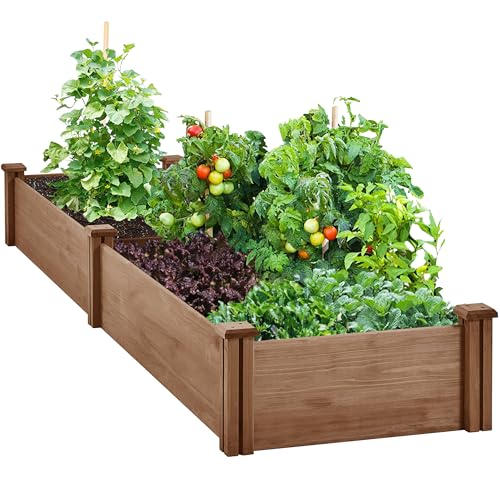
The Yaheetech 8x2ft Dark Brown raised bed is designed for two growing zones, with a removable baffle to switch between two separate plantings or to form a single larger bed. This configuration suits gardeners who want to rotate crops or separate vegetables from ornamentals. Best for medium-sized yards or patios where space is at a premium but depth is still sufficient for root crops. The upgraded corner posts increase slotting options, allowing multiple beds to be connected for a larger modular system. A potential limitation is that the bed’s height may require proper lifting or kneeling comfort for taller gardeners during assembly and ongoing maintenance.
- Divisible design allows two growing areas or a larger unified bed.
- Ample space for vegetables, flowers, and herbs.
- Upgraded corner posts with four-face slotting for flexible configurations.
- Best for buyers who want a scalable, modular garden layout.
SPECRAFT 8×4 Ft Open-Base Wood Raised Bed

The SPECRAFT 8×4 ft bed offers a deep 15-inch planting depth and a generous 44 cubic feet of soil space, making it well-suited for vegetables like lettuce and tomatoes or for vibrant flowers. Its open-base design promotes drainage, helping maintain soil moisture balance and root health. A central divider supports plant organization, while the mortise-and-tenon structure makes tool-free assembly possible in about 15 minutes. Choose this if you want a larger, deeply rooted planting area with straightforward setup; avoid this if you need built-in soil liners or extra weatherproofing not specified by the design.
- Large planting capacity for a variety of crops.
- Open-base drainage reduces waterlogging risks.
- Central divider helps organize multiple plantings.
- Best for buyers seeking quick assembly and ample space.
Yaheetech 8×2ft Natural Wood Raised Bed

This divisible bed mirrors the dual-zone concept in a natural wood finish. It supports two separate plantings and can be expanded or reconfigured as needed. It’s positioned as practical for vegetable, flower, or herb cultivation in patios, yards, and greenhouses, emphasizing flexibility and straightforward assembly with heavy-duty screws. Best for gardeners who want a versatile layout that can be easily adjusted, and for those who value a natural wood appearance. A potential caution is that long-term durability may depend on environmental exposure and maintenance practices.
- Two planting zones with removable baffle for flexibility.
- Suitable for vegetables, flowers, and herbs.
- Simple assembly with sturdy construction.
- Best for modular setups and rustic aesthetics.
Best Choice Products 48x24x30 Inches Raised Bed
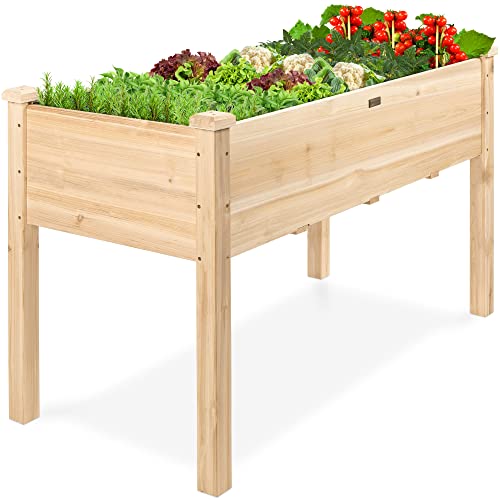
This all-wood raised bed from Best Choice Products provides a broad, 5 cubic feet planting space. Its design emphasizes proper drainage to protect roots and prevent mineral buildup, with Chinese fir wood selected for weather resistance. The longer, low-maintenance bed is suitable for a wide range of crops and decorative plantings, making it a versatile choice for backyards, patios, or balconies. Buyers should consider space availability, as the larger footprint requires enough outdoor room to make full use of the bed’s breadth.
- Large planting space with good drainage.
- All-wood construction for durability in outdoors.
- Suitable for vegetables, herbs, and flowers.
- Best for buyers needing a robust, all-purpose bed.
Yaheetech 43.5″ L×16″ W×14″ H Bed

This rectangular bed offers a balanced footprint—ample inner space while remaining compact enough for tight spaces. It features solid fir wood with a rustic finish and decorative grooves for a natural aesthetic. It’s well-suited for salads, herbs, and compact flower beds. A limitation to consider is its moderate height, which might be less comfortable for gardeners who prefer taller beds or for heavy-watering crops that demand more soil depth.
- Generous inner space in a compact footprint.
- Solid fir wood with a rustic finish and moisture retention.
- Open-ended design helps prevent over-watering and supports healthy root growth.
- Best for compact urban gardens and herb beds; avoid if you need tall access.
Buying Guide: Wood Garden Planter Boxes
What planting space works best for me?
Consider the available yard or balcony area. Larger beds (like 8×4 ft or 8×2 ft divided beds) suit vegetables and mixed plantings, while compact beds are ideal for herbs and small flowers. Depth also matters: deeper beds support root vegetables and sturdier crops; shallow options are better for shallow-rooted plants.
Should I choose open-base or closed-base designs?
Open-base beds provide excellent drainage and air access, which helps prevent root rot and mineral buildup. Closed or closed-base options retain moisture differently and can be paired with liners for sensitive plants. Your climate and irrigation routine will influence this choice.
How important is modularity and assembly time?
Modular, divisible beds offer layout flexibility for rotation and expansion, which is valuable for mixed crops. Quick, tool-free assembly helps you set up quickly and adjust configurations as gardens mature. If you plan frequent changes, prioritize beds with simple joinery and interchangeable parts.
What wood types should I expect and how will it hold up?
Fir, cedar, and other weather-resistant hardwoods are common. Look for natural, untreated wood if you want a rustic look and minimal chemical exposure, knowing that untreated wood may require maintenance to prevent weathering. Be mindful of local pests and humidity, which can affect longevity.
What maintenance is required?
Expect periodic sealing or staining for exposed woods, especially in wet climates. Ensure drainage is not blocked and check for loose screws or warped boards. Routine checks help extend the lifespan of your planter boxes and keep plants thriving.
Choosing the right product mix
For buyers seeking a balance of space, durability, and ease of assembly, prioritize beds with open bases and durable joinery. If you need a modular system to accommodate a rotating crop plan, select divisible designs. For decorative patios, consider a natural wood finish that complements outdoor aesthetics.
Frequently Asked Questions
- What is the typical height of these raised beds? – Heights vary; most range from about 9 to 30 inches, with larger models offering deeper soil for root crops.
- Are these beds easy to assemble without tools? – Many models advertise simple assembly with basic tools; check product details for tool-free setup notes.
- Can I connect multiple beds to form a larger garden? – Some beds feature modular or slotting designs that enable linking two or more beds.
- What plants are best suited for raised wooden beds? – Vegetables, herbs, and flowers generally thrive, especially in well-drained soil and proper depth.
- Do these beds require liners? – Liners are not universally included; consider liners if you need extra moisture retention or plant protection for certain crops.
- How long do wooden beds typically last outdoors? – Longevity depends on wood type, climate, maintenance, and exposure; regular maintenance extends lifespan.