Maintaining stable water quality is essential for a healthy aquarium. Quality test kits help hobbyists monitor pH, hardness, ammonia, nitrite, nitrate, and other critical parameters so problems can be addressed before they affect fish and corals. Below is a curated guide to five reliable water test kits that cover freshwater, saltwater, and reef setups, with a quick reference to what each kit tests and how it’s used.
| Product | Type | Key Parameters | Format | Notes |
|---|---|---|---|---|
| API FRESHWATER MASTER TEST KIT | Liquid reagents | pH, high range pH, ammonia, nitrite, nitrate | Test kit with bottles and color cards | Broad freshwater essential kit |
| API SALTWATER MASTER TEST KIT | Liquid reagents | High range pH, ammonia, nitrite, nitrate | Test kit with bottles and color card | Saltwater essential parameters |
| API GH & KH TEST KIT | Liquid reagents | GH, KH | Two bottles and test tubes | Alkalinity and general hardness focus |
| API pH TEST & ADJUSTER KIT | Liquid reagents | pH (adjustment included) | Test solution and pH adjusters | Simple pH management |
| API REEF MASTER TEST KIT | Liquid reagents | Calcium, carbonate hardness, phosphate, nitrate | Test kit with bottles and color cards | Reef-specific parameters |
API Freshwater Master Test Kit: Comprehensive Freshwater Monitoring

The API Freshwater Master Test Kit provides essential tools to monitor five key freshwater water parameters. It includes seven testing solution bottles, a color card, four test tubes, and caps for convenient testing cycles. This kit helps detect invisible water problems that can harm fish and contribute to losses, enabling proactive maintenance in home aquariums. Operators typically use it to track pH and ammonia changes, along with nitrite and nitrate levels, and to watch for deviations that indicate potential issues in the tank’s biofilter or feeding routine.
Usage tips: calibrate color charts against standard samples and follow the step-by-step directions for each parameter. Regular testing—especially during new tank setup or after water changes—improves observation accuracy and supports rapid corrective actions.
API Saltwater Master Test Kit: Core Reef‑Tank Parameters
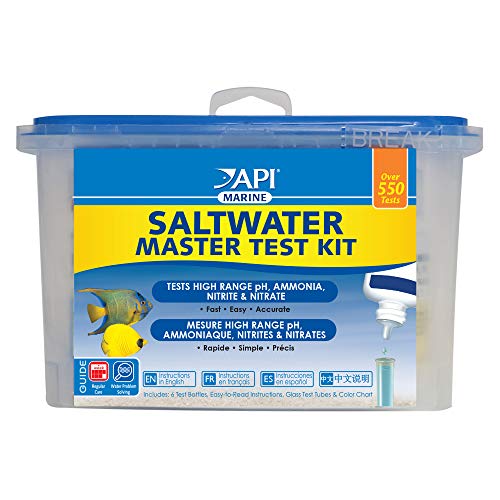
The Saltwater Master Test Kit focuses on four crucial saltwater parameters: high range pH, ammonia, nitrite, and nitrate. It gives reef enthusiasts and saltwater hobbyists a reliable way to monitor the water chemistry that can influence coral health and fish vitality. The kit includes all necessary testing solutions, a color card, and test tubes with caps for repeated use. Regular use helps detect ammonia spikes from overfeeding or inadequate filtration and monitors nitrate accumulation that can affect coral growth and fish behavior.
Best practice is to test after water changes and during feeding adjustments, keeping a log to observe trends over time. For reef tanks, pairing this kit with periodic calcium and alkalinity checks (via dedicated reef tests) offers a fuller view of the water chemistry landscape.
API GH & KH Test Kit: Tracking Hardness and Alkalinity

This kit provides a straightforward way to measure general hardness (GH) and carbonate hardness (KH) in freshwater aquariums. Accurate GH and KH readings support stable pH and help prevent stress on fish and plants sensitive to shifts in alkalinity. Included are two bottles of testing solution and two test tubes with caps, enabling consistent testing routines. Routine GH and KH checks are particularly important for planted tanks and environments with varying water sources, ensuring a predictable buffering capacity.
Practical use involves comparing results to optimal ranges for your species and gradually adjusting mineral content through appropriate water additives when needed. Record results to spot long-term trends rather than reacting to a single reading.
API pH Test & Adjuster Kit: Manage Aquarium pH
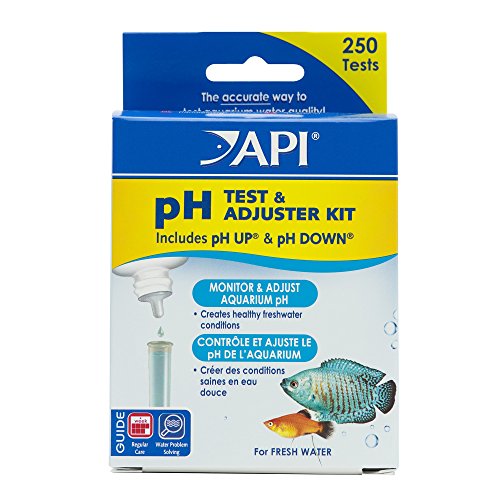
The pH Test & Adjuster Kit combines pH measurement with pH adjustment components to help stabilize aquarium pH. It includes one bottle of testing solution, two bottles of pH adjusters, a color card, and a test tube with cap. This kit is particularly useful for hobbyists managing tanks with soft water, coral propagation, or species that require tight pH control. By testing and making measured adjustments, aquarists can create a more stable environment that supports growth and reduces stress on fish and invertebrates.
Tip: use the adjusters gradually and recheck pH after each adjustment. A consistent routine—paired with water-change practices—helps maintain long-term stability.
API Reef Master Test Kit: Reef-Specific Water Parameters
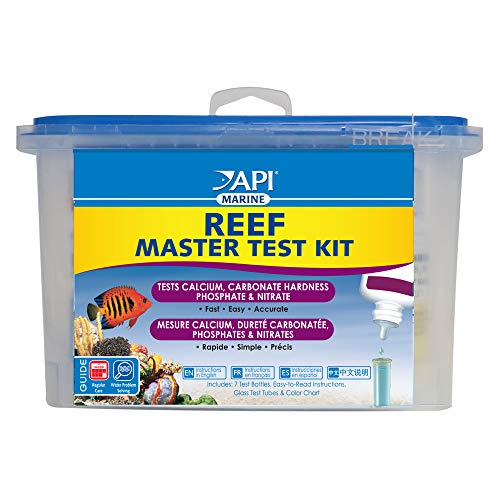
The Reef Master Test Kit focuses on calcium, carbonate hardness, phosphate, and nitrate in reef aquariums. These parameters are critical for coral growth and skeletal formation. The kit provides seven bottles of testing solutions, two color cards, and four test tubes with caps to conduct tests across multiple samples. Reef enthusiasts rely on this kit to detect shifts that could indicate nutrient imbalances or calcium drop-offs, enabling timely adjustments to supplementation regimens and feeding strategies.
For reef setups, it is common to supplement with calcium and alkalinity testing from dedicated kits, but the Reef Master Kit delivers the essential trio of calcium, carbonate hardness, and nutrients in one convenient package. Regular testing supports stable alk/Cal levels, which in turn supports coral health and overall tank stability.
Buying Guide: Key Considerations for Aquarium Water Test Kits
- Tank type and species: Freshwater, saltwater, or reef tanks require different parameter focus. Freshwater kits emphasize pH, ammonia, nitrite, and nitrate, while reef kits add calcium and phosphate monitoring.
- Testing format: Liquid reagent kits provide precise readings but require more handling, while test strips offer quick results with less effort. Choose based on accuracy needs and maintenance style.
- Number of parameters: Consider how many tests you need per session. Some kits cover 5–6 parameters, others focus on essential metrics. For complex tanks, using a combination of kits may be beneficial.
- Frequency of testing: New tanks or recently changed water demand more frequent checks. Established tanks benefit from routine, less frequent monitoring while still watching for spikes.
- Ease of use: Look for clear instructions, color charts, and a straightforward protocol. Color interpretation accuracy matters; some users prefer digital readers or color comparison cards with wide reference ranges.
- Cost per test: Evaluate long-term cost, including replacement solutions or strips. A kit with many tests upfront may reduce ongoing expenses.
- Potential interferences: Certain additives, tannins from wood, or lighting can affect readings. Follow guidelines and, if in doubt, validate results with an alternate kit.
- Maintenance and storage: Store reagents as directed and protect from light and moisture. Proper storage preserves accuracy and shelf life.
- Compatibility: If you mix water sources or have aggressive buffering systems, track both GH and KH alongside pH to maintain stability.
- Documentation: Keep a simple log of results and changes. Trend analysis over weeks helps identify issues before they escalate.