Choosing the right tree watering bag helps ensure deep hydration for large trees, promoting healthy root growth and reducing drought stress. The options below feature 20-gallon capacity and slow-release designs, ideal for mature trees and hot climates. This guide highlights five reliable products, with practical setup tips and objective performance notes to help you compare features like material toughness, fill times, and compatibility with different trunk diameters.
Summary of chosen products
| Product | Brand | Capacity | Pack/Count | Key Benefit |
|---|---|---|---|---|
| Tree Watering Bag, 20 Gallon Slow Release | PANGCH | 20 gallons | 3 Pack | Deep soil saturation; reduced watering frequency |
| Tanzfrosch 10 PCS 20 Gallon Bags | Tanzfrosch | 20 gallons | 10 bags | Easy multiple-bag setup for larger trees |
| KONIGEEHRE 20 Gallon Bags (5 Pack) | KONIGEEHRE | 20 gallons | 5 packs | Premium PVC, easy trunk wrapping |
| Tanzfrosch 12 Pack 20 Gallon Bags | Tanzfrosch | 20 gallons | 12 bags | Durable, large-capacity water delivery |
| VEVOR Tree Watering Bag Slow Release (4 Pack) | VEVOR | 20 gallons | 4 bags | Durable, wide compatibility for various trunks |
Tree Watering Bag, 20 Gallon Slow Release Bag (3 Pack)
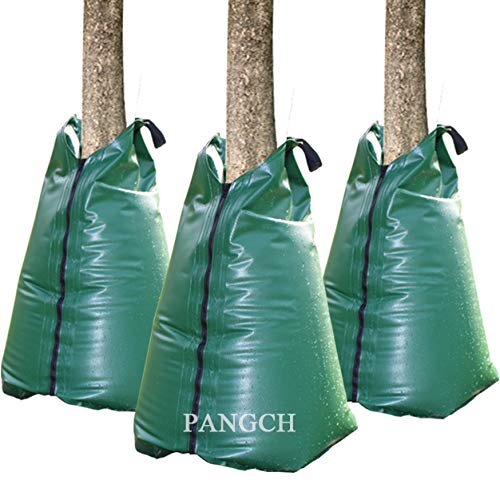
PANGCH offers a 20-gallon slow-release bag designed to saturate soil deeply, promoting robust root growth and helping mitigate transplant and drought stress. The bags claim to reduce watering frequency and labor costs compared with surface watering. Typical fill-to-empty time ranges from about 5 to 9 hours, but actual timing can vary with soil type, tree size, and weather. A commonly used guideline suggests about 10 gallons per week per inch of trunk caliper, though local adjustments are advised. This set includes three bags for versatile coverage around a single tree or multiple trees.
Tanzfrosch 10 Pieces 20 Gallon Tree Watering Bags

These 20-gallon bags are sold in a 10-pack and emphasize quick, easy installation by wrapping around the trunk and zipping shut. They’re designed for larger trees by allowing multiple bags to be zipped together for greater coverage. The bags are made from heavy-duty PVC tarpaulin with UV stabilization to resist sunlight. A wide fill hole accommodates standard hoses, and the built-in handles support long-term use. Ideal for drought-prone areas, they balance capacity with practical deployment for both new plantings and established trees.
KONIGEEHRE 20 Gallon Tree Watering Bags (5 Pack)
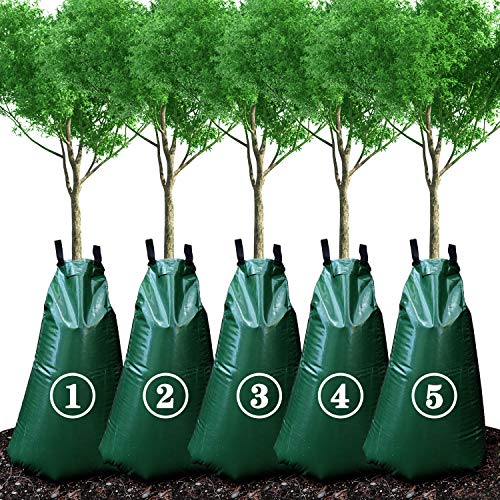
KONIGEEHRE’s set of five 20-gallon bags focuses on ease of use and durability. The bags wrap around trunks with a zipper closure and are designed to be used singly or paired for larger caliper trees. The PVC tarpaulin material is UV resistant, and the design includes a wide fill opening compatible with universal hoses. This option is favorable for homeowners managing multiple trees or larger specimens that require extended irrigation windows without frequent refills.
Tanzfrosch 12 Pack 20 Gallon Tree Watering Bags

This 12-pack from Tanzfrosch offers the same 20-gallon capacity with a focus on durability. The bags are UV-stable PVC tarpaulin and feature sturdy handles for long-term use. They are particularly well-suited for newly planted trees or those in hot climates where a longer release window helps maintain consistent moisture. The product notes that young saplings should be at least 25 inches from the ground and have a trunk diameter over 2 inches to ensure stable attachment when using multiple bags.
VEVOR Tree Watering Bag Slow Release (4 Pack)

VEVOR’s four-pack emphasizes a balance between capacity and durability. Each bag holds up to 20 gallons and slowly releases water over a typical 5–8 hour window, depending on conditions. The set includes bags designed to fit trees with different trunk diameters, making them suitable for both young trees and established specimens. The PVC material is described as weather-resistant and tear-resistant, with a wide fill hole that supports universal hoses for easy filling. This option suits homeowners wanting a reliable multi-tree irrigation solution.
ANPHSIN 12 Pack Slow Release Tree Watering Bags

ANPHSIN provides a 12-pack of 20-gallon bags crafted from premium PE material with sunlight-resistant coating. These drip irrigation bags are straightforward to use: place around the trunk, zip shut, connect a hose, and fill. They’re designed to be durable for long-term use and are positioned as a practical option for arid climates where saplings or newly planted trees require regular, controlled watering to maximize survival and growth during dry periods.
Buying Guide: Key Considerations For Large-Tree Watering Bags
- Capacity and release time: Most bags offer 20 gallons with a 5–8 hour release window. In hot or windy conditions, longer release times can improve root hydration, while cool or clay-rich soils may slow the process. Consider a mix of bags to cover different tree sizes and root zones.
- Durability and material: Look for heavy-duty PVC tarpaulin or premium PE materials that resist tearing and UV exposure. A sturdy seam and a wide fill opening facilitate easier filling and longer service life.
- Tree compatibility: Check trunk diameter ranges and recommended caliper sizes. Some bags are designed for 2″ to 4″ calipers, while others handle larger trunks by combining multiple bags around the trunk or using double-bag configurations.
- Ease of installation: Zipper closures, handles, and wide fill holes simplify setup, especially when filling with a standard garden hose. For larger trees, the ability to zip bags together offers flexible coverage.
- Maintenance and reuse: Reusability is important for year-to-year use. Inspect seals and seams for wear, especially after winter storage or heavy winds. Consider bags with reinforced seams to lower the risk of leaks.
- Watering strategy: Use bags to deliver deep irrigation rather than surface watering. A practical approach is to water 1–2 times per week, adjusting based on soil type, tree species, weather, and drought conditions.
- Cost and labor savings: While initial purchase costs vary, the long-term savings come from reduced labor and lower risk of transplant shock or dehydration-related issues for large trees.
Additional Notes on Usage and Best Practices
For large trees, place the bags evenly around the trunk to ensure uniform distribution of water to the root zone. In drought-prone seasons, consider a two-bag setup for trees with wider trunks to maintain consistent soil moisture without over-saturating any single area. When introducing new trees, begin with smaller trunk calipers and gradually scale to larger configurations as the root system develops. Regularly monitor soil moisture to fine-tune fill schedules and protect root health in varying conditions.