Tomato end rot is a common issue caused by calcium deficiency in fruit tissues. This guide highlights ready-to-use sprays and concentrates designed to supply calcium and prevent blossom-end rot, with clear guidance on who each product is best for. It’s ideal for home gardeners growing tomatoes, peppers, cucumbers, melons, and other calcium-sensitive crops. The following picks emphasize easy application, indoor/outdoor versatility, and proven calcium delivery methods to protect your crops from rot while supporting robust fruit development.
| Product | Best For | Form | Notes |
|---|---|---|---|
| Bonide Rot-Stop Tomato Blossom End Rot (32 oz) | Garden beds, outdoor tomatoes | Ready-to-use spray | Calcium chloride base; broad use on cucumbers, melons, peppers |
| Bonide Rot-Stop Tomato Blossom End Rot (16 oz) | Small gardens, indoor/outdoor use | Liquid concentrate | Same calcium delivery; concentrated for economical use |
| Southern Ag Stop Blossom-End Rot of Tomatoes (32 oz) | Outdoor tomato patches | Ready-to-use | Prevents and corrects calcium deficiency |
| Tomato Blossom End Rot Spray – Rot Rx (16 fl oz) | Home garden variety crops | Liquid spray concentrate | Fast-acting calcium; broad fruit coverage |
| Rot Stop Set (Rot-Stop + Tomato Blossom Set) | Comprehensive tomato garden protection | Two-pack | Rot-Stop plus Blossom Set spray for broader protection |
Bonide Rot-Stop Tomato Blossom End Rot, 32 oz Ready-to-Use Spray Garden Fertilizer for Calcium Deficiency in Plants

Best for: Outdoor tomato patches and other calcium-deficient crops in need of an easy, ready-to-use solution. This product corrects calcium deficiency by delivering nutritional calcium, primarily as calcium chloride, directly to plant tissues. It is suitable for tomatoes, cucumbers, melons, and peppers, making it a versatile option for mixed veggie beds. The 32-ounce size provides ample coverage for larger tomato plots with straightforward application, especially for gardeners who want a simple spray regimen without measuring concentrates.
Why selected: The ready-to-use format saves time and reduces the risk of incorrect mixing. It highlights a broad calcium-delivery approach that targets blossom-end rot at the source, while also being usable on other common garden crops prone to calcium deficiency. A potential limitation is that results depend on consistent application and adequate soil calcium availability; sprayer clogs or uneven coverage can reduce effectiveness in dense foliage.
Bonide Rot-Stop Tomato Blossom End Rot, 16 oz Concentrated Liquid Garden Fertilizer for Calcium Deficiency Indoors & Outdoors
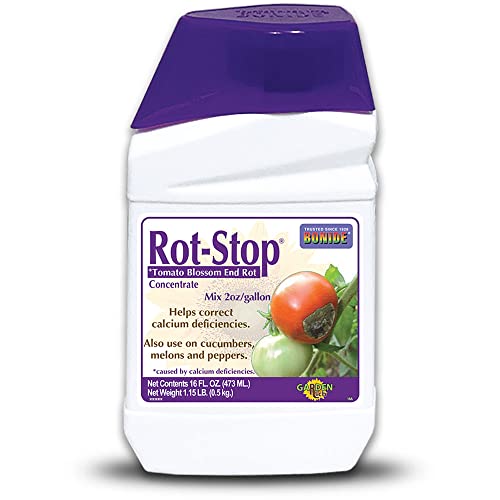
Best for: Gardeners who want a concentrated option for versatile dosing across multiple seasons or crop types. The 16-ounce concentrate targets blossom-end rot by supplying calcium to plants, with applicability indoors and outdoors. It’s designed to correct calcium deficiencies in tomatoes and can also benefit cucumbers, melons, and peppers when used as directed.
Why selected: Concentrates often offer cost efficiency and long-term shelf life, making it a good fit for growers who already maintain spray equipment and prefer tailoring application strength. A caution: concentration requires precise mixing according to label instructions to avoid over- or under-application, which can impact plant health and rot prevention.
Southern Ag Stop Blossom-End Rot of Tomatoes, 32oz – 1 Quart
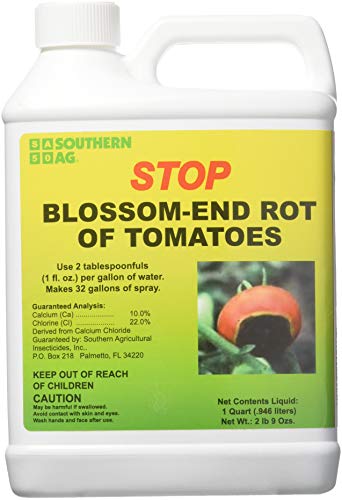
Best for: Outdoor tomato beds where a preventative approach is preferred. This product helps prevent blossom-end rot caused by calcium deficiency and can correct existing issues in many cases. It targets calcium delivery to reduce end rot risk in tomatoes while remaining suitable for cucumbers and peppers when used as directed.
Why selected: Its emphasis on both prevention and correction offers flexibility for growers facing varying rot risk. A potential limitation is that, like all calcium-applied products, consistent coverage and timing matter; delays in application after symptoms appear may limit effectiveness.
Tomato Blossom End Rot Spray – Rot Rx Garden Spray Concentrate for Calcium Deficiency

Best for: Gardeners seeking a fast-acting solution with broad fruit coverage. Rot Rx is a 16-ounce spray concentrate designed to stop blossom-end rot by delivering calcium quickly to plant tissues, supporting tomatoes, peppers, cucumbers, melons, and other susceptible crops. It provides a quick absorption formulation aimed at protecting fruit development.
Why selected: The emphasis on rapid calcium delivery helps address active rot and prevent progression. A caveat: as a concentrate, users must mix correctly and ensure even foliar coverage for optimal results, particularly in dense plantings where spray drift can occur.
Set of 1 Tomato Rot Stop Spray and 1 Tomato & Blossom Set Spray

Best for: Gardeners who want bundled protection against blossom end rot and improved blossom set in tomatoes. This set provides one Rot-Stop spray and one Tomato & Blossom Set spray, allowing targeted calcium delivery plus additional bloom control to promote fruit set.
Why selected: The combination addresses both rot prevention and blossom development, which can lead to better yields. A limitation is the need to manage two product types; follow label directions for rotation between sprays to avoid over-application and ensure even coverage across the bed.
Buying Guide: How to Choose the Right Tomato End Rot Spray
What is the best form for you: ready-to-use spray or a concentrate? If you want quick results with minimal preparation, a ready-to-use spray (32 oz or 16 oz bottles) simplifies application. Concentrates are ideal for gardeners who plan to spray repeatedly or manage large plots, offering cost efficiency per use but requiring accurate mixing and measurement.
Is indoor or outdoor use a priority? Some formulas are explicitly labeled for outdoor garden beds, while others emphasize flexibility for indoor or greenhouse settings. If you grow in containers or in a greenhouse, confirm compatibility with your growing environment and sprayer equipment.
What crops will benefit beyond tomatoes? A number of these products also support cucumbers, peppers, melons, and other calcium-sensitive crops. If you plant a diverse vegetable patch, selecting a product with broader applicability can simplify maintenance.
How important is fast action? For growers facing visible blossom-end rot, a fast-acting formula that delivers calcium quickly to plant tissues may be preferable. Concentrates or formulations marketed as “fast-acting” often claim quicker absorption and quicker visible improvement, but check label guidelines for exact timelines.
What about dosage and timing? Always follow label directions for timing, frequency, and dosage. Calcium deficiency can be influenced by soil conditions, watering patterns, and temperature; some products are best applied at specific growth stages (pre-bloom, pre-fruit set, or during fruit development). Consistent monitoring of fruit health and soil calcium can enhance results.
How to Apply and Monitor
Apply sprays according to the product label, ensuring even coverage on leaves and developing fruit. Reapply as directed after heavy rainfall or according to maintenance schedules. Keep records of application dates and observed fruit health to track effectiveness and adjust timing as needed.
FAQ
- What causes tomato blossom-end rot? Calcium deficiency in developing fruit tissues is the primary cause. Environmental factors like irregular watering and rapid soil calcium fluctuations can worsen it.
- Can I use these sprays on other crops? Yes. Many products listed are suitable for cucumbers, melons, and peppers in addition to tomatoes, depending on label directions.
- Should I use a spray if I don’t see rot yet? Prevention can be effective; applying before signs appear can reduce risk, especially in periods of high fruit set or heat stress.
- Is a concentrate better than a ready-to-use spray? Concentrates are cost-efficient over time and useful for frequent applications; ready-to-use sprays are convenient for quick, single-step treatments.
- How often should I apply these products? Follow product-specific guidelines. Typically, applications occur during fruit development or after rainfall, with adjustments for local climate and soil conditions.
- Will these sprays cure existing rot? They can halt progression and support healthier new growth, but severe, extensive rot may already require crop removal and soil assessment.