Healthy plants start with clean, balanced water. Tap water often contains chlorine, chloramines, heavy metals, and pH swings that can stress roots and hinder growth. The following hand-picked conditioners reduce or neutralize these elements, helping houseplants, hydroponics, and garden setups thrive. Each product has practical use for plant care, with notes on concentration, coverage, and application. Use these options to improve root development, nutrient uptake, and overall vigor without relying on guesswork or constant replacements.
| Product | Brand | Used For | Approx. Treated |
|---|---|---|---|
| Southside Plants Tap Water Conditioner | Southside Plants | Houseplants, Hydroponics, Ponds | Up to 200 gallons |
| Cute Farms Tap Water Conditioner | Cute Farms | Houseplants, Hydroponics, Irrigation | Up to 320 gallons |
| OneDose Tap Water Conditioner for Plants | OneDose | Tap water for plants | Depends on dosage per gallon |
| API Tap Water Conditioner (16 oz) | API | Aquarium water, ponds (where plant roots contact water) | 1 bottle treats many gallons |
| API Tap Water Conditioner (4 oz) | API | Small volumes for plants needing conditioned water | Small batch coverage |
Note: Some conditioners are marketed for aquatic life but can also improve water quality for potted plants or hydroponic systems by reducing chlorine, chloramines, and heavy metals. Always follow label directions for safe, effective use with plants.
Southside Plants Tap Water Conditioner

Brand: Southside Plants
Product from the line designed to neutralize chlorine and chloramines while buffering pH for safer water use in plant care. Features indicate it dissipates harmful chemicals before soil contact and supports robust growth. The formula is applied by adding 1/4 capful per gallon of tap water, with an 8-ounce bottle claimed to treat up to 200 gallons, making it suitable for both houseplants and hydroponic systems. The product also notes suitability for ponds and aquariums as a broad water conditioner option.
Cute Farms Tap Water Conditioner

Brand: Cute Farms
This conditioner targets chlorine, chloramines, and heavy metals to improve water quality for plant growth. It emphasizes easy, long-lasting application—just 1/4 capful per gallon—and claims coverage up to 320 gallons, making it a cost-efficient option for households with multiple plants or larger hydroponic setups. Intended outcomes include healthier roots, taller growth, and more vibrant foliage by ensuring plants receive cleaner water and reducing common water-related stressors.
OneDose Tap Water Conditioner for Plants
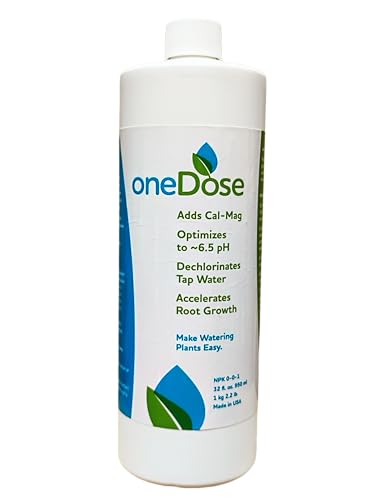
Brand: OneDose
The OneDose formula aims to improve plant water by adding essential calcium and magnesium, lifting municipal tap water to approximately 100 ppm Ca and 25 ppm Mg. It supports stronger cell walls and improved nutrient uptake, while neutralizing chlorine and chloramines without forming formaldehyde or ammonium. Marketed as suitable for tap water, RO water, or filtered water, it targets common nutrient deficiencies and aims to stabilize pH for healthier root systems.
API Tap Water Conditioner 16-Ounce

Brand: API
Contains one 16-ounce bottle designed to neutralize chlorine, chloramines, and other chemicals to make tap water safer for fish and aquatic life. While primarily marketed for aquariums, the product can be relevant for cultivators using water features or hydroponic setups connected to fishless systems, reducing stress from tap water chemicals that could affect plant roots through water transport channels.
API Tap Water Conditioner 4-Ounce

Brand: API
This compact bottle provides the same core function—neutralizing chlorine and chloramines to make tap water suitable for aquatic life—and can be handy for small plant-care tasks where minimal volumes are used. It offers a simple, quick way to condition water in small grow boxes, terrariums, or isolated plant experiments requiring steady water quality.
API Fishcare 52Q Tap Conditioner 32-Ounce

Brand: API
A larger 32-ounce bottle designed to neutralize chlorine, chloramines, and other chemicals in tap water to make it safe for fish. While primarily an aquarium product, its chemistry can be applicable in hydroponic or water feature contexts where plant roots might interface with conditioned water. The product emphasizes protection against gill damage and tissue irritation in aquatic life as a proxy for clean water quality in plant systems dependent on consistent water quality.
Buying Guide: Key Considerations For Choosing A Plant-Focused Tap Water Conditioner
- Plant compatibility: Verify whether the product is specifically labeled for plants or is primarily an aquarium conditioner. Plant-focused formulas often emphasize pH stabilization and mineral balance aligned with plant uptake.
- Concentration and coverage: Consider how much water you need to treat and the product’s per-gallon dosage. Higher-concentration formulas can treat more water with fewer applications, reducing cost and handling.
- Chlorine and chloramine neutralization: Most conditioners eliminate chlorine and chloramines, which helps protect roots from chemical stress. Chloramine-neutralizing formulas are preferable if your municipal water uses chloramines.
- Heavy metals and impurities: Some conditioners address heavy metals that can affect plant health. Look for products that specify metal reduction to support robust root systems.
- pH buffering and stability: A conditioner that buffers pH helps maintain a stable growing environment, reducing the need for frequent pH adjustments in soil or soilless media.
- Application method: Consider whether the product requires mixing per gallon, direct addition to water storage, or integration into hydroponic reservoirs. Easy-to-use dosing saves time and reduces errors.
- Safe use with aquariums and water features: If you also manage aquatic life or decorative ponds, choosing a multi-use formula can simplify inventory, but ensure compatibility with your plant setup.
- Cost per gallon treated: Compare bottles and concentrations to determine long-term value, especially for larger plant collections or frequent water changes.
- Ingredient transparency: Look for clear ingredient lists and reputable brands to ensure the product meets safety and regulatory expectations for household use.