Choosing the right sun shade can protect greenhouse plants from scorching light while maintaining airflow. The following five shade cloths are selected for durability, shading efficiency, and ease of hanging. Each offers different shade rates, fabrics, and installation options to fit various greenhouse sizes and climates. Read on to compare materials, UV protection, and wind resilience to help you pick the best sun shade for your greenhouse.
Summary of Selected Products
- Shade Cloth for Garden Plants Greenhouse, 40-50% Sunblock Netting — QLOFEI
- Glieskir 90% Blackish Green Shade Cloth, 6.5x10FT — Glieskir
- Cool Area 55% Shade Cloth Mesh, 6.5x10FT — Cool Area
- winemana 40% Black Shade Cloth, 20×20 FT — winemana
- Kesfitt Garden 50% Shade Cloth, 14x20FT — Kesfitt
Shade Cloth for Garden Plants Greenhouse, 40-50% Sunblock Netting

The QLOFEI shade cloth is designed to balance sun protection with airflow, promoting a cooler microclimate for greenhouse plants. Its high-density polyethylene (HDPE) fabric provides durability without sacrificing breathability, which helps prevent heat buildup during peak sun hours. The shade rate falls in the 40-50% range, offering versatility for seedlings, ornamentals, and fruiting crops that require partial sun. The fabric’s stretch capability keeps plants shaded evenly while resisting tears from wind or movement. Reinforced corners and grommets along reinforced edges enable straightforward hanging from hoops, fences, or framework.
Key benefits include adjustable shade coverage across seasons and environments. It blocks direct sun and heat while allowing essential air exchange and moisture escape. The design supports various configurations—from hoop houses to kennel or poultry enclosures—that may need to extend shade without fully blocking light. The lock-stitch knitting reduces unraveling, extending product life even under outdoor exposure. As with similar shade cloths, maintenance is simple: rinse with water and mild detergent if needed, then re-hang as required.
Considerations: assess your greenhouse’s sun exposure, wind patterns, and the ease of securing edges. If your climate experiences strong gusts, you might prefer additional tie-downs or edge reinforcements. This cloth works well when combined with drip irrigation to ensure plants receive adequate moisture while shaded.
Glieskir 90% Blackish Green Shade Cloth, 6.5x10FT

Glieskir’s 90% shading cloth provides substantial sun protection while preserving airflow, suitable for hot climates or intense greenhouse sun. The HDPE material is breathable and durable, with four sides reinforced by six-needle binding to resist tearing during heavy use. The fabric’s high shading rate is ideal for protecting sun-sensitive plants, seedlings, or newly potted specimens that require partial shade during peak hours. Reinforced corners and sturdy grommets along the edges enable flexible mounting across frames, fences, or shade nets.
This mesh tarp’s design emphasizes wind resistance and water drainage, helping plants stay cooler during bright days and reducing excess heat stress. The cloth is breathable enough to support photosynthesis while limiting direct sun exposure. When watering, the cloth typically stays in place, and the shading effect remains consistent, improving plant vigor over time. It is suitable for greenhouses, chicken coops, pergolas, and other outdoor shelters where shade consistency matters.
Practical notes: verify that your greenhouse’s frame spacing accommodates the 6.5x10FT size. If needed, combine multiple units for larger areas. Regular inspection of grommets ensures ongoing secure mounting in windy conditions.
Cool Area 55% Shade Cloth Mesh Tarp, 6.5x10FT

This Cool Area shade cloth offers a 55% shading rate using 100% new HDPE fabric, prioritizing durability and longevity. The cloth is designed to withstand heat and environmental stress, with a service life advertised at two to three years and a focus on lack of recycled materials. Its installation is straightforward, with included aluminum buckles and simple fixings like zip ties or rope. The material balances sun protection with air circulation, making it suitable for gardens, pergolas, greenhouses, and kennels where consistent shading is necessary without completely blocking airflow.
Considerations include the cloth’s weight and wind resistance; heavier fabrics may require additional anchoring in exposed sites. Its water resistance and permeability ensure that irrigation remains feasible without removing shade. The product’s light weight makes temporary shading options practical for seasonal changes or temporary structures.
winemana 40% Black Shade Cloth, 20×20 FT

Winemana’s shade cloth provides a balanced approach with 40% shade while maintaining airflow for greenhouse climates. The 20×20 FT size offers a broad coverage area suitable for larger greenhouse sections, patios, or garden beds. The fabric is HDPE, lightweight yet durable, designed to resist tearing and tearing during frequent handling. The product markets itself as suitable for greenhouses, garden beds, chicken coops, and livestock shelters, providing shade, heat reduction, and some anti-freeze benefits in cooler months.
With a focus on durability, the cloth employs a lock-stitch knit to prevent unraveling and strengthen edges. The included reinforced corners and grommets simplify hanging across frames, ensuring a secure setup even in windy locations. Fast setup enables quick shade adjustments as seasons shift. For best results, pair with proper irrigation and adequate venting to maintain plant health and humidity balance.
Practical guidance: for large installations, consider sectioning the shade cloth with separate hanging points to distribute load evenly and reduce edge wear over time.
Kesfitt Garden 50% Shade Cloth, 14x20FT
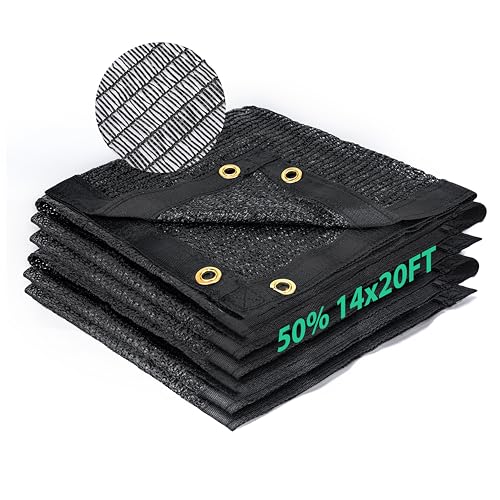
Kesfitt’s 14x20FT shade cloth provides a 50% shading rate, delivering a balanced sun protection option for greenhouse environments with moderate sun. The HDPE material is UV-protected and designed to resist fading, while reinforced edge stitching and copper grommets bolster durability at the mounting points. The mesh design promotes air flow, helping maintain plant cooling during hot afternoons and enabling safe watering without removing shade. The large size allows covering substantial greenhouse sections or multiple planting rows with a single cloth.
Edge reinforcement and robust grommets are key to long life, especially in windy areas. The mesh structure supports quick water drainage during rain events and reduces water pooling on the cloth. For best results, install higher along the frame to maximize shade evenly across beds and avoid shading one side more than the other. Compatibility with various tying methods (zip ties, rope, or hooks) makes mounting flexible across different greenhouse architectures.
Buying Guide: Key Purchase Considerations For Greenhouse Shade Cloths
- Shade rate: Determine how much sun you want to block (e.g., 40%, 50%, 55%, or 90%). Higher rates suit very sunny climates or delicate plants; lower rates suit seedlings and heat-sensitive crops.
- Material and durability: Look for HDPE fabrics with UV protection and reinforced edges. Strong grommets and stitching extend life under wind and weather.
- Ventilation and water permeability: Choose cloths that allow airflow and water passage where you irrigate directly, to maintain photosynthesis and prevent excess humidity.
- Size and coverage: Measure greenhouse dimensions to select cloths that cover required areas. Larger sizes reduce seams but require more mounting hardware.
- Installation: Consider ease of hanging, edge reinforcements, and compatibility with your frame style (hoops, cables, or walls).
- Weather resilience: For exposed locations, seek wind-reinforced designs and consider securing methods to resist gusts and temp fluctuations.
- Maintenance: Look for machine-washable or easy-clean fabrics and understand recommended storage when not in use.
- Multi-use compatibility: Some cloths work for kennels, chicken coops, pergolas, and greenhouses. If you use adjacent shelters, matching shade cloths simplify management.
- Cost vs. lifespan: Compare price per square foot against expected service life and maintenance needs to estimate long-term value.