Choosing the right fertilizer for St. Augustine grass in the heat of the summer helps maintain a lush, green lawn while supporting drought resistance and weed suppression. The products below are tailored to St. Augustine varieties and southern climates, highlighting balanced NPK blends, weed control, and slow-release formulations. This guide compares five top options to help you select a summer-ready fertilizer that fits your lawn’s needs and maintenance style.
Product Summary
| Product | Type | Key Benefit | Coverage (approx.) |
|---|---|---|---|
| Advanced 16-4-8 Balanced NPK (Simple Lawn Solutions) | Liquid lawn food | Greening, growth, seaweed & fish nutrients | Varies by spray application |
| Scotts Turf Builder Lawn Food | Granular fertilizer | Strong roots, better water/nutrient absorption | Up to 5,000 sq ft |
| Fertilome St. Augustine Weed & Feed 15-0-4 | Pre/post-emergent weed control with fertilizer | Weed control plus essential nutrients | 12.8 lbs coverage |
| Sunniland Weed & Feed 20-0-6 | Granular weed and feed | Easy spreading, spring and fall applications | 5,000 sq ft |
| Lesco 50 lb St. Augustine Weed and Feed | Slow-release fertilizer with herbicide | Long feeding up to 8 weeks, Floratam safe | Large coverage |
Advanced 16-4-8 Balanced NPK – Lawn Food (Simple Lawn Solutions)

The 16-4-8 liquid fertilizer delivers a complete NPK formula with seaweed and fish nutrients to support greening and growth. Its ready-to-use sprayer design makes application straightforward for summer maintenance. The product emphasizes high-quality feed-grade ingredients and simple usage, making it suitable for homeowners seeking quick, even coverage. For St. Augustine lawns needing steady nutrient delivery, a liquid option can improve uptake during hot months. Check your spray volumes to avoid oversaturation on stressed turf.
Scotts Turf Builder Lawn Food

Scotts Turf Builder Lawn Food – Fertilizer for All Grass Types, 5,000 sq. ft., 12.5 lbs.
This product is designed to strengthen roots and improve the lawn’s capacity to absorb water and nutrients. It supports future resilience by building a robust root system, which is beneficial for hot, dry summers. Scotts formulations often emphasize dual-action benefits—nutrition plus protection against common lawn stress. For St. Augustine lawns in warmer climates, ensure you apply during appropriate growth periods and water adequately after application to minimize runoff and maximize uptake.
Fertilome St. Augustine Weed & Feed 15-0-4

Fertlome (13915) St. Augustine Weed & Feed 15-0-4 (12.8 lbs.)
The 15-0-4 formulation pairs weed control with essential nutrients tailored for St. Augustine, centipede, and some other warm-season grasses. Designed for use on lawns where weed pressure is notable, this product supports nutrient delivery while addressing unwanted vegetation. It’s not recommended for Bermuda or Northern grasses, so verify your grass type before use and follow label directions for best results in summer months.
Sunniland Weed & Feed 20-0-6 Lawn Fertilizer

Sunniland Weed & Feed 20-0-6 Lawn Fertilizer 5000 sq. ft. for St. Augustine
The 20-0-6 blend emphasizes weed control with a high-nitrogen focus for rapid greening. Easy to spread and handle, it supports two applications annually (spring and fall) aligning with common maintenance cycles. For summer needs, pair with consistent irrigation to promote nutrient uptake. Although it’s formulated for St. Augustine grasses, always match application timing to local climate conditions and turf health.
LESCO 50 lb St. Augustine Grass Weed and Feed
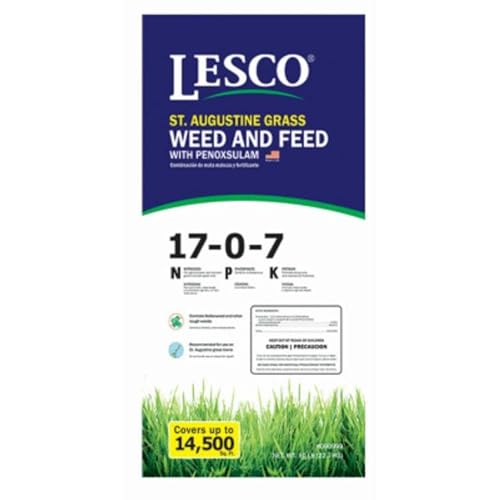
LESCO 50 lb St. Augustine Grass Weed and Feed with Penoxsulam
This product is a professional-grade option designed specifically for St. Augustine turf, with a slow-release formula that can feed the lawn for up to eight weeks. The blend includes herbicidal components to combat common weeds and is safe for Floratam varieties when used as directed. It requires careful application when turf is wet and may involve longer-term results. Consider soil conditions and recent rainfall patterns to optimize effectiveness during summer growth cycles.
Buying Guide
Key considerations when selecting a summer fertilizer for St. Augustine grass include nutrient balance, weed control needs, application method, and local climate. Below are factors to compare across products:
- Nutrient balance: Summer-appropriate blends often feature higher phosphorus and potassium to support root growth and heat tolerance, while nitrogen drives lush green growth. Decide between balanced NPK ratios (e.g., 16-4-8) versus weed-and-feed formulations (which combine herbicide with fertilizer).
- Weed management: If you battle broadleaf or grassy weeds, weed-and-feed options provide targeted control. Always verify weed compatibility with your turf type and avoid products not labeled for St. Augustine or Floratam varieties.
- Application method: Choose between granular fertilizers (slow-release or quick-release) and liquid formulas (quick uptake but often higher maintenance). Sprays can yield even coverage, while granular products may require more precise spreading.
- Soil and climate considerations: In hot southern summers, soil tends to dry quickly. Slow-release formulations help maintain steady feeding without burn, and watering practices significantly affect nutrient uptake. Consider your irrigation schedule and rainfall patterns.
- Coverage and lawn size: Match product coverage to your lawn size. Large lawns may benefit from higher-capacity bags, while small patches can be treated with concentrated blends or spot treatments.
- Grass type compatibility: St. Augustine varieties vary; confirm label suitability for Floratam or other St. Augustine cultivars to avoid damage.
- Application timing: Align with active growth periods in summer, typically when lawns are growing but not under extreme heat. Avoid mid-day applications in peak heat to prevent leaf burn.
For best results, follow label directions, water after application as recommended, and adjust based on lawn color, growth rate, and weed presence. Regular mowing height management and proper irrigation amplify fertilizer efficiency, helping St. Augustine grass maintain vigor through the hottest months.