Answering the demand for easier, less-bent planting, the stand-up seed planter category helps gardeners sow seeds with minimal back strain while maintaining consistent depth and spacing. This guide highlights five stand-up seed planters that are best suited for small-to-medium gardens, raised beds, or backyard plots. Each option targets a different need—adjustable depth, heavyweight durability, or ergonomic handling—so you can pick the one that aligns with your planting style and soil conditions.
| Product | Best For | Why It Stands Out |
|---|---|---|
| Seedling Transplanter, Stand Up Bulb Planter | Hands-free or back-friendly transplanting | Semi-automatic digging and seeding with long stainless steel handle and sponge grips. |
| LYNICESHOP Stand-Up Manual Seeder | Fast, adjustable sowing with multiple seed slots | Adjustable seed drop and depth; durable stainless steel and reinforced plastic. |
| Chapin 8701B Garden Push Seeder | Versatile seed types and precise row planting | Six seed plates, hopper capacity, and integrated marking and plowing features. |
| Jardineer Bulb Planter Tool Long Handle | Heavy-duty bulb and transplant work | Long handle, stainless steel blade, ergonomic grip for back relief. |
| Manual Stand-Up Seed Planter (SJXHRFXY) | Crops like corn and peanuts with adjustable seed count | 1–3 seeds per sowing position; adjustable depth and stainless steel build. |
Seedling Transplanter, Stand Up Bulb Planter

Best for gardeners who want to transplant seedlings or bulbs with minimal bending. This tool uses a long stainless steel handle and a semi-automatic process to dig a hole, drop in a seedling, and cover the soil. The design minimizes soil compression and helps protect delicate roots. The handle reduces strain for extended planting sessions, and the 304 stainless steel construction offers durability. Best for raised beds, potted plants, and beds with loose or well-tilled soil where quick, repeated transplanting is needed.
Who it fits: beginners who need a straightforward, back-friendly option and seasoned gardeners who plant many seedlings. Best for small to medium plots where transplanting is frequent and precision matters. A caution: avoid extremely dry or overly saturated soil, as soil consistency can affect the seedling drop and placement accuracy.
LYNICESHOP Stand-Up Manual Seeder

This standing planter is designed to boost efficiency by letting you sow from an upright position. It’s ideal for gardeners who want to reduce bending while increasing planting speed. The seeder features a sowing axle with multiple seed slots to control whether you drop 1, 2, or 3 seeds per hole and to adjust depth and handle height for various soil conditions. It’s built from stainless steel and reinforced plastic to resist rust and maintain reliable performance through seasons. Best for corn, peanuts, soybeans, and other row crops where precise seed spacing matters.
Who it fits: home farmers seeking faster sowing with adjustable seed counts and depths. Choose this if you want a durable, low-maintenance seed planter that adapts to different crops. Limitation: while versatile, the seed slot options may require deliberate calibration for very small or very large seeds.
Chapin 8701B Garden Push Seeder

Chapin’s push seeder offers complete row planting with a four-stage process: mark, prep, place, and cover. It supports up to 20 seed types with six interchangeable plates, accommodating vegetables from beets and radishes to cucumbers and peppers. The 1.5-liter hopper holds a decent seed supply, and the cushioned handles reduce fatigue during long planting sessions. Best for gardeners who grow a wide variety of vegetables and want a single tool to manage the entire seeding workflow. A caution: performance depends on seed size compatibility with the plates; some very small seeds may require manual adjustment.
Who it fits: urban gardeners and market gardeners who plant many varieties in straight rows. Choose this if you value a versatile, row-ready seeder that coordinates planting, spacing, and depth in one pass.
Jardineer Bulb Planter Tool Long Handle
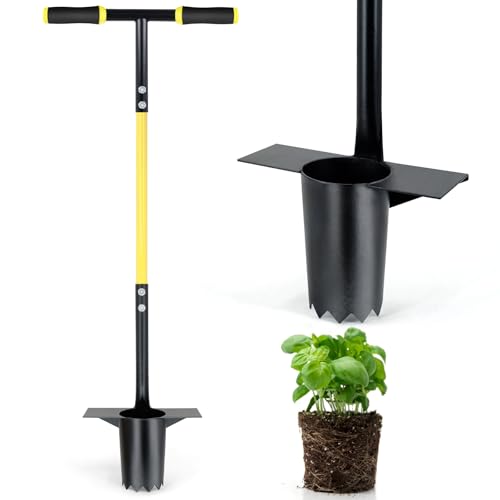
Designed for heavy-duty bulb planting, this long-handle tool features a sharp, tapered stainless steel blade to pierce soil with minimal effort. It provides clean holes for bulbs, transplants, and seedlings while resisting bending and wear in tough clay soils. The ergonomic, cushioned grip helps reduce strain on the back and knees, making it suitable for seniors or gardeners with mobility considerations. Best for bulb gardening, perennial beds, and landscapes where precision and root safety are essential. Limitation: primarily a bulb planter, so it may not replace a full seed-sowing planter for large-scale seedling work.
Who it fits: gardeners needing a durable, back-friendly tool for bulb planting, bulb transplants, and shallow-rooted crops. Choose this if your primary task is inserting large bulbs or seedlings rather than dense broadcasting.
Manual Stand-Up Seed Planter (SJXHRFXY)

This standing manual seed planter sows 1–3 seeds per hole at adjustable depths from 1.38 to 3.07 inches, designed for crops like corn and peanuts. It uses a stainless steel frame and plastic components to keep weight manageable while resisting rust. The adjustable seed sizes (0.12–0.59 inches) enable compatibility with different seed varieties, making it a flexible option for hill and plain fields alike. Best for larger-seeded crops or fields requiring accurate seed counts per hole. Caution: ensure seed size falls within the adjustable range for consistent results.
Who it fits: farmers and serious hobby growers who prioritize adjustable planting density and depth for specific crops. Choose this if you need a rugged, depth-tuned tool that can handle multiple seed types in uneven terrains.
Buying Guide: Stand-Up Seed Planters — Key Considerations
- What crops will you plant? Select a model with seed plates or adjustable drop settings that match your crops (corn, beans, radishes, bulbs, etc.).
- How much back support do you need? Long-handled or stand-up designs dramatically reduce bending; check handle height and balance.
- Soil conditions matter. For hard clay or compacted soil, choose a robust steel blade or heavier construction; for loamy soil, lighter models may suffice.
- Adjustability and versatility. If you grow many crops, a multi-plate or adjustable-depth planter can save time and space in your shed.
- Maintenance. Look for corrosion-resistant materials (stainless steel, powder-coated frames) and simple disassembly for cleaning.
- Ease of use. Consider models that offer straightforward setup, particularly if you plant frequently or with family members who are new to gardening.
Frequently Asked Questions
- Are stand-up seed planters easier to use than traditional trowels? Yes, they reduce bending and provide consistent seed placement, which can improve germination uniformity.
- Can I plant a wide range of crops with a single stand-up planter? Some models offer adjustable depth and seed-count options, but many are crop-specific. Check compatibility before buying.
- Do these planters require a lot of maintenance? Generally low-maintenance; stainless steel parts resist rust, but clearing soil and debris after use helps longevity.
- What soil types are best for stand-up planters? Loamy soils are easiest to work with; very hard or very sandy soils may require models with stronger blades or different seed-dish configurations.
- Is it worth paying more for a premium model? If you plant frequently, have back issues, or grow a variety of crops, a versatile, durable model can be cost-effective over time.
- Can these tools be used for raised beds and in-field rows? Yes, most models are designed for raised beds, garden rows, and field plots with minor adjustments for seed spacing.