Looking for a durable stainless steel pitch fork that can handle tough soil, compost, and root work? This guide highlights five strong options suited to different garden sizes and tasks. Each pick is evaluated for longevity, ergonomics, and practicality so you can choose confidently for weeding, turning compost, or preparing beds. The top choices are ideal for serious vegetable gardeners, landscapers, or DIY compost hobbyists who want a reliable tool that lasts years.
| Product | Best For | Why It Stands Out |
|---|---|---|
| Eadwiella Pitchforks for Gardening | Heavy-duty tasks and long-term use | All-metal construction with D-handle for leverage; rust-resistant, over-welded tines for strength |
| Berry&Bird Garden Digging Fork, 37.4″ | Light to medium chores, comfortable long handle | Ash wood handle, ergonomic D-grip, highly durable stainless steel |
| Berry&Bird Gardening Digging Fork, 43.9″ | General cultivation and aerating in larger beds | Long 43.9″ reach with sturdy 4-tine steel head and ergonomic wooden handle |
| VNIMTI Garden Fork, 45″ | Versatile, daily garden use | 4-tine steel design with durable Y-grip and wooden handle, prepared for hard soil |
| AugFir Pitchfork for Gardening, 50″ | Heavy-duty professional use | Ten-tine reinforced stainless steel, long 50″ shaft, reinforced welds for control |
Eadwiella Pitchforks for Gardening

The Eadwiella digging fork uses a strong stainless steel construction for tines and a rust-resistant head. It is designed to handle moist soil, manure, and other challenging materials, with each tine over-welded to the crossbar to prevent snapping. This makes it a solid choice for heavy-duty composting, turning soil, and root work in dense beds. The 43-inch length and D-grip ash handle provide leverage for lifting and turning heavier loads.
Best for: Gardeners who need a robust tool for compost manipulation, root lifting, and soil prep in medium to large beds. The design focuses on long-term durability and postural efficiency, reducing the need to bend for extended tasks.
Limitations: The tool’s weight and length may be less maneuverable in very small spaces or raised beds with tight clearance. Users with smaller frames may prefer a shorter model for compact tasks.
Berry&Bird Garden Digging Fork, 37.4″
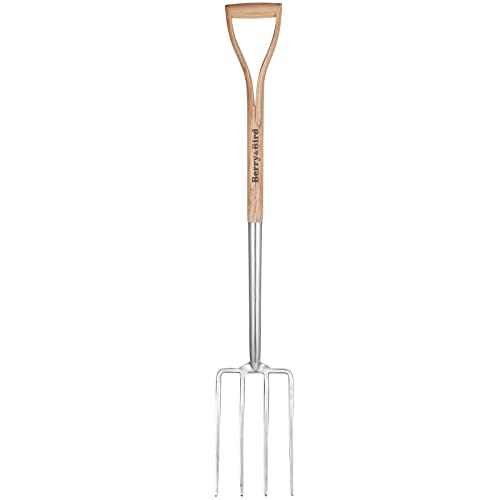
This Berry&Bird digging fork combines a long ash wood handle with a 4-tine stainless steel head. The ergonomic D-grip reduces wrist strain during extended use, and the stainless steel is polished to resist dirt adhesion and clean up easily. The tool is designed for all-around gardening tasks, including loosening soil, mixing organic material, and turning compost. The 37.4″ length makes it a versatile choice for medium-height gardeners and raised-bed work.
Best for: Gardeners seeking a classic, durable instrument for general cultivation and compost incorporation without excessive length. The ash handle and ergonomic grip help reduce fatigue on longer sessions.
Limitations: While durable, its 37.4″ length may be less suitable for very tall users who require more reach on distant beds or deep compost piles.
Berry&Bird Gardening Digging Fork, 43.9″
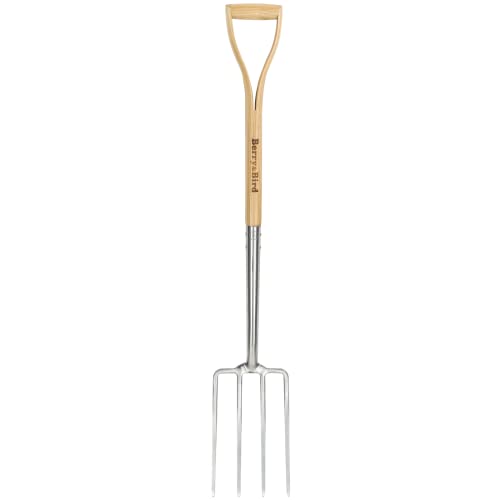
The 43.9″ Berry&Bird digging fork extends reach for large beds while providing a sturdy 4-tine stainless steel head. The long ash wood handle and ergonomic D-grip help maintain a comfortable stance during prolonged sessions, with a focus on reducing wrist and back strain. It excels in soil turning, aeration, and breaking up clumps in dense soil and compost materials.
Best for: Users who work across broad garden beds and need extended reach along the length of the bed without sacrificing control. The pair of long handles is suited for gardeners who perform frequent turning and aeration tasks.
Limitations: The longer length may be unwieldy in compact planters or tight corners where shorter tools perform better.
VNIMTI Garden Fork, 45″

The VNIMTI 45″ garden fork emphasizes a sturdy 4-tine design with a steel Y-grip and a wooden handle. Its description highlights resilience in hard soil and rocky environments, suggesting it can withstand regular use in demanding conditions. The Y-grip design is intended to offer durable control, while the wooden handle aims to balance weight and comfort for extended sessions.
Best for: Gardeners who balance daily cultivation with occasional heavy-duty tasks like breaking up compacted soil. The longer shaft helps reduce bending and provides leverage for bigger loads.
Limitations: The tool description notes a focus on strength, but users should be mindful of proper technique to prevent fatigue if unfamiliar with longer-handled tools.
AugFir Pitchfork for Gardening, 50″
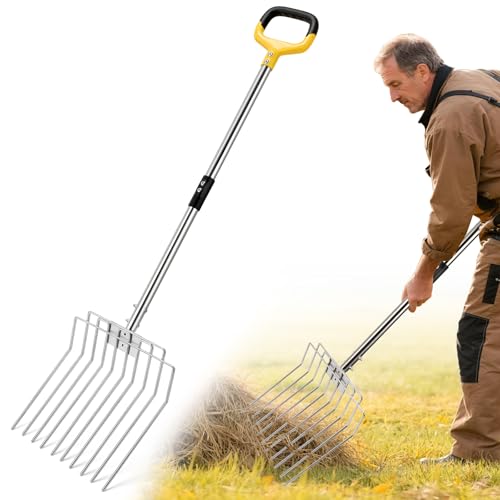
The AugFir pitchfork pushes the upper end of the scale with a 50-inch stainless steel build and a reinforced 10-tine design. The one-piece construction minimizes flex and bending, making it suitable for heavy-duty farm tasks, large compost turnovers, and root digging in tough soil. A high-density plastic handle with an anti-slip grip supports extended use, and the long shaft increases reach for tall users or extensive bed work.
Best for: Professionals or dedicated home gardeners who frequently tackle large-scale digging, compost turning, and soil remediation. The extended length and reinforced tines offer maximum leverage and durability.
Limitations: The longer shaft and heavier build may be less ideal for small-scale tasks or storage in tight spaces. Handle comfort is important for long sessions, so ensure a proper grip is maintained.
Buying Guide: How To Choose The Right Stainless Steel Pitch Fork
Key factors to consider when selecting a stainless steel pitch fork include length, tine configuration, handle design, and overall durability. Each dimension affects comfort, control, and performance across different garden tasks.
What length is best for you?
Shorter forks (around 37-45 inches) are easier to maneuver in small spaces and raised beds. Medium lengths (about 45-50 inches) offer a balance of reach and control for medium-to-large beds. The longest options (50 inches and up) maximize leverage and are better for tall individuals or expansive areas but can be heavier and harder to store.
How many tines and why?
Four-tine forks are the standard for general cultivation, aerating soil, and compost turning. Ten-tine forks provide more surface area for loose materials and broad soils but may be heavier and require more strength to manage. Consider your typical workload when choosing the tine count.
What about the handle?
Wooden handles (ash or beech) provide natural grip and comfort, especially with a D-grip or Y-grip design. Plastic or composite grips can offer durability and slip resistance, particularly in wet conditions. The shape and material influence fatigue and control over long sessions.
Material and construction?
Stainless steel tines resist rust and corrosion, which is essential for moist soil and compost work. A one-piece or over-welded construction reduces the chance of loosening joints and snapping tines. Look for tools with reinforced connections and rust-resistant heads.
What tasks will you tackle most?
For heavy-duty compost turning, root lifting, and dense soil, prioritize long reach, solid construction, and a comfortable grip. For light cultivation and smaller plots, a shorter model with ergonomic design might be preferable to reduce fatigue.
Quick comparison at a glance
- Best for heavy-duty use: AugFir Pitchfork (50″, 10-tine, reinforced, long reach)
- Best value for general gardening: Berry&Bird 43.9″ or 37.4″ variants (durable stainless steel, ergonomic handles)
- Best for straight compost turning and soil prep: Eadwiella (43″ with robust tines and D-handle)
- Best for medium to large beds: VNIMTI 45″ (durable build with wooden handle)
Maintenance tips
- Rinse off soil after use and dry to prevent rust in non-stainless areas.
- Wipe metal surfaces with a light coating of oil to protect against moisture.
- Inspect tines and joints for signs of wear and tighten or replace as needed.
FAQ
- Q: Should I choose a longer or shorter pitchfork for raised beds?
A: Raised beds often benefit from mid- to long-length forks (around 37-50 inches) for posture-friendly use and leverage while turning soil or mixing compost. - Q: Are stainless steel forks better than carbon steel?
A: Stainless steel resists rust and is easier to clean, which is advantageous for moist soil and compost handling. Carbon steel can be strong but may require more maintenance to prevent rust. - Q: Is a 4-tine fork suitable for compost?
A: Yes. A 4-tine design provides balanced soil penetration and lifting for most composting tasks. Heavier-duty needs may justify additional tines. - Q: How important is the grip type?
A: Grip design affects comfort and fatigue. D-grip and Y-grip handles with ergonomic shaping are typically easier to control during longer sessions. - Q: Can these tools break under heavy use?
A: Durable models use reinforced welds and robust tines to resist bending. Always follow proper technique and avoid overloading the fork when lifting very dense material.