Solar aeration is a practical, low-maintenance way to keep large ponds healthy by boosting dissolved oxygen for fish, plants, and beneficial bacteria. This guide highlights top solar pond aerators designed for larger water features, focusing on battery backup, multiple operating modes, and reliable solar performance. Explore five strong options and learn how to choose the right system for year-round aeration, weather resilience, and low ongoing costs.
| Product | Brand | Power | Key Benefit |
|---|---|---|---|
| 8W Solar Pond Aerator | POPOSOAP | 8W | Dual power, 24H continuous aeration with three modes |
| 15W Solar Pond Aerator | POPOSOAP | 15W | Two outlets, 4400mAh battery, 3 modes, power display |
| 4W Solar Pond Aerator | POPOSOAP | 4W | Separated panel design, 2200mAh battery, three modes |
| 15W Solar Aerator | Lewisia | 15W | Large solar collector, built‑in 4400mAh battery |
| 3W Solar Pond Aerator | NFESOLAR | 3W | All‑in‑one unit, 2200mAh backup, 3 modes |
In the sections below, each product is presented with a concise overview, its primary features, and how it fits larger ponds or mixed-use water features. The focus is on reliability, ease of setup, and long-term energy savings.
POPOSOAP 8W Solar Pond Aerator

The 8W model provides solar and battery backup, enabling 24-hour aeration with uninterrupted operation as daylight shifts to night. Three working modes adapt to seasonal needs and pond load, including a strong bubble setting for heavier oxygen demand and a softer mode for calmer periods. Its dual power design helps ensure continuous oxygenation even during cloudy days, which is important for larger ponds with variable sun exposure.
POPOSOAP 15W Solar Pond Aerator

This higher‑power option features a 15W solar array, a 4400mAh built‑in battery, and two air outlets for more even oxygen distribution across larger volumes. It includes a power display for monitoring energy production and consumption, plus three modes to tailor aeration intensity. The upgraded solar cells provide strong energy conversion, supporting extended operation when sunlight is abundant and maintaining oxygenation at night.
POPOSOAP 4W Solar Pond Aerator

Designed with a separated solar panel for easy placement away from the pump, this model helps reduce wire exposure around water features. The built‑in 2200mAh battery offers reliable night‑time oxygenation, while three modes allow adjustment to seasonal and environmental conditions. Ideal for smaller to mid‑sized outdoor ponds adjacent to living spaces or wildlife habitats where safety and ease of use are priorities.
Lewisia 15W Solar Aerator

The Lewisia 15W unit combines a larger solar collector with a 4400mAh battery to sustain aeration after sunset, supporting continuous oxygenation for larger fish ponds. It offers three modes and emphasizes robust air output to meet higher dissolved oxygen demands. The higher wattage helps maintain performance during periods of cooler weather or reduced sunlight, which is common in seasonal climates.
Lewisia 30W Solar Pond Aerator
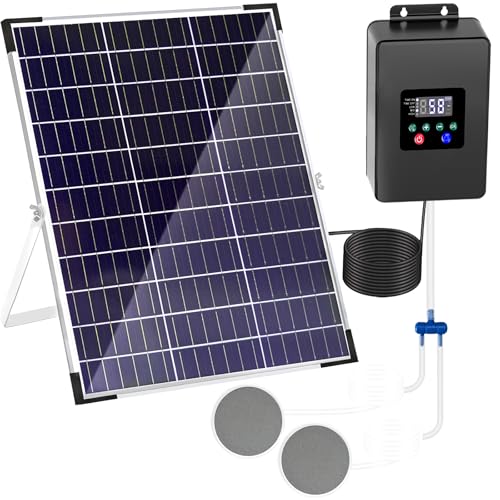
For very large or heavily stocked ponds, the 30W model with timer control provides scalable aeration. A larger solar panel supports extended daytime operation, while the timer helps manage energy use by running aeration in predefined intervals. This option is well suited for ponds that demand consistent oxygenation across seasons, including hydroponics setups adjacent to outdoor water features.
NFESOLAR 3W Solar Pond Aerator

The NFESOLAR unit focuses on compact, all‑in‑one design with 2200mAh battery backup and three operating modes. While lower in wattage, it remains a practical choice for smaller sections of a large pond or for supplementary aeration in larger water features. The all‑in‑one design simplifies deployment where wiring may be restricted or invasive to pond margins.
Buying Guide: Key Considerations For Large Ponds
- Power and coverage: Larger ponds require higher wattage or multiple outlets to achieve even aeration. Look for models with 12–30W equivalents or multiple outlets to distribute bubbles efficiently.
- Battery backup and runtime: A robust battery (typically 2200–4400mAh) extends aeration into nighttime and cloudy days. Consider expected runtimes for typical weather patterns in your region.
- Solar panel design: Separated panels offer flexible placement to maximize sun exposure and minimize water contact. All‑in‑one designs suit simpler installations but may require careful positioning to avoid shading.
- Modes and control: Three modes (strong, soft, cycle or intermittent) adapt to seasonal fish loads, water temperature, and plant growth. Intermittent modes can extend battery life during lengthy cloudy periods.
- Durability and noise: Look for models with weather‑resistant housings and low operational noise, especially if the pond is near living or outdoor seating areas.
- Maintenance and warranty: Check for easy access to parts such as air hoses, stones, and pumps. A reliable warranty helps safeguard long‑term pond health.
- Safety considerations: Separated panels reduce wiring risks. Ensure proper grounding and placement to avoid accidental contact with water and pets.
- Cost of ownership: While prices vary, solar aerators reduce energy costs over time. Consider the long-term savings alongside upfront investment and maintenance needs.
For large ponds, selecting a system with higher wattage, dual power options, and multiple outlets often yields the most consistent results. Systems with battery backup provide resilience during inclement weather, while models with timer controls can optimize energy use without compromising oxygen levels.
When evaluating options, align product features with pond size, fish load, plant presence, and local sun exposure. A staged approach—starting with a mid‑range 8–15W system and expanding as necessary—can offer a balanced path to reliable, year‑round aeration.