For bean crops, a quality soil inoculant can boost nitrogen fixation, improve root development, and support bigger harvests. The following picks are focused on legumes, offering a range of formulations from granular to powder and mycorrhizal blends. This guide compares key features to help American gardeners select an inoculant that fits their bean varieties, climate, and planting approach.
| Product | Brand | Key Benefit | Format |
|---|---|---|---|
| Nature’s Aid Garden Soil Inoculant | Park Seed | Enhances nitrogen fixation for beans, peas, and vetch | Granular |
| Legume Powder Inoculant | Mountain Valley Seed Company | Rhizobia blend for legume seeds and cover crops | Powder |
| Garden Inoculant For Peas And Beans | Papaw’s Garden Supply LLC | Attaches to roots to supply nitrogen | Powder/Pouch |
| Micronoc Seed Inoculant | Micronoc | Nitrogen-fixing bacteria plus soluble nutrients for seeds | Powder |
| Myco Bliss Powder | Plantonix | Five-strain mycorrhizal inoculant for improved nutrient uptake | Powder |
Park Seed Nature’s Aid Garden Soil Inoculant
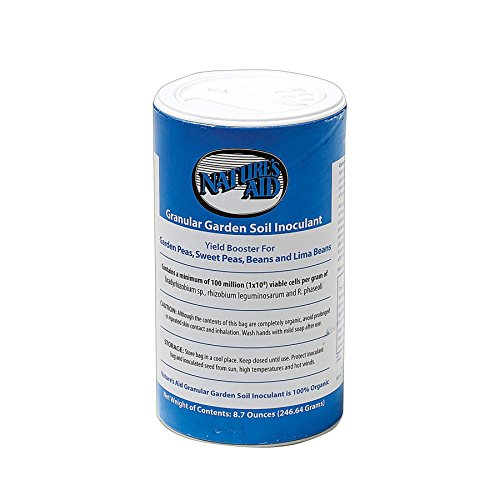
Park Seed’s Nature’s Aid Garden Soil Inoculant is formulated to boost nitrogen fixation in legumes, with a blend including bradyrhizobium sp., rhizobium leguminosarum, and R. phaseoli. This granular product is designed to be applied at sowing, delivering live nitrogen-fixing bacteria directly into the soil to support beans, peas, and vetch. Its dry format simplifies handling and reduces the risk of mess compared to liquids, making it a practical option for row crops and home gardens alike. The result is improved root development, vigorous foliage, and a more efficient nitrogen cycle that can reduce synthetic fertilizer needs over the season.
Legume Powder Inoculant

Mountain Valley Seed Company’s Legume Powder Inoculant is a powder rhizobia inoculant designed for legume cover crops and seeds, including beans and peas. The formulation targets root nodulation, enabling more efficient nitrogen fixation in the soil and better seedling establishment. It’s particularly beneficial for gardeners who plant cover crops to improve soil structure and nutrient cycling between seasons. Application is straightforward: coat seeds before planting to initiate nodulation and ensure a strong start for your bean crops across varied soil conditions.
Papaw’s Garden Supply Inoculant For Peas And Beans

Papaw’s Garden Supply LLC offers a compact inoculant designed specifically for peas and beans. This 1.5 oz packet focuses on root association to deliver free nitrogen to developing plants. Its small, easy-to-use package makes it convenient for gardeners with limited seed stock or for those who prefer a targeted inoculant that’s simple to integrate into standard sowing workflows. While small in size, the product emphasizes direct root contact to support early growth and nodulation in bean crops.
Micronoc Seed Inoculant

Micronoc Seed Inoculant presents a versatile blend of nitrogen-fixing bacteria, phosphate solubilizers, and beneficial fungi. This 8 oz powder coat is designed to coat seeds before planting, promoting enhanced nutrient availability and root development. The formulation aims to create a balanced soil ecosystem that supports legumes like beans, improving seedling vigor and overall plant performance. The product highlights ease of use and a proactive approach to nutrient uptake, making it suitable for home gardens and small plots where soil diversity is a priority.
Myco Bliss Powder

Myco Bliss Powder by PlantOnix is a 5-strain mycorrhizal inoculant designed to boost nutrient and water uptake through robust root associations. With 1,000 propagules per gram, this concentrate offers strong performance for a range of crops, including beans, by expanding the root zone and improving resilience against dry spells. The powder format allows direct seed coating or soil mixing, providing a flexible option for gardeners seeking to improve infiltration and moisture retention in their bean beds. This inoculant complements nitrogen-focused products by expanding the soil’s beneficial microbial network.
Myco Bliss Powder (200 g)
Myco Bliss Powder (200 g) mirrors the earlier powdered variant with a similar five-strain mycorrhizal formulation. It is engineered to improve root colonization, nutrient uptake, and drought tolerance for a wide array of plants, including beans. The larger 200 g package provides extended coverage for bigger bean beds and garden plots. As with other mycorrhizal products, results depend on soil conditions, planting depth, and compatibility with existing microbial communities.
Buying Guide: Key Purchase Considerations
- Target crop and compatibility: Choose inoculants explicitly labeled for legumes or beans to maximize nodulation and nitrogen fixation.
- Formulation and handling: Granular formats are often easier to apply during planting, while powders can be convenient for seed coatings or precise dosing.
- Mycorrhizal vs. rhizobial focus: Rhizobia inoculants address nitrogen fixation in legumes; mycorrhizal products improve nutrient and water uptake across many crops. Some gardeners use both for broader soil health.
- Soil conditions and climate: If your soil is poor in organic matter or you’re planting beans in drought-prone areas, a product with robust root colonization and moisture retention can be beneficial.
- Application timing: Apply at sowing or seed treatment for legumes to ensure early nodulation; some products support established plants but are most effective when used at planting.
- Packaging size and cost per use: Compare ounces or grams per application and consider the size of your planting area to estimate how many seasons a product will cover.
- Certification and safety: Look for OMRI-listed labels if you’re pursuing organic gardening practices, and verify product expiry dates to ensure viability of live cultures.
For best results, align your inoculant choice with your bean type (e.g., bush vs. pole beans), soil test results, and planned fertilization approach. Combining a legume-specific rhizobial inoculant with a mycorrhizal blend can offer complementary benefits by supporting both nodulation and nutrient uptake.