Clay soil presents a unique challenge for gardeners and homeowners: dense texture, poor drainage, and restricted root growth can limit plant health. The right soil conditioner helps break up clay, improve aeration, and boost nutrient availability. This article highlights five highly regarded products designed to loosen clay, enhance water movement, and promote robust root systems. Each option brings a different blend—gypsum, humic substances, or liquid aeration—to support lawns, gardens, and beds. Read on to compare how these conditioners work, what to expect, and how to choose the best fit for your yard.
| Product | Brand |
|---|---|
| Earth Science Fast Acting Gypsum | |
| Live Earth Humate Soil Conditioner | |
| Liquid Soil Loosener | |
| Humate Soil Conditioner Granules | |
| Covington Liquid Lawn Aerator |
Earth Science Fast Acting Gypsum For Clay Soil

Earth Science Fast Acting Gypsum works immediately to loosen clay and compact soils, creating a better environment for plant roots. The formula adds calcium to soil, supporting healthier growth and helping repair salt-damaged soil. Finely ground yet pelletized for easy application, this product penetrates quickly to improve water penetration and soil workability. By loosening clay, it enhances drainage and aeration, which helps root systems expand and access nutrients more efficiently. It’s suitable for gardens, lawns, and landscapes dealing with heavy clay conditions.
Live Earth Humate Soil Conditioner – 50 lb
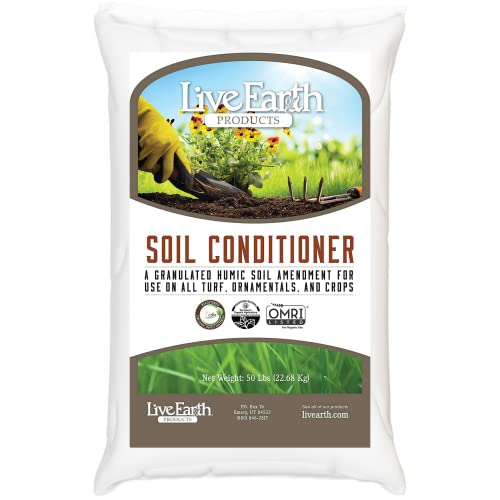
Live Earth Humate Soil Conditioner blends fulvic and humic acids with trace minerals to improve soil health. Sourced from ancient organic deposits, this conditioner enhances microbial activity, water retention, and nutrient availability. It is designed for lawns, vegetable gardens, trees, shrubs, and flowers, helping build soil structure and resilience in clay-heavy beds. Application is straightforward—shaking into soil followed by watering promotes better infiltration and sustained soil vitality. The organic composition supports long-term soil improvement without synthetic additives.
Liquid Soil Loosener For Compact Soils
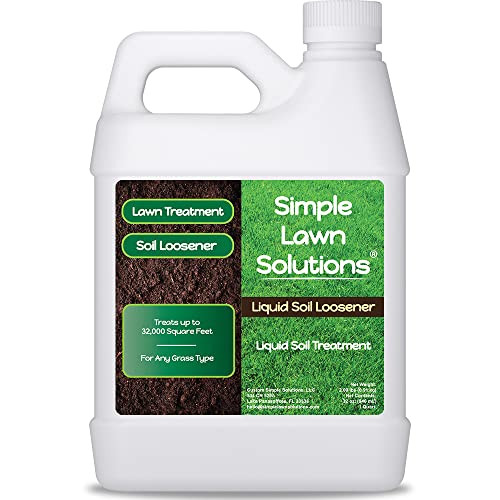
Liquid Soil Loosener is crafted for use alone or with mechanical aeration. It conditions compact soils, promotes downward water movement, and increases infiltration, making it a practical option for clay with standing water or poor drainage. The concentrated 32-ounce bottle covers up to 32,000 square feet, offering a cost-effective approach to soil conditioning. This liquid conditioner supports easier root absorption by enhancing soil structure and water movement, reducing the friction that often slows growth in dense clay patches.
Live Earth Humate Soil Conditioner Granules

Humate soil conditioner granules from Live Earth Products provide a natural, organic approach. Derived from ancient plant matter, these granules contain 45% total humic acid and are suitable for lawns, turf, vegetable gardens, flowers, trees, and shrubs. This option emphasizes long-term soil health by improving natural soil processes, microbial activity, and nutrient cycling. Granular application makes it easy to incorporate into existing soil mixes and turf programs, particularly in clay-rich areas needing gradual but persistent improvement.
Covington Liquid Lawn Aerator – Clay Soil Solution

Covington Naturals’ Liquid Lawn Aerator is designed to loosen clay and compact soils, improving water movement and nutrient absorption. This liquid conditioner serves as an easy alternative to core aeration, helping to create better soil structure, increased air circulation, and healthier root systems. Formulated with humic acids, amino acids, and kelp, it feeds soil microbes and supports a safer, more effective conditioning process for lawns and gardens. It’s a practical choice for homeowners seeking a straightforward, pet- and family-friendly soil treatment.
Buying Guide: Key Considerations For Clay Soil
- Soil test results: Start with a soil test to determine calcium and magnesium balance, organic matter, and existing salt levels. This guides whether gypsum or organic conditioners are most needed.
- Conditioner type: Gypsum products (calcium sulfate) primarily loosen clay and repair salt damage; humic substances improve microbial activity and nutrient exchange; liquid formulations offer quick, uniform coverage and are easy to apply with irrigation or sprayers.
- Application method: Pelletized gypsum, granular humates, or liquids each have different spread patterns, coverage rates, and timing. Choose based on lawn size, accessibility, and preferred application schedule.
- Frequency and duration: Clay improvement is typically gradual. Assess whether you need a one-time treatment or a series of applications across multiple seasons for sustained results.
- Environmental and safety factors: Prefer products with natural or organic ingredients when possible. Check for pet- and child-safe labels and any local regulatory guidelines for soil amendments.
- Target outcomes: If the goal is improved drainage and root expansion, prioritize products proven to enhance soil structure and water movement. For long-term soil vitality, select conditioners that boost microbial activity and humic content.
- Budget and coverage: Compare per-square-foot cost and recommended coverage. Some liquids offer larger-area coverage per bottle, while granules may require more frequent reapplication in high-use areas.
- Compatibility with current programs: Consider how a conditioner fits with existing fertilization regimens, irrigation schedules, and lawn care plans to avoid over-treating or uneven results.
Clay soil improvement blends science-driven chemistry with practical lawn care. By loosening tight textures and encouraging better drainage, these conditioners help establish a foundation for healthier roots, steadier moisture levels, and more vigorous growth. When selecting a product, weigh immediate effects against long-term soil vitality, let soil tests guide your choice, and tailor applications to your yard’s size and usage. The right conditioner, used consistently, can transform compact clay into a thriving growing medium for a wide range of plants.