Clay soils can be dense and slow-draining, but the right amendments can improve structure, porosity, and root growth. This guide highlights five Amazon-listed soil amendments that address clay-specific challenges like compaction, poor drainage, and nutrient availability. Each product is evaluated for how it enhances microbial activity, increases soil carbon, or improves physical properties such as drainage and aeration. The following selections cover humic-based amendments, calcined clay, and gypsum to offer a well-rounded approach to clay soil improvement.
| Product | Brand | Primary Benefit for Clay |
|---|---|---|
| Farmer’s Secret Soil Revitalizer (32oz) | Farmer’s Secret | Stimulates microbial activity; organic, OMRI-listed |
| The Andersons Humic DG Organic Soil Amendment | The Andersons | High humic content; improves carbon, microbial food source |
| Sol Soils Calcined Clay – 1 Gallon | sol soils | 74% porosity; superior drainage and aeration |
| The Andersons HumiChar Organic Soil Amendment | The Andersons | Humic acid plus biochar; soil health and nutrient retention |
| Down To Earth Garden Gypsum | Down To Earth All Natural Fertilizers | Calcium sulfate; loosens clay and improves drainage |
These selections span different mechanisms—humic-rich amendments that feed soil biology, porous clays for drainage, and mineral gypsum to counter compacted clay. When choosing, consider your local climate, the depth of your topsoil, and whether you want immediate drainage improvements or long-term soil health. For best results, apply according to product guidelines and monitor soil moisture and texture over several weeks.
Farmer’s Secret Soil Revitalizer (32oz)

Farmer’s Secret Soil Revitalizer is an organic, activated-humic acid-based liquid amendment designed to boost microbial activity in the soil. It aims to mimic composting benefits with faster results, which can help clay soils by increasing microbial diversity and soil structure. The product emphasizes feeding the soil itself rather than just the plants, supporting long-term soil health. Application is suggested monthly through the growing season, with emphasis on fall and spring soil conditioning. The formula is free from synthetic chelating agents and relies on OMRI-listed organic materials.
Key features include activation of soil biology, monthly application guidance, and an emphasis on organic sources. For clay, this type of amendment can help improve aggregation and porosity over time, contributing to easier root penetration and more consistent moisture management. Users should monitor changes in soil texture after several applications to evaluate improvements in drainage and crumb structure.
The Andersons Humic DG Organic Soil Amendment
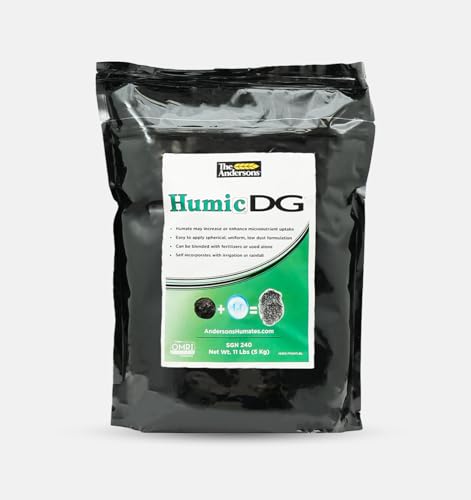
The Andersons Humic DG Organic Soil Amendment is designed around a high humic-content formulation. It increases soil carbon and organic matter and provides a critical carbon source for soil microbes. The product uses chelated nutrients to improve nutrient absorption and overall plant health, which can be beneficial in clay soils prone to nutrient lockup. OMRI-listed and environmentally friendly, this DG (dispersible granule) technology allows rapid breakdown and uniform distribution when mixed with water or fertilizer programs.
Reference features include high humic content (70%), microbial food support, and compatibility with various fertilizer programs. For clay soils, the improved nutrient availability and microbial activity can translate into better root development and resilience against compaction. When applying, ensure even dispersion and follow label directions to avoid over-application, especially in pots or small garden beds where excess organic matter can alter texture quickly.
Sol Soils Calcined Clay – 1 Gallon

Calcined clay is a popular amendment for clay soils due to its high porosity and stable structure. Fired at high temperatures, this product achieves about 74% porosity, creating air pockets that improve drainage and aeration while reducing compaction. The material helps maintain an optimal moisture balance, preventing overwatering and waterlogging—an important benefit for clay soils that often struggle with drainage. It is widely used for indoor plants, succulents, bonsai, and other plant types that benefit from improved root environments.
Key considerations for clay applications include mixing rate, potential impact on soil pH, and long-term effects on soil structure. Calcined clay tends to work gradually; combine with other amendments for a rapid transformation. For larger outdoor beds, repeat applications as needed to sustain improved drainage and root health over the growing season.
The Andersons HumiChar Organic Soil Amendment

The Andersons HumiChar combines humic acids with biochar to enhance soil health and nutrient retention. This amendment targets soil structure by increasing organic matter and microbial habitat, while biochar provides a long-term reservoir for nutrients. The product is applied as a dispersible granule and is designed to blend easily with fertilizers or be used on its own. It is OMRI-listed and marketed as environmentally friendly, offering a sustained improvement in soil vitality with a focus on clay soil resilience.
For clay soils, HumiChar can help reduce nutrient leaching and improve water-holding capacity without sacrificing drainage. Consider combining with a mineral amendment like gypsum for physical improvements while simultaneously supporting biology. Follow product guidelines for rates and frequency, especially in established plantings where rapid soil changes can influence soil moisture dynamics.
Down To Earth Garden Gypsum

Down To Earth Garden Gypsum is an OMRI-listed calcium sulfate product designed to loosen clay soils and improve drainage without alkaline soil alteration. Gypsum helps break up compacted clay by displacing sodium with calcium, enhancing aggregation and pore spaces. It is commonly used to remediate heavy clay soils and can be part of an annual or seasonal program to maintain soil structure. The product may be used in organic production when following OMRI guidelines and storage conditions are kept dry.
When applying gypsum, consider soil tests to confirm calcium needs and avoid over-liming. Gypsum is a fast-acting mineral amendment that addresses physical properties more than biology, making it a complementary component to humic-based amendments and biochar in a holistic clay-soil strategy.
Buying Guide: Key Purchase Considerations
- Clay soil goals: Decide whether you need immediate drainage improvement, long-term soil health, or both. Gypsum and calcined clay provide physical changes, while humic amendments boost microbial activity and carbon.
- Soil testing: Conduct a basic soil test to determine pH, nutrient levels, and texture. This helps tailor amendments to your specific clay soil profile.
- Product compatibility: Consider how amendments interact with existing fertilizers. DG formulations and biochar can blend with fertilizers, but high rates of organic matter may affect drainage temporarily.
- Application rate and frequency: Some products are applied monthly, others seasonally. Follow label directions to avoid over-application and unintended texture changes.
- Long-term vs. short-term: Calcined clay and gypsum often provide quicker physical changes, while humic-based products contribute to long-term soil structure and biology.
- Environmental considerations: OMRI-listed products are suitable for organic systems. If you garden with organic practices in mind, prioritize OMRI-listed amendments.
- Plant needs: If you grow drought-sensitive or root-intensive plants, emphasize amendments that improve aeration and moisture balance alongside nutrient availability.
- Site scale: Outdoor garden beds may require larger application rates or multiple products, while container or indoor setups may benefit from calcined clay and liquid amendments for uniform distribution.
Clay soil improvement typically benefits from a multi-pronged approach: improve structure with calcined clay, reduce compaction with gypsum, and support biology with humic acids and biochar. The five products featured here provide practical options across these strategies, allowing you to design a tailored program for your garden or landscape.