Answering the common buyer question: which soaker hose drip line best fits my garden, budget, and water-saving goals? This guide highlights five top options, explains who they’re best for, and shows how to compare features like water delivery, pressure tolerance, and ease of installation. Ideal buyers include compact vegetable gardens, raised beds, and larger landscapes needing slow, even moisture delivery without constant monitoring.
Summary Table of Selected Products
| Product | Brand | Diameter / Length | Why It Stands Out | Best For |
|---|---|---|---|---|
| Raindrip 015005T | Raindrip | 1/4 in. OD, 50 ft | Vegetable gardens and borders | |
| Raindrip 016010T | Raindrip | 1/4 in. tubing, 100 ft | Small to medium yards and planters | |
| Pawfly 50 ft | Pawfly | 1/4 in. OD, 50 ft | Raised beds and narrow bed layouts | |
| Lesimnky 100 ft | Lesimnky | 1/4 in. ID ~0.16 in., 100 ft | Garden beds and mixed plantings | |
| Sasylvia 100 ft | Sasylvia | 1/4 in. ID ~0.16 in., 100 ft | Vegetable beds and hydroponic-style setups |
Raindrip 015005T 1/4-Inch by 50-Foot Soaker Hose Tubing
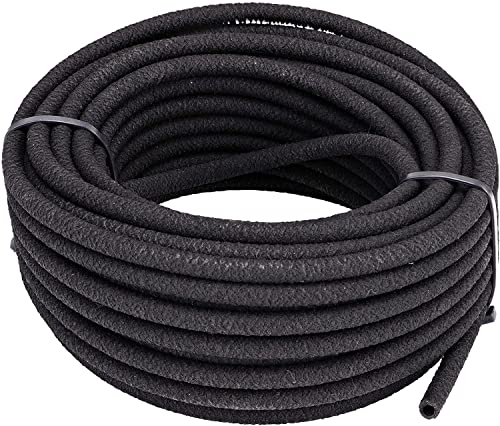
What it is: A 50-foot soaker hose designed to slowly water the soil around plant roots. Best for short runs along flat surfaces like vegetable beds, planters, and borders. The tubing has an outer diameter of 1/4 inch and an internal diameter of about 0.170 inches, allowing connection to common supply lines with 1/4-inch micro fittings. It seeps water along the entire line, keeping soil moist and preventing localized drying.
Who it’s best for: Gardeners with tight or linear layouts requiring a compact, dependable root-zone irrigation solution. Great for vegetable rows and small borders where even moisture distribution is critical.
Why selected: Proven, simple integration with standard drip components; flexible enough to bend around curved beds and corners.
Caution: For best performance, avoid pressing the hose flat or overly stressing the fittings, which may impede water flow in tight bends.
1/4 inch Soaker Hose Tubing for Drip Irrigation, 100FT

What it is: A 100-foot soaker hose set with a broad range of fittings (including 30 connectors: straight barbs, elbows, tees, end plugs). Outside diameter is 0.25 inch with an internal diameter around 0.16 inch. Designed to connect to most 1/2 inch, 5/8 inch, and 0.71 inch lines and to fit a variety of garden layouts.
Who it’s best for: Gardeners planning longer runs or multiple plant clusters across a yard, seeking versatile connectors and the ability to customize length.
Why selected: The included fittings give flexibility for extended installations without buying extra adapters.
Caution: The presence of many connectors can complicate setup; plan fittings in advance to minimize leaks at unions.
Sasylvia 100 ft 1/4 in Irrigation Tubing Soaker Hose System

What it is: A 100-foot soaker hose designed from a rubber/PE blend to evenly moisten the root zone. The 1/4 inch internal diameter supports steady water delivery and compatibility with common drip equipment. Holes along the wall allow slow seepage when pressure is applied.
Who it’s best for: Garden beds and small hydroponic-style plots where consistent, shallow penetration of water is desired to avoid nutrient runoff.
Why selected: Durable construction and reliable seepage mechanism deliver uniform moisture.
Caution: As with any porous hose, excessive pressure can cause faster water depletion at ends; maintain moderate PSI for even flow.
Raindrip 016010T 1/4-Inch Drip Irrigation Supply Tubing, 100-Foot

What it is: A 100-foot supply tubing designed as a feeder line to power low-flow drip emitters or as a main line in a small system. It connects to a main supply with 1/4-inch micro fittings and delivers water to emitters along the way.
Who it’s best for: Home gardens that require a simple main line from a water source to multiple emitters, especially when expanding a drip layout over time.
Why selected: Strong compatibility with drip components; easy to coil and store when not in use.
Caution: Do not exceed recommended PSI to prevent excessive flow that could overwhelm emitters or cause uneven distribution.
Pawfly 50 ft Soaker Hose

What it is: A 50-foot, 1/4 inch drip irrigation hose designed to deliver water directly to the root zone. It emphasizes water efficiency, with a typical delivery around 0.75 gallons per hour per 15 feet at 25 PSI, and uses rubber construction for durability.
Who it’s best for: Smaller plots, raised beds, or garden rows where quick setup and straightforward operation are preferred.
Why selected: Ease of use—cut to length and attach to standard fittings; good option for renters or seasonal gardeners.
Caution: Longer runs may require higher water pressure to maintain even seepage, so test the system on your setup before full deployment.
Buying Guide: How to Choose the Right Soaker Hose Drip Line
What environment and layout influence choice?
Flat borders and long vegetable rows benefit from flexible tubing that can bend around corners without kinking. For raised beds or irregular plots, consider hoses with a higher bend radius and a broader selection of fittings to create custom paths.
What about water savings and pressure?
Most soaker hoses are designed to save water by delivering moisture directly to the soil without oversaturating foliage. Look for a system that provides consistent delivery around 0.5–1.0 gallons per hour per 15–20 feet at 20–25 PSI. If your water pressure is inconsistent, choose hoses with built-in flow controls or consider using a pressure regulator.
Do you need fittings and connectors?
Many kits include 30–100 pieces of connectors, tees, elbows, and end plugs. If you plan to extend a line or connect multiple beds, a kit with diverse fittings reduces the need for extra purchases. Plan the layout first and piece together a schematic to minimize leaks at joints.
Material and durability considerations
Rubber-PE blends offer good durability and temperature resilience. Cheaper plastics may crack in cold weather. For year-round use in varying climates, select hoses rated for outdoor exposure and with robust end fittings. Brass connectors tend to last longer than plastic alternatives in high-use systems.
Installation tips for best results
- Lay hoses on soil or mulch rather than on bare ground to reduce heat buildup and wear.
- Avoid sharp bends; use gentle curves to prevent kinks and restrictors.
- Test the system at low PSI before full deployment to identify leaks and ensure even seepage.
- Combine hoses with a simple irrigation timer to automate watering and improve consistency.
Maintenance considerations
Inspect hoses annually for cracks or leaks, especially at connectors. Clean or replace worn perforations to maintain even water distribution. Store hoses in mild conditions when not in use for extended periods to prolong life.
Frequently Asked Questions
- What is the optimal PSI for a soaker hose? Most soaker hoses perform well around 15–25 PSI, depending on length and hose design. Check the manufacturer’s guidance for your model.
- How long should I water with a soaker hose? Start with 1–2 hours and observe soil moisture. Increase gradually if needed, ensuring the root zone is evenly moistened.
- Can I use a soaker hose under mulch? Yes. Mulch helps retain moisture and reduces evaporation, which complements soaker hoses. Ensure the hose is evenly buried or covered.
- Are soaker hoses good for containers? They can be used for container plantings, but shorter lengths and careful spacing are important to achieve even moisture delivery.
- Do I need a pressure regulator? If your water pressure exceeds recommended levels, a regulator helps prevent over-watering and hose wear. If pressure is already modest, a regulator may not be necessary.
- How do I extend a soaker hose system? Use compatible fittings and maintain consistent PSI across runs. Plan your layout to minimize complex junctions and leaks.