Looking for a compact, affordable way to relieve soil compaction and improve your lawn’s health? The best small lawn plug aerators are designed to create deeper soil channels with minimal effort, making them ideal for homeowners with small to medium yards, patios, or tight spaces. This guide reviews five top compact options and explains who each tool is best for, plus practical buying tips. Whether you’re dealing with clay, thatch, or general compaction, the right aerator can boost water, air, and nutrient penetration to your grassroots level.
Buyer snapshot: The following table highlights who each product is best suited for and why it stands out for small lawns.
| Product | Best For | Why It Stands Out |
|---|---|---|
| LawnVigor Manual Core Aerator | Beginner to intermediate homeowners | Sturdy hollow tines for deeper core removal; low clog risk |
| Hermsche Lawn Aerator Coring Tool | Budget-conscious users with durable needs | Two half-open slots plus spikes for versatile use; solid construction |
| EKIORI Manual Core Aerator | Frustration-free aeration | Step-to-Eject design to prevent clogging; strong steel build |
| Worcest 2-in-1 Manual Lawn Aerator | Small to medium lawns needing versatility | Core and spike options; lightweight yet sturdy |
| Nucyky Lawn Aerator Coring Tool | Efficient disposal and deep core aeration | Built-in soil tray; durable iron construction and sharp tines |
LawnVigor Manual Core Aerator Lawn Tool
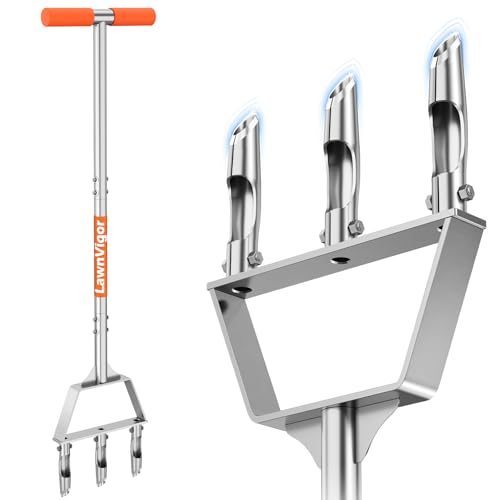
Best for first-time users who want straightforward, reliable core aeration. This tool uses three hollow tines to remove soil plugs, creating deeper holes for water infiltration and root growth. It is built from sturdy metal and features replaceable hollow tines for long-term use. A caution: water dry soil before use and avoid side-to-side rocking, which can hinder penetration. Best for laid-back DIYers who value durability and low maintenance.
Hermsche Lawn Aerator Coring Tool
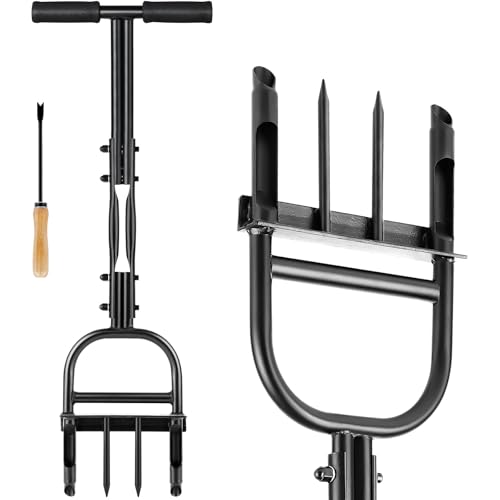
Best for those who want a robust manual tool with a moderate budget. It combines 2 spike tines with 2 hollow cores (each about 4.3 inches long) to penetrate and loosen soil while reducing resistance. It’s designed with high-density alloy and a solid frame capable of supporting heavier use. A limitation: the longer tines mean a slightly larger footprint and may require more space to maneuver in tight areas.
EKIORI Manual Lawn Aerator With Step-To-Eject
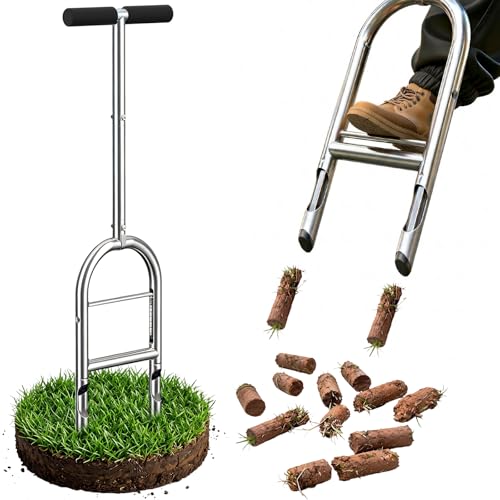
Better for users who want a frustration-free aeration process. EKIORI’s patented Step-to-Eject technology prevents soil plugs from clogging, allowing continuous operation. The tool uses heavy-duty steel construction to resist bending, and it emphasizes core removal rather than surface spiking. Choose this if you frequently aerate large patches and dislike stopping to clear clogs. A potential constraint: the mechanism adds complexity, so ensure proper use per instructions.
Worcest 2-in-1 Manual Lawn Aerator

Best for small to medium lawns needing dual-action aeration. This tool combines hollow-tine cores and solid spikes, enabling core removal and surface loosening with one device. Its alloy steel build supports repeated use, and the 2-in-1 design helps users adjust quickly to soil conditions. Caution: heavier models may require more effort on very compact soil; for best results, apply gradual stepping pressure and avoid sudden jerks.
Nucyky Lawn Aerator Coring Tool

Best for efficient collection and disposal of soil plugs. Nucyky adds a built-in soil tray to collect plugs, simplifying cleanup, and uses thickened iron construction with sharp 3.9” tines for deep core penetration. It’s strong on durability and designed to reduce soil compaction in one pass. Limitation: the tray adds weight and may require more space when stored in compact sheds.
Buying Guide
What to look for in a small lawn plug aerator
- Core vs spike design: If you want to relieve compaction and improve root access, choose a core aerator with hollow tines. Spikes only loosen soil and can worsen compaction in some soils.
- Number and length of tines: More and longer hollow tines create larger cores and deeper channels, but require more effort. Look for tines around 3-4 inches if you have compact soil.
- Build material: Steel or alloy frames resist bending under steady stepping pressure. Stainless steel resists rust in damp climates.
- Clogging prevention: Tools with Step-to-Eject or side-opening tine designs help minimize downtime during use.
- Portability and storage: For small lawns, lightweight designs with manageable footprints are easier to maneuver; check the weight and tool length when stored.
How to use a small lawn aerator effectively
- Water the lawn the day before aeration to soften the soil and improve tine penetration.
- Aim for consistent, straight passes in both directions for even soil plugs distribution.
- Leave soil plugs on the lawn to decompose, or collect them if a built-in tray is available and reapply later.
- Aerate in cooler parts of the day to reduce soil moisture stress on your grass.
Maintenance tips for longevity
- Clean any dirt from tines after use to prevent rust and corrosion. Dry and store in a dry area.
- Check for loose bolts or wear at welds; tighten or repair as needed.
- Lubricate moving parts if recommended by the manufacturer.
What to buy for your lawn size
- Small yards or containers: Prioritize lightweight, compact models with removable or replaceable tines for easy storage.
- Clay or heavily compacted soil: Look for deeper core surfaces and heavier-duty frames; 3-4 inch tines are advantageous.
- Budget considerations: Manual aerators generally cost less and are suitable for occasional use; premium models offer clog-prevention features and stronger steel construction.
Quick FAQ
- Q: Do I need to aerate every year? A: For heavily compacted soils or new lawns, annual aeration is common; sandy soils may require less frequent aeration.
- Q: Can I use an aerator on a wet lawn? A: It’s better to aerate when the soil is moist but not soggy to prevent soil clumping and to protect turf.
- Q: Are hollow-tine aerators better than spike aerators? A: Yes, hollow-tine cores remove plugs and relieve compaction more effectively than spikes, which can push soil aside.
- Q: How deep should I aerate? A: Target core depths of 2 to 4 inches, depending on soil compaction and grass root depth.
- Q: Should I fertilize after aeration? A: It’s common to fertilize after aeration to take advantage of enhanced nutrient uptake, but follow lawn-care guidelines for your grass species.
- Q: Can I rent an aerator? A: Yes, rental options exist, but owning a compact aerator offers convenience for ongoing lawn maintenance.