Hash making relies on precise sifting to separate resin glands from plant material. The following sifting screens and classifiers are selected for durability, mesh precision, and compatibility with standard buckets or workstations. This guide highlights five top options and what to look for when choosing the right screen for hash production, dry sifting, or small-scale lab use.
| Product | Mesh Size | Diameter | Material | Use |
|---|---|---|---|---|
| PATIKIL 90 Mesh Lab Sieve | 90 Mesh / 0.18mm | 30 cm | 304 Stainless Steel | Hash, dry sift, lab testing |
| PATIKIL 200 Mesh Lab Sieve | 200 Mesh / 0.075mm | 30 cm | 304 Stainless Steel | Fine hash, plant material separation |
| PATIKIL 100 Mesh Lab Sieve | 100 Mesh / 0.15mm | 30 cm | 304 Stainless Steel | Hash refinement, sifting |
| ASR Outdoor 1/8 Classifier | 1/8″ (~3.2 mm) holes | Top 13.25″, Bottom 11″ | ABS Plastic with 304 Stainless Steel Mesh | Bucket-based classification, coarse to mid-size material |
| ASR Outdoor 1/8″ Deep Stacking | 1/8″ holes | Fits standard 5-gallon bucket | ABS Plastic | Stackable classifier for larger batches |
Below is a quick overview to help you compare these options: durability and corrosion resistance, mesh precision, bucket compatibility, and typical hash-related use. Choosing the right mesh involves balancing particle size with the volume you process and the ease of cleaning and maintenance.
PATIKIL 90 Mesh Lab Sieve For Hash
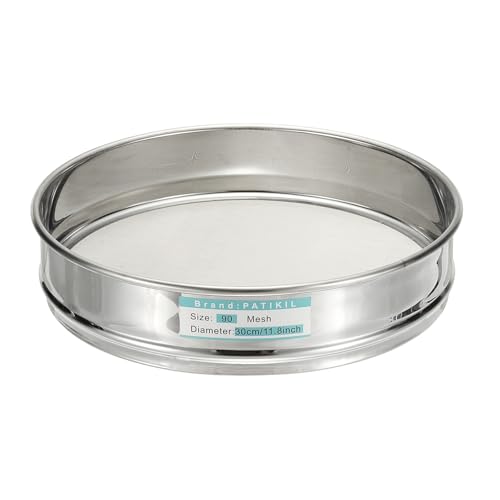
The PATIKIL 90 Mesh Lab Sieve provides a 0.18mm opening in a 30 cm diameter frame. It uses 304 stainless steel with a double-layer frame design that resists deformation and corrosion. Its smooth bottom edge and seamless frame minimize snagging and sticking, facilitating repeated use in hash production or lab testing. The sieve is designed to withstand rigorous handling and weights up to 220 pounds, making it suitable for high-throughput sifting in home or small lab settings.
PATIKIL 200 Mesh Lab Sieve For Finely Ground Material

offering a finer 200 Mesh/0.075mm opening, this PATIKIL sieve enables finer particle separation for more refined hash production. Like the 90-mesh model, it uses a robust 304 stainless steel frame and seamless connections to prevent clogs or substrate adhesion. Its compact 30 cm diameter ensures compatibility with standard lab benches or dry-sifting stations while maintaining durability for repeated use in extraction workflows.
PATIKIL 100 Mesh Lab Sieve For Balanced Sifting

This PATIKIL model features a 100 Mesh/0.15mm opening, ideal for achieving a balance between yield and purity in hash processing. The 304 stainless steel mesh and frame match the brand’s emphasis on durability and cleanability. The double-layer frame and smooth bottom edge reduce material sticking, making it easier to run multiple passes to reach the desired particle size in both home and lab environments.
ASR Outdoor 1/8 Classifier Screen
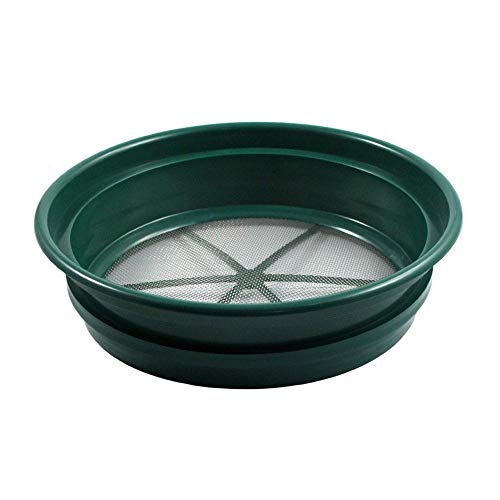
Designed to fit on top of a 5-gallon bucket and compatible with ASR Outdoor’s other classifier screens, this 1/8″ classifier features a rugged ABS plastic body with a 304 stainless steel mesh. It is suitable for bucket-based sifting, allowing efficient separation of hash materials while withstanding weather and wear. The classifier is stackable for processing larger batches and excels in producing coarser to mid-range particle sizes.
ASR Outdoor Deep Stacking 1/8″ Classifier

The ASR Outdoor Deep Stacking 1/8″ classifier is built for heavier workloads. It features a 1/8″ (16 holes per square inch) screen, designed to sit on 5-gallon buckets and be stacked with other ASR classifier screens. Made from high-quality ABS plastic, it offers UV resistance and durability in outdoor or workshop environments. Its stacking design improves workflow efficiency when processing larger quantities of material for hash or mineral separation tasks.
Buying Guide
Key purchase considerations for hash sifting screens include mesh size and material, bucket compatibility, and ease of cleaning. Mesh size determines the thickness of plant material allowed through, affecting yield and purity. Stainless steel meshes (especially 304-grade) offer corrosion resistance and longer service life, essential for repeated washings. ABS or plastic frames should be evaluated for environmental exposure, weight, and compatibility with standard 5-gallon buckets. For larger operations, stacking classifiers can dramatically improve throughput, while single-layer screens are handy for finer passes. When choosing, consider your typical batch size, desired hash grade, and whether you will process wet or dry material. A combination of a coarse sieve (e.g., 1/8″ or 0.18–0.25mm) followed by finer passes (e.g., 0.075–0.15mm) often yields balanced results. Finally, ensure cleaning is straightforward to preserve screening integrity over numerous uses.
For hash makers and small labs, these five options provide a spectrum of mesh sizes and configurations to match varying workflows. Always follow safety and handling guidelines when processing botanicals and ensure components are compatible with your existing setup to maximize efficiency and maintain material quality.