If you want reliable, low-maintenance moisture for your indoor plants, these self-watering ceramic pots are ideal. They use bottom watering and absorbent inner pots to keep soil consistently moist without constant monitoring. This guide highlights five top options, who they’re best for, and practical buying tips.
Summary table of selected products
| Product | Best For | Key Benefit | Notes |
|---|---|---|---|
| LITUDISO African Violet Pots, 6 Inch | Busy homeowners; African violets and mixed small plants | Natural kaolin inner pot for moisture retention | Unique glaze gradient; plant not included |
| Teagas Self Watering Planters, 6 Inch | Beginners; small herbs and violets | Bottom hydration with absorbent inner pot | Outer and inner pot measurements; plant not included |
| Nihow Self Watering Plant Pot (Cream White) | Frequent travelers; office plants | Two drainage holes plus water storage saucer | Multiple similar Nihow models; ensure correct variant |
| Teagas Ceramic Self Watering Pots (Green) | Small to medium indoor plants | Durable glazed ceramic with clay inner for absorption | Avoid over-watering by following fill lines |
| Thriving Thicket 6 Inch Self-Watering | African violets and similar ornamentals | Water reservoir with fill lines for easy care | Bottom-watering design; 1 pack |
LITUDISO African Violet Pots, 6 Inch Self Watering

Best for: Plant hobbyists who want a stylish, layer-cake moisture system for compact plants. Why selected: This pot blends a premium ceramic outer with a natural kaolin inner that absorbs and releases water to keep soil consistently moist. The integrated reservoir reduces daily watering needs and helps prevent overwatering. The glaze creates a distinctive gradient finish, making each pot a unique decor piece. Caution: The plant is not included, and glaze variations may affect color slightly between units.
Teagas Self Watering Planters for Indoor Plants, 6 Inch

Best for: Busy gardeners who want reliable water management with simple refilling. Why selected: The outer pot is glazed ceramic, paired with a clay inner pot that has excellent absorption, and a water reservoir in the saucer for re-use. It’s well-suited for small to medium plants like African violets and herbs. Caution: Plant not included; outer and inner pot dimensions are listed, ensure your plant fits.
Nihow Self Watering Plant Pot (Cream White & Brown)

Best for: Home office setups and small herb gardens. Why selected: This pot features a two-hole drainage system plus a cotton wick to continuously moisten soil from a water storage saucer. The design supports long intervals between waterings, making it suitable for travelers. Caution: Model variants differ; confirm the Cream White & Brown version matches your needs and that the plant is not included.
Teagas Ceramic Self Watering Pots, 6 Inch (Green)
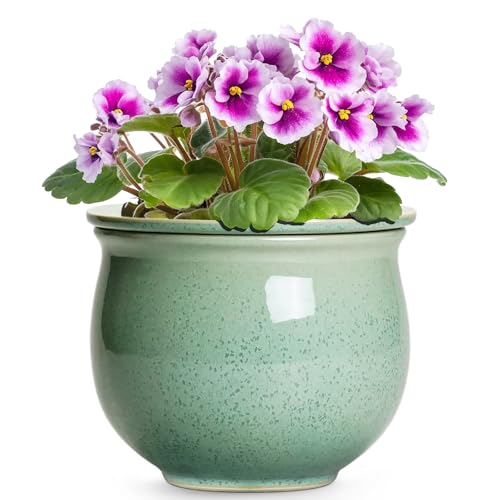
Best for: Small to medium plants in living spaces that favor vibrant accent colors. Why selected: It uses a similar dual-pot system with a clay inner for moisture absorption and a glazed outer pot, offering reliable bottom watering. Caution: Outer and inner pot sizes are specified; ensure compatibility with your plant’s root depth and pot diameter.
Thriving Thicket 6 Inch Self Watering

Best for: African violets and similar compact flowering plants. Why selected: This pot includes water reservoir and fill lines to guide proper watering, promoting steady moisture for up to about three weeks depending on soil and plant. Caution: Single-pack product; plan for additional units if you have multiple plants or larger varieties.
Buying Guide: Self-Watering Ceramic Pots For Indoor Plants
What should you consider when choosing a self-watering ceramic pot?
- Pot size and plant compatibility: Measure your plant’s mature width to ensure the outer pot accommodates growth. Look for inner pot dimensions to judge root space and moisture management.
- Watering system type: Bottom-watering with an absorbent inner pot is common. Some pots include a water storage saucer and wick, which can extend moisture intervals—handy for travelers or busy households.
- Material quality and finish: High-quality ceramic with a glazed exterior resists staining and helps with cleaning. A natural kaolin inner pot can offer strong absorption and steady moisture release.
- Aesthetic and decor: Choose finishes that complement your space. Gradient glazes and color accents add personality while maintaining functional moisture control.
- Maintenance and care: Most pots require occasional cleaning of the reservoir area. Check if the plant is included or if you’ll need to supply your own pots and soil.
- Plant types: African violets, herbs, pothos, and small succulents are common fits. Consider each plant’s watering needs and root depth to match the pot’s design.
Practical Tips For Use
- Fill the outer reservoir to the recommended level, then place the plant in the inner pot. Allow capillary action to steady moisture.
- Avoid over-watering by following fill-line guidance or daily checks if using pots with visible lines on the inner pot.
- For travel or extended absences, fill to capacity and test moisture levels before leaving; consider rotating plants or using multiple pots for redundancy.
- Place pots where they won’t trap excess moisture on furniture or carpets; use an under-pot tray if needed.
Frequently Asked Questions
- What is a self-watering ceramic pot good for?
It helps maintain consistent soil moisture, reducing the frequency of manual watering and supporting plant health between waterings.
- Can I use these pots with any plant?
Most are suitable for small to medium indoor plants, including African violets, herbs, and Pothos. Check the inner pot size to ensure adequate root space.
- Do these pots come with plants?
Some listings show plants separately; many products specify that pots are sold empty, with “plant not included.”
- Is the water reservoir risky for mold or algae?
Regular cleaning of the outer pot and reservoir area helps prevent buildup. Ensure good drainage and avoid standing water in the saucer for long periods.
- Which is best for travel?
Pots with clear fill lines and longer moisture intervals (through clay inner pots and reservoirs) tend to be best for travel and business trips.
- How do I avoid overwatering?
Follow the product’s recommended fill level and monitor soil moisture initially. Use the inner pot’s absorption as a guide to maintain steady moisture without soggy soil.