Yes—these self-propelled brush hog mowers are designed to tackle dense brush, tall grass, and uneven terrain with reduced operator effort. This guide highlights five top options, including gas- and battery-powered models, to suit large properties, sloped yards, and challenging landscapes. Each product is chosen for power, maneuverability, and practicality in real yard conditions. Read on to find the right fit for professionals, property owners with large plots, and homeowners dealing with heavy growth.
Summary table of chosen products
| Product | Power Source | Best For | Why Picked |
|---|---|---|---|
| BILT HARD 26 Inch Self-Propelled Walker | Gas | Dense brush and large areas | Vigorous 14HP engine, electric start, self-propelled with good traction |
| BILT HARD 170cc Self-Propelled Trimmer | Gas | Wide-cut, heavy grass and weeds | Wide deck, self-propelled, strong cutting path |
| BILT HARD 22 Inch Self-Propelled Trimmer | Gas | Medium to large yards | Reliable self-propel system and robust deck |
| 36 Inch Walk Behind Brush Mower | Gas | Dense brush and overgrowth | Large cutting width and heavy-duty build |
| Caltric Mower Deck Wheel (2-Pack) | Parts | Equipment maintenance | Compatibility with Bush Hog and similar decks |
BILT HARD 26 Inch Self-Propelled Walk Behind Field and Brush Mower

The BILT HARD 26 Inch Self-Propelled Walk Behind Field and Brush Mower uses a robust 14HP 452cc 4-stroke OHV engine with electric start, eliminating pull-cord effort. It is designed for dense grass, thick brush, and overgrown terrain, with rear-wheel drive and heavy-duty 145/70-6 tires for stable traction on slopes, rocks, and soft ground. The variable self-propelled speed (0.5-3 km/h) lets you tailor ground speed to the task, reducing operator fatigue. Best for property owners who need reliable power and precise maneuverability on challenging sites. Limitations include an electric-start battery requirement; ensure you have a charged 12V battery on hand.
What to know about this model
- Best for: Large areas with dense vegetation; owners prioritizing traction and ease of use on slopes.
- Why chosen: Combines heavy power with controlled speed to maintain cutting performance across surfaces.
- Limitations: Electric start depends on battery health and maintenance.
BILT HARD Self-Propelled Walk Behind String Trimmer

This unit uses a 170cc 4-cycle OHV engine to power through thick grass, weeds, and light brush. It features a self-propelled drive at about 1.9 mph (3.06 km/h) and a wide 22-inch cutting path with a heavy-duty steel deck. The manual recoil ignition ensures quick starts, while the foldable ergonomic handle and flat-free wheels improve maneuverability. Best for users who need a reliable, wide-cut trimmer that can move efficiently through variable terrain. A potential limitation is that it is more suited for edges and open areas rather than very heavy brush lanes.
Who this is for
- Best for: Homeowners with wide, grassy borders and moderate brush.
- Why chosen: Combines high cutting width with easy maneuverability and self-propelled control.
- Limitations: Not ideal for extremely dense brush compared to heavier brush cutters.
BILT HARD Walk Behind String Trimmer, 170cc

This 170cc gas-powered trimmer features a one-piece steel deck and a 22-inch cutting width with tough nylon line for fast clearing. It advances with 14-inch never-flat wheels and a foldable ergonomic handle for better grip and compact storage. Best for property owners who need efficient weed and grass clearance over medium to large areas without heavy brush. Caution: heavy-duty operation may require frequent maintenance on a large property.
36 Inch Walk Behind Brush Mower
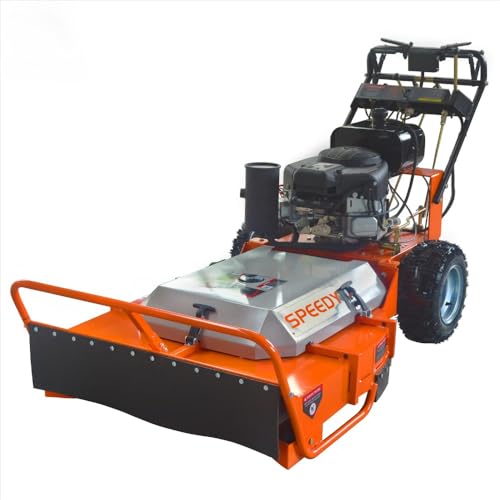
The 36 Inch Walk Behind Brush Mower delivers a wide cutting deck for large surface areas and dense growth. It is positioned as a heavy-duty option for agriculture, farming, and lawn care, especially on overgrown terrain where a wider reach reduces mowing time. Best for users who need high-volume cutting capability and a robust frame. A potential limitation is that the unit may require more power and fuel to operate over large properties, making maintenance and fuel logistics more important.
Caltric Mower Deck Wheel (2-Pack)

Caltric offers a two-pack of mower deck wheels compatible with Bush Hog and similar rotary cutters. This accessory is essential for maintaining or upgrading mower maneuverability on uneven terrain. Best for buyers who want to ensure wheel reliability and reduce downtime due to worn components. Vital caution: confirm compatibility with your specific deck model before purchase to avoid fit issues.
Buying Guide
What should I consider when choosing a self-propelled brush mower?
- Terrain and vegetation: For slopes and heavy brush, prioritize engines with ample torque and reliable traction. Gas-powered units typically offer higher peak power than many cordless models.
- Power source: Gas engines provide continuous operation with refueling; cordless electric mowers offer quiet operation and zero emissions but require battery management and charging time.
- Cutting width and deck construction: Wider decks reduce mowing time but increase weight. Sturdy steel decks help reduce vibration and withstand dense brush.
- Self-propelled speed: Adjustable propulsion lets you match pace to the task, reducing fatigue and preserving cutting performance.
- Ease of starting and maintenance: Electric start is convenient, while recoil starts require more effort. Check for availability of spare parts and service options in your area.
- Safety and ergonomics: Look for ergonomic handles, vibration control, and appropriate safety guards when working near rocks, roots, or uneven ground.
Gas vs. electric: which is better for brush mowing?
- Gas: Usually favored for dense brush, tall grass, and large properties due to higher torque and longer operation without recharging. Pros: high power, universal refueling. Cons: heavier, louder, and requires more maintenance.
- Electric (corded or cordless): Offers lower noise and zero emissions, with easier start. Pros: quieter and cleaner. Cons: runtime depends on battery capacity and charging, which may be limiting on very large properties.
Maintenance tips for long-term performance
- Regularly inspect the deck, blades, and traction tires for wear and damage.
- Keep air intakes clear and change or clean filters as needed to maintain engine efficiency.
- Check battery health for electric models and replace when performance declines.
- Lubricate moving parts and ensure safety guards are secure before each use.
Which option should you choose?
- Best for dense brush and large properties with hills: BILT HARD 26 Inch Self-Propelled Walk Behind Field and Brush Mower.
- Best for wide-cut mowing in moderate brush: 36 Inch Walk Behind Brush Mower.
- Best for quiet operation and smaller to medium yards: Greenworks 60V Self-Propelled Mower or NovorikX 60V Self-Propelled Mower.
- Best for budget maintenance and deck parts: Caltric replacement wheels for compatible decks.
FAQ
- What is self-propelled mowing? A: Self-propelled mowers move forward on their own, reducing user effort when mowing uneven or large areas.
- Are gas or electric models better for brush mowing? A: Gas models typically provide more torque for dense brush, while electric models offer quieter, cleaner operation for lighter tasks.
- Do these mowers require a lot of maintenance? A: Maintenance depends on the model; gas engines need fuel system upkeep, while electric models require battery management and motor care.
- Can I use these on slopes? A: Yes, many models include rear-wheel drive traction suitable for slopes, but always follow safety guidelines and manufacturer recommendations.
- Is a 22-inch deck enough for large yards? A: A 22-inch deck is versatile for mid-sized yards; larger decks (like 36 inches) cover more ground but require more power and control.
- Should I buy replacement parts separately? A: It’s wise to have essential parts (blades, tires, decks) on hand for quick maintenance, especially on larger properties.