Answering common irrigation needs with reliable self-priming pumps. This guide highlights five current, practical options for homeowners, gardeners, and small farm operators who need easy water transfer from wells, tanks, or ponds. Each product is evaluated for who benefits most, plus practical limitations. A quick summary table of the selected pumps follows the introduction.
Quick Reference: Selected Pumps
| Product | Best For | Key Benefit |
|---|---|---|
| GOULDS GT15 IRRI-Gator Self-Priming Pump (1.5 hp) | Home gardens and small irrigation setups | Self-priming, serviceable design with FDA-compliant impeller |
| WASSERMANN Centrifugal Pump (1.5 HP, 66 GPM) | Lawn sprinklers and broad garden irrigation | High flow with dual voltage and rugged cast-iron body |
| GT15 Self-Priming Centrifugal Pump (1.5 HP, czobloik) | Small farms, orchards, and livestock watering | Versatile applications with solid cast-iron construction |
| GOULDS GT20 IRRI-Gator Self-Priming Pump (2 hp) | Lawn irrigation and larger water transfer tasks | Higher horsepower and robust 1-1/2″ pipe connections |
| Miory GT15 Self-Priming Pump (1.5 hp) | Residential systems needing flexible voltage | Two voltage options and corrosion-resistant housing |
GOULDS GT15 IRRI-Gator Self-Priming Pump — 1.5 hp

The GOULDS GT15 is a compact self-priming centrifugal pump aimed at residential irrigation tasks. It’s best for gardeners who need dependable water transfer with minimal manual priming. The design emphasizes serviceability and an FDA-compliant impeller to support clean-water applications. Best for: small lawns, garden beds, and light sprinkler systems where quick priming and easy maintenance matter. Caution: ensure compatible piping and power supply to avoid overloads or short cycling.
WASSERMANN Centrifugal Pump — 66 GPM, 1.5 HP
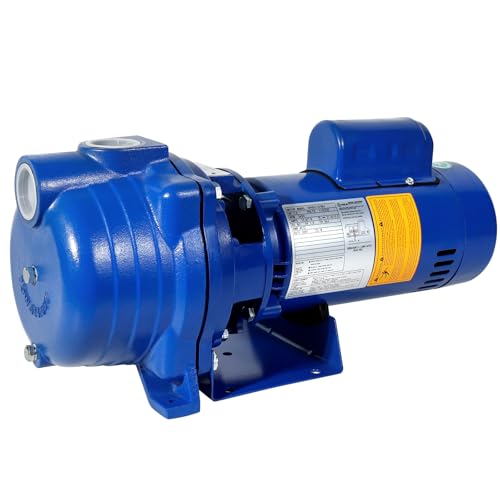
The WASSERMANN centrifugal pump delivers a robust 66 GPM with a maximum head up to 126 feet. This makes it a strong candidate for larger irrigation tasks and lawn sprinkler setups where higher flow is desirable. Best for: sizeable garden zones, multiple sprinkler zones, and shallow-well water sources. Better for: households needing flexible 115V/230V operation. Caution: cast-iron construction adds weight and may require periodic maintenance to prevent corrosion in harsh environments.
GT15 Self-Priming Centrifugal Pump — 1.5HP (czobloik)
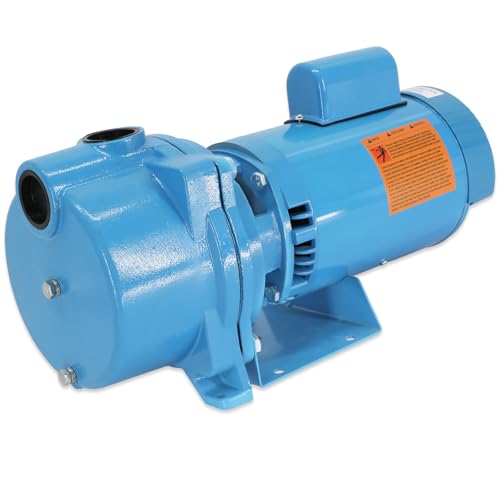
The czobloik GT15 focuses on versatile water applications with a robust cast iron housing. It’s designed for small farms, orchards, and livestock watering systems, with straightforward inlet/outlet connections and a 1.5 HP motor. Best for: irrigation or water transfer where a durable, self-priming option is needed. Choose this if you value a straightforward installation and reliable long-term use. Limitation: specific data on flow rates is variable by configuration, so verify your required head and lift.
Flotec FP5172-08 Self Priming High Capacity Pump

The Flotec FP5172-08 is designed for high-capacity sprinkler systems and irrigation tasks. Although it’s labeled as self-priming and high capacity, buyers should verify compatibility with existing plumbing and power arrangements. Best for: larger residential irrigation zones or multi-zone sprinkler setups where more water volume is required. Caution: the listing notes “Made in MX,” which may raise considerations about regional support or parts availability depending on location.
Miory GT15 Self-Priming Pump — 1.5 hp

Miory’s GT15 self-priming pump offers dual voltage capability, making it adaptable to different power sources. It features a corrosion-resistant cast-iron housing and an enclosed impeller for stable operation. Best for: residential systems needing flexibility in voltage and reliable water transfer. Avoid this if you require a documented, heavy-duty warranty or explicit third-party certifications in your region, as such details are not specified in the listing.
Buying Guide: Key Considerations for Self-Priming Irrigation Pumps
When choosing a self-priming irrigation pump, buyers should align the pump’s specs with their water source, system size, and voltage availability. The following practical questions help narrow the options:
- What is the required flow rate and head for your irrigation layout? Larger lawns or multi-zone systems benefit from higher GPM and head ratings (e.g., 66 GPM and up to 126 feet head).
- Is dual-voltage operation important for compatibility with existing power supplies? Some models offer 115V/230V flexibility.
- What piping size and connections does your system use? Look for 1-1/2″ NPT or similar standard fittings for straightforward installation.
- Do you need a pump that is easy to service? Self-priming designs with accessible seals and components simplify maintenance.
- What is your water source—pond, tank, or shallow well? Self-priming pumps are designed to draw water from such sources without manual priming.
- Is material durability a priority? Cast-iron housings offer ruggedness, but consider local corrosion exposure and maintenance needs.
Additional Considerations
Consider the environment where the pump will operate. If you’re in a compact garden or a larger yard, select a model that balances flow with head to ensure consistent pressure across sprinklers. For those who must adapt to varying power sources, dual-voltage options can reduce installation constraints. Serviceability matters for extended use; pumps with accessible impellers and straightforward disassembly help with routine maintenance and parts replacement.
Frequently Asked Questions
- What does “self-priming” mean for irrigation pumps?
Self-priming means the pump can evacuate air from the suction line and start pulling water from a source without manual priming. - Can these pumps operate on both 115V and 230V?
Some models offer dual-voltage operation, but not all. Check the product specs to confirm compatibility with your power supply. - What head and flow should I expect for a small garden?
Many 1.5 HP models deliver tens of gallons per minute with heads suitable for typical lawn irrigation; verify your system’s zoning and nozzle requirements. - Are cast-iron housings better for durability?
Cast iron is durable and resistant to wear in continuous use, but it requires maintenance in corrosive environments. - Is professional installation recommended?
For power connections, plumbing fittings, and system integration, consulting a professional can help avoid leaks and electrical issues. - How do I know which pump is best for my source?
Match the flow rate (GPM) and head (feet) to your water source lift and sprinkler layout; if in doubt, err on a higher capacity model to cover future needs.