Finding a selective herbicide that targets grassy weeds without harming desirable turf can be challenging. This guide highlights five well-regarded options that homeowners and professionals rely on to control crabgrass, foxtail, quackgrass, and other common lawn pests. Each product below is described with its standout features, ideal use cases, and application timing to help you choose the best fit for your lawn or turf project.
Summary of chosen products
| Product | Brand | Best For | Key Feature |
|---|---|---|---|
| Atticus Torocity Herbicide (8oz) | Atticus | Pre and post-emerge selective control | Contains 40% mesotrione; flexible timing window |
| BASF Drive XLR8 Crabgrass Killer | BASF | Crabgrass and broadleaf control | Post-emergent, up to 30 days residual |
| Nufarm Change Up | Nufarm | Wide broadleaf weed control in turf | Excellent control of 200+ broadleaf weeds |
| Agrisel GrassOut Max | Agrisel | Deters 50+ grassy weeds | Targets grasses with careful application near desired plants |
| Whitetail Institute Arrest Max | Whitetail Institute | Selective grass control in food plots | Focused on grasses for deer forage areas |
Atticus Torocity Herbicide: Selective, Flexible Timing
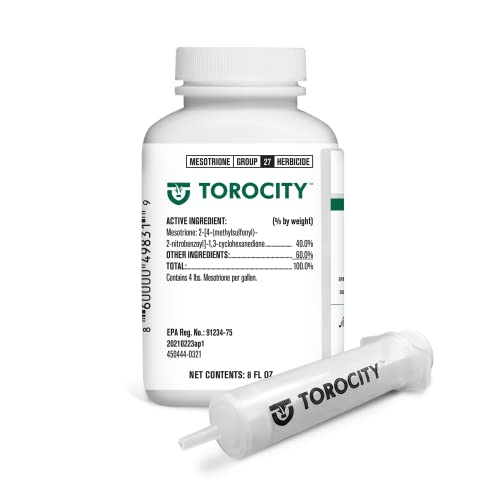
Atticus Torocity is a mesotrione-based selective herbicide designed for lawns and turf. It mirrors the active ingredient of leading brands, offering targeted control of many broadleaf and grassy weeds. With 40% mesotrione, Torocity provides flexibility through both pre- and post-emerge activity, expanding the window for effective weed management. It is especially noted for combating crabgrass, ground ivy, clover, oxalis, and dandelion, making it a versatile choice for newly seeded areas or established turf where selective weed suppression is desired.
Application considerations include timing relative to weed life stage and turf health. Because it is selective, it aims to spare common grasses while delivering control of problematic broadleaf species and some grasses. Always follow label directions for mixing, rate, and safety recommendations to minimize stress on desired grasses.
BASF Drive XLR8 Crabgrass Killer

BASF Drive XLR8 is a post-emergent herbicide designed to provide rapid, broad-spectrum weed control in lawns and turf. It targets crabgrass and other common grasses and broadleaf weeds, delivering up to 30 days of residual control and a rainfast window in less than an hour. This product is valued for quickly reducing weed competition, helping the turf establish a healthier, denser mat of grass. Its water-based formulation supports efficient uptake and consistent performance.
Considerations include ensuring it is compatible with your grass type and avoiding overspray on desirable ornamentals or nearby beds. The quick action and residual effect can reduce reapplication frequency, but proper timing relative to weed life cycle remains essential for best results.
Nufarm Change Up: Premium Selective Weed Control

Nufarm Change Up is positioned as a premium selective herbicide for turf, delivering broad control of more than 200 broadleaf weeds, including dandelion, plantain, oxalis, and chickweed. It is labeled for a wide range of cool- and warm-season turfgrasses, offering flexibility for residential and commercial lawns. The product emphasizes turf safety with broad tolerance across many common grasses, enabling homeowners to target stubborn weeds without sacrificing lawn quality.
Best-use considerations include herbicide timing with weed growth stages, compatibility with existing lawn care programs, and adherence to label rates. As with many selective products, correct identification of target weeds improves efficacy and reduces collateral injury to desirable grasses.
Agrisel GrassOut Max: Targeting 50+ Grassy Weeds

Agrisel GrassOut Max is designed to identify and suppress a wide range of grassy weeds, with a warning that it will kill targeted grasses. This product is suitable for areas where you want to eradicate grassy weeds while avoiding other plantings, notably in flower beds or around shrubs. The “Tip and Pour” packaging is highlighted to facilitate easy application, and it is offered in a 16-ounce bottle intended for larger or repeated applications.
Important considerations include careful placement to avoid desirable grasses, potential impact on nearby ornamentals, and precise measurement to maximize weed kill while minimizing harm to non-target plants. Users should follow recommended coverage rates to optimize weed control while protecting landscape health.
Whitetail Institute Arrest Max: Food Plot Specific Grass Control
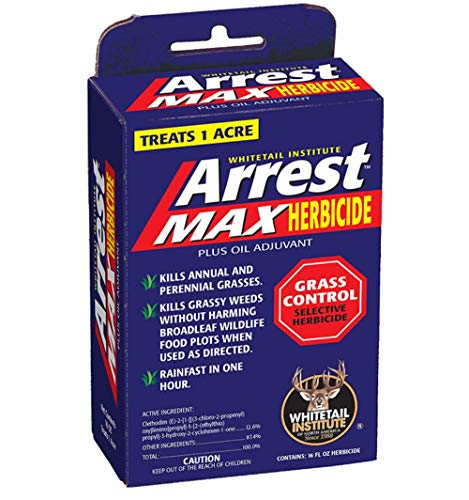
Arrest Max by Whitetail Institute is specifically developed for deer food plots, focusing on selective grass control while remaining safe for WHITETAIL planting systems and clovers or alfalfa. This product targets a broad range of annual and perennial grasses used in food plots, helping maintain a desirable forage stand. It is designed to support plot management by reducing competition from unwanted grasses without compromising forage quality.
When used in food plots, considerations include compatibility with forage varieties, timing to align with planting cycles, and the potential impact on non-target forage species. For property owners managing deer plots, Arrest Max offers a targeted option for grass suppression within suitable contexts.
Buying Guide: Key Purchase Considerations And Comparisons
Choosing the right selective herbicide for grassy weeds requires evaluating weed species, turf type, application timing, and potential effects on ornamental plants. This guide summarizes critical factors and compares typical trade-offs across products:
- Weed spectrum: Some products address broad lists of broadleaf and grassy weeds, while others focus on specific grasses common to lawns, such as crabgrass. Identify the primary weeds you encounter to prioritize a product with proven efficacy for those species.
- Turf tolerance: Check the herbicide’s labeled tolerance for your grass type (warm-season vs cool-season). A product with strong turf safety minimizes risk of injury to your lawn.
- Mode of action and timing: Pre-emerge, post-emerge, or both—selectives vary. Flexible timing can reduce weed establishment and allow control after germination, but follow timing guidance to maximize results and prevent damage to desirable grasses.
- Residue and rainfastness: Residual control can reduce reapplication frequency, but could also affect ongoing weed emergence. Rainfast times matter for how soon after application irrigation or rainfall can occur.
- Non-target safety: Some products are safer for ornamentals and garden beds than others. Consider proximity to shrubs, flowers, or edible plants when applying.
- Application method and packaging: User-friendly formulations (such as ready-to-use liquids or “Tip and Pour” designs) can simplify application, especially for larger areas or DIY users.
- Environment and safety: Always follow label directions, wear protective gear as advised, and consider environmentally sensitive areas (waterways, pollinator zones) when selecting and applying herbicides.
- Cost and coverage: Compare coverage rates per bottle and per acre, as well as the expected number of applications. Long-term control and reduced reapplication frequency can offer better value despite higher upfront costs.
In practice,Atticus Torocity provides flexible pre/post-emerge activity with a strong mesotrione base, making it a versatile option for mixed weed populations. BASF Drive XLR8 offers rapid post-emergent results with substantial residual activity, suitable for immediate weed suppression. Nufarm Change Up targets a broad array of broadleaf weeds with broad turf tolerance, appealing to property managers seeking a robust, year-round solution. Agrisel GrassOut Max emphasizes targeted grassy weed elimination but requires careful placement to protect desirable grasses. Whitetail Institute Arrest Max is specifically tailored for food plots, enabling grass control without harming key forage plants.
For best results, align product choice with your weed profile, turf type, and ongoing lawn care plan. Consider conducting a small test patch to observe turf response before full-area application, and always adhere to label instructions for safe, effective weed management.