Choosing the right seed mix helps support pollinators while adding color and biodiversity to your yard. The following selections are designed to attract bees, butterflies, and hummingbirds with a mix of annuals and perennials that perform across seasons. Below you’ll find five well-regarded options, followed by a practical buying guide to help compare types, coverage, and suitability for different gardens.
| Product | Brand | Seed Count / Coverage | Notes |
|---|---|---|---|
| Save the Bees Wildflower Seeds Bulk | Mountain Valley Seed Company | 80,000+ seeds; ~250 sq ft coverage | 19 varieties; supports Bee Conservancy |
| Seed Needs Pollinator Seed Mix | Seed Needs | 12,500+ seeds | Perennial-only blend; 16 species |
| Burpee Wildflower Mix | Burpee | 25,000 seeds; up to ~1,000 sq ft | 18 varieties; non-GMO |
| Tactiko Garden 26 Mix | Tactiko Survival | 120,000+ seeds; up to 600 sq ft | Annuals & perennials; 26 varieties |
| SWEET YARDS Bee Friendly Mix | SWEET YARDS | 7,500 seeds | 19 perennials; high germination |
Wildflower Seeds Bulk, 2 Oz. Save the Bees Mix

The Save the Bees mix from Mountain Valley Seed Company combines 19 annual and perennial varieties designed to be bee friendly while offering color across seasons. It includes butterfly milkweed, New England aster, coneflowers, lupine, cosmos, and many other favorites. The blend is suitable for planting in gardens, farms, or fields and is part of a national wildflower seed line crafted for North American conditions. With 80,000+ seeds, gardeners can cover roughly 250 square feet, creating a vibrant habitat that supports pollinators and local biodiversity.
Seed Needs Pollinator Seed Mix Honey Bee Blend

This Seed Needs blend focuses on perennial flowering plants. The packet measures a compact size and contains 16 species, including popular choices like Black-Eyed Susan, Purple Coneflower, Columbine, and White Yarrow. The mix is 100% pure live seed with no fillers, and the seed package is designed to be easy to store and use, making it suitable for gardeners who want reliable germination and a steady display of blooms to attract pollinators year after year.
Burpee Wildflower 25,000 Bulk Mix

Burpee’s Wildflower Mix offers 18 varieties that attract bees, butterflies, and other pollinators throughout the season. The mix includes species such as Siberian Wallflower, Forget-Me-Not, Echinacea, and Coreopsis, designed to thrive in sunny areas and various soil types. Each bag covers up to about 1,000 square feet when sown under appropriate conditions. The seeds are non-GMO and intended for easy outdoor scattering after danger of heavy frost, with even moisture and proper establishment supporting long-term blooms.
Tactiko Garden 26 Wildflower Seeds Mix
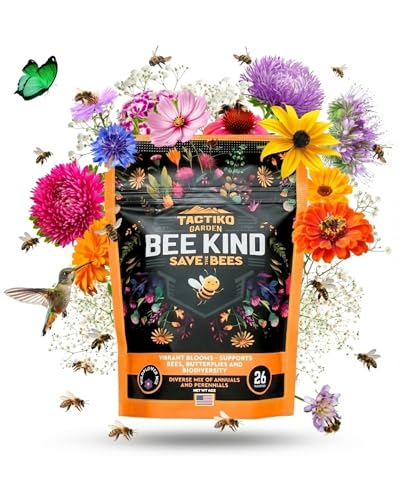
Designed to save the bees, this 4-ounce bag from Tactiko Survival contains over 120,000 seeds and includes 26 annual and perennial varieties. The blend aims to attract honeybees, native bees, butterflies, and hummingbirds, providing season-long color. Its large seed count makes it suitable for backyards, borders, meadows, and larger landscaping projects, with coverage up to 600 square feet when properly sown and cared for.
BUZZY Wildflower Pollinator Seed Mix

BUZZY’s seed mix features 18 pollinator-friendly varieties, including coreopsis, zinnias, cosmos, and coneflowers, designed to provide continuous nectar and pollen for bees, butterflies, and hummingbirds. The package emphasizes a DIY throw-and-grow approach suitable for beginners, with a focus on attracting pollinators while supporting a vibrant, long-season garden. The mix aims to cover sizable garden spaces and sustain a pollinator-friendly landscape through multiple bloom periods.
Buying Guide: Key Purchase Considerations
Choosing a seed mix for pollinators involves weighing plant variety, bloom timing, and garden conditions. Here are key factors to consider when selecting a mix:
- Pollinator appeal: Look for blends that include a mix of nectar-rich annuals and perennials to ensure blooms across multiple growing seasons and ongoing food sources for bees and butterflies.
- Coverage and density: Check stated seed counts and estimated coverage. Higher seed counts can translate to denser plantings, but actual results depend on sowing method, soil quality, and climate.
- Regional suitability: Some mixes are designed for broad North American planting, while others may target specific climate zones. North American-focused blends tend to offer more adaptable varieties.
- Germination and freshness: Fresh, open-pollinated seeds often germinate reliably. Look for information about germination rates and storage recommendations to maximize success.
- Non-GMO and purity: If avoiding fillers or genetically modified seeds is important, verify that the mix emphasizes high-purity, non-GMO seeds and lists all included varieties.
- Packaging and storage: For long-term use or gifting, choose blends with durable packaging and clear planting instructions, as well as resealable options when possible.
- Environmental impact: Consider blends that support pollinator health and may contribute to habitat restoration initiatives or conservation programs.
When comparing product options, note the balance between immediate coverage (larger seed counts and larger per-bag area) and ongoing bloom potential (a mix that blends annuals for quick color with perennials for lasting habitat). Also assess how easy the seed is to sow in your space (broadcast, drill, or patch planting), and whether you need a mix that tolerates sunnier or shadier locations.