Answer: A screen house or garden netting setup protects vegetables from pests, sun damage, and birds while allowing air, light, and water to reach plants. This guide highlights five top options for American buyers, showing who each product is best for, what makes it stand out, and any practical limitations. The selections cover ultra-fine mesh barriers, UV-stable shade cloth, and complete netting kits suitable for raised beds, greenhouses, and open gardens.
| Product | Best For | Key Benefit |
|---|---|---|
| WenTao Ultra Fine Garden Netting 4’x10′ | Raised beds and greenhouses | Ultra-fine mesh shields against insects and birds; doubles as mosquito barrier |
| Garden Tailor 4’x10′ Fine Bug Netting | Delicate vegetables and flowers | Durable HDPE with UV resistance; versatile indoor/outdoor use |
| TREEVEX Shade Cloth 6.5×10 ft | Sun-sensitive crops | Filters up to 55% of sunlight; reduces heat while preserving light |
| Meuallikit Ultra Fine Netting 4’x10′ | Small gardens; integrated water access | 0.8mm x 1mm mesh; see-through design; easy sizing and anchoring |
| Monirsen Garden Netting Kit 10×30 ft | Raised beds with hoops and covers | All-in-one kit with hoops for a quick setup; strong poly netting |
Note: Each product targets different garden setups—choose based on your crop type, climate, and whether you need shade, insect exclusion, or a full-frame protective cover.
WenTao Ultra Fine Garden Netting 4’x10′

The WenTao netting provides a sturdy 4 by 10 footprint ideal for raised beds and greenhouse rows. The ultra-fine 0.8–1.0 mm mesh blocks a broad range of insects while still allowing air and sunlight to pass through. It also functions as a mosquito barrier, offering relief from bites in outdoor garden spaces.
Best for: Gardeners seeking a versatile pest barrier that doubles as a mosquito shield for raised beds and greenhouses. It’s especially suitable for small to medium plots where a single wide sheet can cover multiple plants.
Why selected: The dual-purpose design combines pest protection and comfort, reducing the need for multiple coverings. The fabric’s durability makes it suitable for seasonal use in varied climates.
Caution: Ensure the edges are weighted or secured to prevent wind displacement in windy areas, since loose edges can loosen under strong gusts.
Garden Tailor 4’x10′ Fine Bug Netting
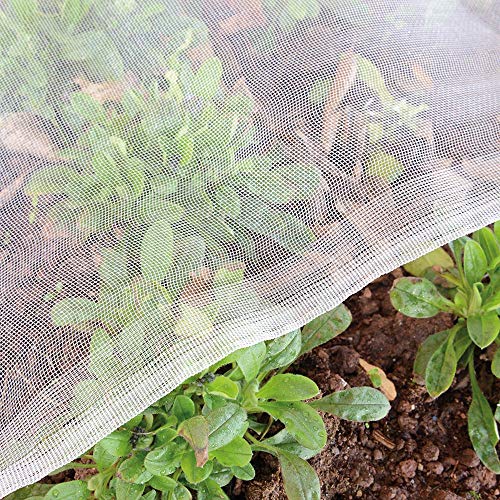
Garden Tailor offers a 4×10 foot fine net designed to protect a wide range of plants, including vegetables, flowers, and fruits. The HDPE material is UV-resistant, keeping the net sturdy in sun exposure. Tight selvedge helps prevent unraveling, and the mesh height is optimized to block many pest species while still letting water and light pass through.
Best for: Gardeners managing mixed crops and seeking a robust, long-lasting barrier for outdoors and in greenhouses, with dependable UV resistance.
Why selected: Its all-purpose design supports diverse garden layouts—from open beds to window screens—without needing extra framing.
Caution: While the mesh is fine, very small pests might still exploit gaps if the netting sits loosely; ensure a snug fit around plant rows and hoops.
TREEVEX Shade Cloth 6.5×10 ft

TREEVEX provides a 6.5 by 10 foot shade cloth with 55% shade capacity. Made from high-density polyethylene, it reduces sun intensity, moderates temperatures, and improves airflow. It’s designed to be cut to size and helps lower irrigation frequency by reducing evaporation.
Best for: Crops sensitive to intense sun, such as lettuce, peppers, and herbs, or gardens in hot climates that need shading during peak sun hours.
Why selected: It balances light exposure and temperature control, allowing growth without heat stress. It’s also durable enough to last seasons because of its knitted HDPE construction.
Caution: Shade cloth reduces sunlight; avoid using it on crops that require full sun year-round unless you adjust shading timing to preserve photosynthesis.
Meuallikit Ultra Fine Netting 4’x10′

Meuallikit offers 4×10 foot ultra-fine netting with a 0.8mm x 1mm mesh. The see-through design allows easy observation of plant health while keeping insects, birds, and other pests out. The netting is easy to cut and secure with stakes or clips, and it can be used across raised beds or in a greenhouse row.
Best for: Gardeners who want reliable pest exclusion with convenient access to watering and feeding without removing the barrier.
Why selected: The kit-friendly sizing and clear design provide practical flexibility for varying garden layouts and water application needs.
Caution: While it’s versatile, ensure the support structure is stable to prevent wind flap if used as a standalone sheet in exposed areas.
Monirsen Garden Netting Kit 10×30 ft
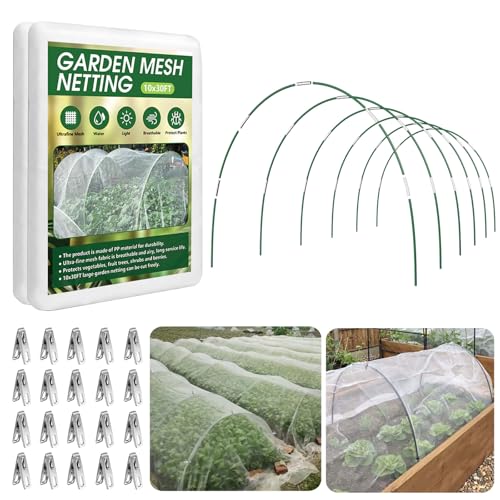
The Monirsen kit combines a 10×30 foot garden netting with six sets of 8-foot fiberglass hoops and supporting clips. The kit is designed for raised beds and outdoor plots, enabling quick assembly of a protective row cover. The 0.8mm x 1mm mesh is fine enough to deter many pests while letting air, light, and moisture through.
Best for: Gardeners seeking a complete, ready-to-assemble pest barrier with hoops to create a cover over raised beds or rows without building a frame from scratch.
Why selected: The all-in-one nature simplifies setup, especially for new installations or seasonal gardens needing rapid protection.
Caution: The fiberglass hoops should be handled with care during assembly; avoid bending the poles beyond recommended angles to prevent damage.
Buying Guide: How to Choose The Right Screen House For Your Veggies
What level of pest protection do you need? If you face insects and birds, go for ultra-fine mesh (0.8–1 mm) to reduce entry points. If you’re mainly worried about sun damage, shade cloth with 40–55% light reduction can protect heat-sensitive crops while preserving growth.
Raised beds vs. row covers: For raised beds, consider a kit that includes hoops or a frame to lift the netting away from plants. For open rows, a single wide sheet or a ground-weighted cover is often enough.
Durability and climate factors: UV resistance and HDPE construction matter in sunny regions. For windy climates, ensure edge weighting and secure anchoring. If you expect frequent weather changes, choose a product that can be easily trimmed to fit or re-secured.
Water and airflow: Look for nets with hole sizes that allow water and air to pass. This supports healthy root zones and reduces the need for frequent irrigation. See-through designs help gardeners monitor plant health without removing covers.
Ease of setup: Kits with hoops, stakes, and clips save time and ensure a snug fit. If you’re new to garden protective covers, start with a 4×10 or similar size to cover multiple rows or a small bed before expanding.
FAQ: Quick Answers For Garden Netting And Shade Cloth
- Q: Do these nets block all pests? A: They block many insects and birds, but extremely small pests may still find gaps if the cover is not snug.
- Q: Can I water plants with a netting covering? A: Yes, many nets are designed to allow water, air, and light to pass through without removing the cover.
- Q: Will shading reduce yields? A: Shade cloth reduces sunlight, so choose appropriate cloth for crops that tolerate partial shade or adjust timing to maximize photosynthesis.
- Q: How long do these covers last? A: Durability depends on material quality and exposure. UV-resistant HDPE and reinforced edges generally provide longer life in outdoor conditions.
- Q: Do I need tools to install? A: Most kits can be assembled with minimal tools; some include hoops and clips for quick setup.
- Q: Can I reuse covers season after season? A: Yes, with proper maintenance, storage, and care, most mesh covers and shade cloths can be reused across growing seasons.