If you’re growing hydroponically, you need consistently clean water. The top RO (reverse osmosis) systems remove dissolved solids, chemicals, and metals that can stunt plant growth. This guide highlights five well-suited options for hydroponics, explaining who each is best for and why it stands out. Use these picks to match your setup, water source, and production goals with reliable filtration.
| Product | Max Daily Output | Best For |
|---|---|---|
| Aquatic Life RO Buddie 3-Stage Hydroponic | 75 GPD | Small to medium hydroponic systems needing reliable, compact RO |
| Aquatic Life RO Buddie 4-Stage | 50 GPD | Budget-conscious setups with optional DI for zero TDS |
| Aquatic Life Twist-In 4-Stage RO/DI | 75 GPD | Moderate systems seeking easy cartridge changes |
| Aquatic Life 5-Stage Hydroponic RO | 200 GPD | Larger operations needing high throughput |
| Geekpure 4 Stage RO Drinking System | 100 GPD | General use for hydroponics and household needs |
Aquatic Life RO Buddie 3-Stage Hydroponic RO System

The Aquatic Life RO Buddie 3-Stage is designed for hydroponic use, delivering up to 75 GPD. The system focuses on reducing Total Dissolved Solids (TDS) by up to 98% and provides membrane filtration to lower TDS to a 1 in 10,000 ratio. Best for compact hydro setups where space and budget matter. Caution: 3-stage filtration may require more frequent cartridge changes than higher-stage models in very hard water.
Aquatic Life RO Buddie 4-Stage Aquarium Filter System
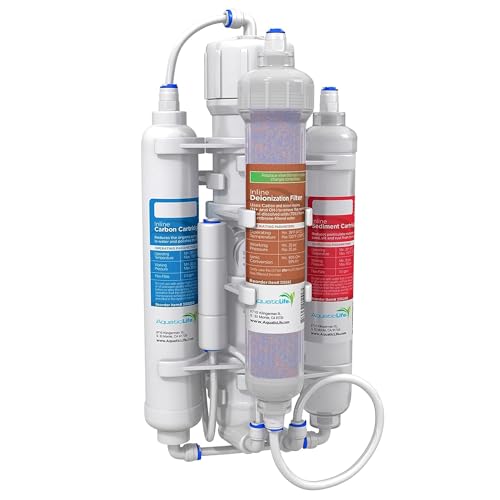
The 4-Stage RO Buddie adds a DI stage in the line, producing up to 50 GPD with zero TDS water. This setup is ideal for hydroponic users who want near-pure results and the flexibility to remove residual TDS after RO with DI resin. Best for growers on a budget who still want high-quality output. Caution: DI resin adds ongoing cartridge costs and requires monitoring to maintain zero TDS.
Aquatic Life Twist-In 4-Stage RO/DI System
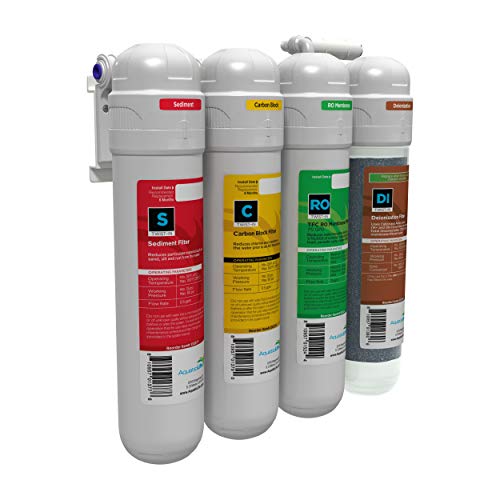
This 4-Stage Twist-In unit provides 75 GPD and includes a dedicated RO membrane plus a DI stage for near-0 TDS. It is well-suited for hydroponics that require consistent low-ppm nutrient water. Best for growers who want strong filtration with straightforward maintenance. Limitation: DI resin replacement is an ongoing cost and must be planned for in long-running setups.
Aquatic Life 5-Stage Hydroponic RO System

The 5-Stage unit delivers up to 200 GPD, suitable for larger hydroponic installations. It reduces chlorine, chloramines, heavy metals, and total dissolved solids for optimal nutrient uptake. Best for high-demand environments where a higher daily output is essential. Caution: Higher throughput can require more space and initial plumbing effort.
Geekpure 3 Stage Portable RO System

Geekpure’s 3-stage unit provides 100 GPD and emphasizes a compact design suitable for apartment hydroponics or small setups. Best for growers who want a portable, space-saving option with decent output. Limitation: Fewer stages means slightly less filtration depth than higher-stage systems, so monitor TDS to determine if DI is required.
Buying Guide: Key Purchase Considerations
- Water source and TDS level: Start with your tap water TDS. Higher TDS may benefit from multiple stages or an RO/DI combination.
- Throughput needs: Match GPD rating to your daily water use. Larger hydroponic systems may require 200 GPD or more, while hobby setups can do well with 50–75 GPD.
- Stage count and filtration depth: More stages (5-stage or RO/DI) typically yield purer water but cost more and require more maintenance.
- DI resin considerations: DI adds near-0 TDS output but increases ongoing costs. Decide if zero-TDS water is essential for your crops.
- Filtration sequence: Pre-filtration (sediment and carbon) protects the RO membrane and DI resin, extending life and performance.
- Space and installation: Some units are compact and portable, others require permanent mounting or plumbing. Plan placement and hookups.
- Maintenance schedule: Filter and membrane replacement intervals depend on water quality and system design. Budget for cartridges and replacement parts.
- Cost vs. benefit: Higher-GPD units reduce downtime but come with higher upfront and maintenance costs. Weigh against your grow cycle demands.
Practical Tips For Hydroponic Use
- Test water regularly to track TDS and pH after filtration, as changes can affect nutrient uptake.
- Flush new filters as recommended by the manufacturer to prevent initial impurities from affecting your water.
- Consider a TDS meter and pH meter as part of ongoing nutrient management for precise control.
- Plan for wastewater disposal in accordance with local regulations when using RO systems.
FAQ
- How much water should I expect from an RO system for hydroponics?
Answer: The daily output is listed by the manufacturer and depends on pressure and water temperature. Typical ranges include 50–200 GPD for the models listed here. - Is DI filtration necessary for hydroponics?
Answer: Not always. DI can produce near-0 TDS water, which some growers prefer, but it adds ongoing resin costs. Consider your TDS targets and budget. - What does a higher stage count buy me?
Answer: More stages generally provide cleaner water by reducing more contaminants and providing more protection for the RO membrane and plants. - Can I install these systems myself?
Answer: Many units include quick-connect fittings and clear labeling. Basic plumbing skills help, but consult the manual for your model’s specifics. - Will RO water impact nutrient strength?
Answer: RO water itself is essentially mineral-free. You’ll add nutrients via your hydroponic solution; monitor EC/TDS to adjust accordingly. - How often should I replace filters?
Answer: Replacement intervals vary by model and water quality, but expect sediment and carbon pre-filters every 6–12 months and RO membranes every 2–3 years in typical use.