Answering the question “which riding mower works best on hills and slopes?” this guide highlights five top picks designed to handle inclines, uneven terrain, and tight yard spaces. Each option targets different buyers—from heavy-duty slope work to light hillside maintenance—so you can choose the mower that aligns with your hillsides, budget, and yard layout.
Buyer types for quick reference:
– Large, steep yards: high-horsepower riding mowers with durable decks
– Narrow gate entrances: compact riding mowers with space-efficient features
– Safety-focused work on slopes: models with stable transmissions or remote control
– Slope-heavy properties with mixed terrain: versatile or electric options with solid traction
| Product | Best For | |
|---|---|---|
| CRAFTSMAN 42″ Gas Riding Lawn Mower | Medium to large hills with mower deck efficiency | 17.5 HP Briggs & Stratton engine; 7-speed transmission |
| Husqvarna Z254 (54″) ZT | Steep slopes and large yards | 54″ deck; 24 HP Briggs engine; hydrostatic transmission |
| Husqvarna Z246 (46″) ZT | Medium slopes with tighter spaces | 46″ deck; 22 HP Briggs engine; EZT transmission |
| Greenworks 80V CROSSOVERZ | Quiet, low-emission hillside mowing | 80V battery; 42″ deck; slope handling up to 15° |
| iBaeggs Cordless Remote Control | Hands-free mowing on hills for accessibility | Remote control; 45° slope capability; dual batteries |
CRAFTSMAN 42″ Gas Riding Lawn Mower
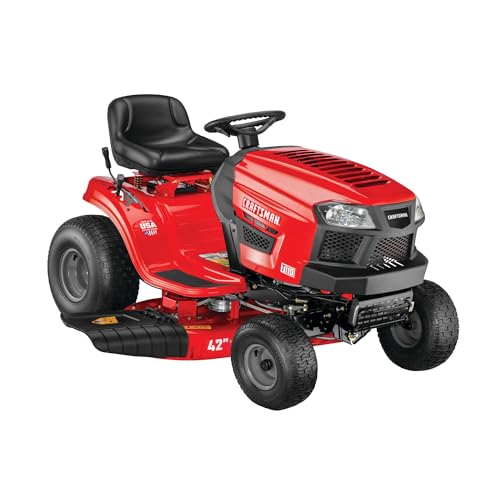
Best for: Property owners with mid-to-large hillside yards needing solid power and efficiency. This model uses a reliable 17.5 HP Briggs & Stratton engine and a 42″ deck to tackle uneven grass efficiently. The 7-speed transmission helps adapt to varying slope conditions and yard layouts.
- Advantages: Strong engine, wide cutting deck for faster coverage, mulching kit option for a professional finish.
- Best for hillsides: The engine and deck combination supports steady hill work and wide-area mowing.
- Caution: A larger deck may be challenging to maneuver through very tight gates or narrow passages.
CRAFTSMAN 36″ Gas Riding Lawn Mower

Best for: Smaller hillside yards or tight spaces where a wider mower cannot pass. The 36″ deck fits through tighter gates while delivering reliable performance on slopes with its 11.5 HP Briggs engine and 7-speed transmission.
- Advantages: Narrower profile, strong mulching capability, practical for gates and tight turns.
- Best for hillsides: Narrow width helps with navigating hillside features and embedded obstacles.
- Caution: Lower horsepower means it may take longer on very tall or thick grass on steep grades.
Husqvarna Z254 (54″) ZT

Best for: Large, slope-heavy landscapes requiring aggressive cutting coverage. The 54″ deck and 24HP Briggs & Stratton Endurance engine support fast, confident mowing on hills with a smooth Hydro-Gear EZT transmission for responsive control.
- Advantages: High engine power, wide cutting deck for quick hillside coverage, solid stability on inclines.
- Best for hillsides: ZT design provides excellent maneuverability across uneven terrain when powered by a robust engine.
- Caution: Large footprint may be harder to store in tight spaces or through narrow gates.
Husqvarna Z246 (46″) ZT

Best for: Medium-sloped sites where space is more confined. The 46″ deck and 22HP Briggs engine with an EZT transmission offer precise control on modest slopes and tighter layouts.
- Advantages: Compact for a ZT, good traction and responsiveness on slopes, easy-to-handle steering dynamics.
- Best for hillsides: Suited for medium-sized, uneven terrains with many obstacles.
- Caution: Not ideal for very steep hills or extremely tall grass without prior mowing passes.
Greenworks 80V CROSSOVERZ 42″

Best for: Quiet, emissions-free hillside mowing with a balance between performance and sustainability. The 80V battery platform offers a 42″ deck and power to handle slopes up to 15°, with multiple batteries to reduce downtime.
- Advantages: Low noise, no fuel, included batteries and charger support extended mowing sessions.
- Best for hillsides: Ideal for homeowners preferring electric operation in gentle to moderate slopes.
- Caution: Battery-powered performance may vary with load and incline; check runtime expectations for very long hills.
iBaeggs Cordless Remote Control Lawn Mower

Best for: Hillside properties where remote control mowing reduces manual effort and enhances safety. This model features remote operation, dual batteries, and 45° slope handling via strong traction wheels.
- Advantages: Hands-free mowing, remote control operation, safe handling on inclines or rough ground.
- Best for hillsides: Remote control can reduce risk when navigating steep or uneven slopes.
- Caution: Remote-control units may require familiarization with controls and may be less suitable for very large yards.
Buying Guide
Key factors to consider when choosing a riding mower for hillsides include engine power, deck size, transmission type, traction, and safety features. The right choice depends on yard size, slope degree, gate dimensions, and noise or emission preferences.
- Power and deck size: On steep terrain, higher horsepower engines and wider decks reduce mowing time. Consider deck width that fits your gate size and yard layout.
- Transmission and traction: Hydro-Gear EZT or CVT options provide smooth speed control. For slopes, robust traction systems and weight distribution matter for stability.
- Riding vs. remote or cordless: Riding mowers suit large, frequent hillside mowing. Remote-control or electric models offer accessibility and reduced emissions, with trade-offs in runtime or speed.
- Safety on slopes: Look for low center of gravity, secure seat belts, and easy-to-operate steering. Avoid models with overly aggressive cutting actions on steep inclines.
- Storage and compatibility: Check gate width, garage space, and whether you need mulching kits or bagging options for your lawn care routine.
Frequently Asked Questions
- What is the best riding mower for very steep hills?
- Are electric or cordless mowers suitable for hillsides?
- Should I choose a wide mower deck for hills?
- What safety features matter most on hillsides?
- Is a remote-control mower safer for slopes?
- Can mulching kits improve hillside mowing results?
Look for models with strong engines, wide traction options, and stable hydrostatic transmissions designed for slopes. A zero-turn mower with a robust drive system is often advantageous on uneven terrain.
Yes, for moderate slopes and smaller yards. They offer quiet operation and low emissions, but runtime depends on battery capacity and incline difficulty.
Wider decks cover more area per pass but may be harder to maneuver in tight spaces. Choose deck width based on gate access and yard layout.
Stable chasses, secure seat, high-traction tires, and a design that distributes weight away from steep slopes help maintain control and reduce tipping risk.
Remote control can minimize operator exposure on steep or challenging terrain, but it requires learning the remote interface and ensuring batteries are charged for the mowing session.
Mulching helps recycle clippings and maintain turf health on slopes, reducing cleanup and promoting even growth across uneven areas.