Gardening in American yards often suffers from Japanese and Oriental beetles that target foliage, flowers, and fruit. Reusable beetle traps offer a cost-effective, eco-friendly way to reduce beetle populations over a season without constant replacements. This guide highlights five top reusable traps, explaining how they work, what makes them effective, and which garden needs they best serve. Each option emphasizes easy emptying, durable materials, and scents that draw beetles away from prized plants.
Product snapshot table: the following five items are analyzed for attracting beetles, capacity, and reuse features. All are designed for outdoor use and include attractant components intended to last a full season. Consider garden size, plant density, and preferred maintenance when choosing a trap type.
| Product | Brand | Type / Notes |
|---|---|---|
| RESCUE! Japanese Beetle Trap – Reusable Bag – 3 Traps | RESCUE! Store | 3-pack; reusable bag; pheromone attractant; suitable for medium to larger gardens |
| RESCUE! Japanese Beetle Trap – Reusable Bag – 2 Traps | RESCUE! Store | 2-pack; reusable bag; pheromone attractant; portable for smaller setups |
| Catchmaster Japanese Beetle Traps Outdoor 6PK | Catchmaster Store | 6-trap set; dual lure; large coverage; easy bag disposal |
| RESCUE! Japanese Beetle Trap – Reusable Bag – 6 Traps | RESCUE! Store | 6-pack; reusable component; high capacity for bigger yards |
| RESCUE! Japanese Beetle Trap – Reusable Bag | RESCUE! Store | Single-trap option; reusable bag; compact for small plants |
RESCUE! Japanese Beetle Trap – Reusable Bag – 3 Traps

The RESCUE! trio offers a robust option for gardeners facing heavier beetle pressure. Each trap uses a pheromone lure to draw beetles toward the green panels, where they are stunned upon entry and fall into a collection bag. The bags are designed to prevent escape, and the attractant cartridge lasts an entire season. When a bag fills, owners can open the easy-lock bottom to empty and reuse the trap without replacing the attractant. This setup is ideal for mid-to-large landscaped areas or multi-plant beds where beetle activity is consistent over several weeks.
Key considerations include installation locations to maximize beetle capture, and regular bag checks to prevent overflow. The reusable design minimizes waste and overall cost. For best results, position traps away from flowering plants to lure beetles before they reach sensitive ornamentals. Routine maintenance, such as cleaning residues from panel surfaces, helps maintain attractant effectiveness over time.
RESCUE! Japanese Beetle Trap – Reusable Bag – 2 Traps

This smaller two-trap bundle is suited to limited spaces, patios, balconies, or compact gardens. Like the larger kit, it relies on a pheromone lure and a sturdy, reusable bag system. Each trap is designed for long-term seasonal use, with simple bottom-access emptying. The compact arrangement makes it easy to shield plant edges while drawing beetles away from nearby ornamentals. If beetle activity fluctuates across the season, a two-trap setup can be expanded later with additional traps from the same line.
Gardeners should monitor trap proximity to high-value plants and rotate positions as beetle pressure shifts. Ensure the attractant cartridge remains effective by following the product’s replacement guidance and keeping panels clean to sustain scent dispersion. The reuse process should remain straightforward to minimize downtime between seasons.
Catchmaster Japanese Beetle Traps Outdoor 6PK
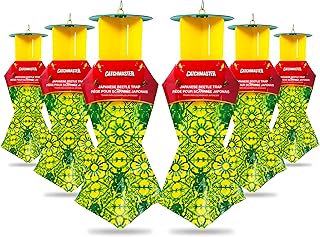
Catchmaster’s six-trap set emphasizes maximum yard coverage. It features a dual lure system—one that appeals to both male and female beetles and another floral/food lure—aimed at significantly boosting beetle capture rates compared with single-lure traps. The kit includes ready-to-use components: cross-shaped vanes, bags that seal to prevent rainwater intrusion, and adhesive bait packs for easy setup. With coverage claims surpassing 5,000 square feet, this option is well-suited for larger lawns, orchards, or garden layouts with abundant beetle pressure.
Performance depends on strategic placement and consistent bag disposal. The dual-lure approach can reduce beetle activity across a broad zone, but proper installation is essential to ensure the bags do not fill prematurely. Users should balance trap placement with access routes to minimize interference and maximize beetle capture without attracting pests to prized specimen plants.
RESCUE! Japanese Beetle Trap – Reusable Bag – 6 Traps

This six-trap collection is designed for homeowners with substantial beetle pressure or larger landscapes. The reusable bag system aligns with long-term garden maintenance goals, allowing traps to be emptied and reused across the season. The pheromone attraction and robust panel design aim to draw beetles away from foliage quickly, providing a practical solution for continuous protection in bigger yards. Regular bag checks help prevent overflow and maintain trap effectiveness. The kit’s breadth makes it a strong option for multi-zone gardens with diverse plantings.
Considerations for this kit include the total number of plants requiring protection, the ease of moving traps between beds, and weather conditions that may affect lure longevity. Storing unused attractants in a cool, dry place when not in use can extend the season-long efficacy of the traps. For optimal results, combine traps with good garden hygiene, such as removing beetles regularly and keeping flowering plants managed to minimize beetle oversaturation near essential ornamentals.
RESCUE! Japanese Beetle Trap – Reusable Bag

This single-trap option provides a compact, easy-to-deploy solution for small gardens, balcony planters, or containers with limited space. The reusable bag design and pheromone attractant deliver targeted beetle capture without requiring large-scale setup. While smaller in capacity, it remains effective in guarding individual plant clusters and entry points into a landscape. Placement near high-value or particularly vulnerable plants can yield meaningful beetle reductions with minimal maintenance effort. Regular bag disposal remains the main ongoing task to sustain performance year after year.
Buying Guide: How to Choose The Right Reusable Beetle Trap
- Garden size and beetle pressure: Larger lawns benefit from multi-trap kits or six-trap sets, while small beds may be adequately served by a single or two-trap option.
- Trap capacity and maintenance: Consider bag size and how often you’ll need to empty; larger bags reduce frequency but require more space to store.
- Lure longevity: Look for products with attractants designed to last a full season, and understand replacement cycles to avoid dwindling effectiveness.
- Placement strategy: Position traps away from sensitive plants yet in beetle flight paths for optimal capture; avoid clustering traps too close to ornamentals.
- Durability and reuse: Reusable bags and sturdy panels reduce waste and total cost; check for weather resistance to withstand rain and sun.
- Installation and access: Easy assembly, clear hanging or mounting options, and simple bag removal aid ongoing use without heavy labor.
- Environmental considerations: Traps should minimize bycatch and avoid attracting non-target pests; follow local guidelines for garden pest control.
- Compatibility with existing garden routines: If you use other pest control methods, ensure the trap installation complements them without interfering with beneficial insects.
Choosing the right reusable beetle trap depends on garden size, beetle activity, and maintenance capacity. For larger landscapes, multitrap kits with dual lures typically maximize capture rates and reduce floral damage across broader zones. For smaller spaces, compact options still offer meaningful protection with simpler upkeep. Regardless of choice, regular emptying, proper placement, and consistent maintenance are essential to achieving durable beetle control through the season.