Find the right wooden raised garden bed to fit your yard, balcony, or greenhouse. The following five planter kits are well-suited for vegetables, herbs, and flowers, offering sturdy framing, durable wood, and practical drainage. This guide helps buyers choose based on space, construction, and maintenance needs.
Quick reference
| Product | Key Size | Material/Finish | Best For |
|---|---|---|---|
| Yaheetech 43.5″ Raised Garden Bed | 43.5″ L x 16″ W x 14″ H | Medium to larger planter spaces; versatile in yards and greenhouses | |
| Yaheetech 8x2ft Divisible Bed | 96″ L x 25″ W x 11″ H | Customizable garden layouts; multiple beds in one area | |
| ScienGarden Planter Box 47.24″ | 47.24″ L x 15.75″ W x 12.6″ H | Long, narrow beds along walls or fences | |
| VIVOSUN 43.5″ Bed (2-Pack) | 43.5″ L x 16″ W x 14″ H | Two beds for separate crops or microclimates | |
| Shine Company Cedar Raised Bed | 40″ L x 12″ D x 12″ H | Smaller, durable cedar option with good drainage |
Yaheetech 43.5″ Raised Garden Bed

The Yaheetech 43.5″ raised garden bed offers a substantial growing area with interior dimensions that support a diverse mix of vegetables, herbs, and flowers. Best for gardeners who want a single, roomy planting bed without multiple components, it uses solid fir wood with a protective paint finish to help shield against outdoor elements. The long, rectangular shape fits well along a fence line or greenhouse interior. A note: wood care is ongoing, and some maintenance helps preserve the finish over time.
Who this is best for: Gardeners seeking a single, spacious bed for a small to medium plot, with simple assembly and rustic appeal. Best for yards or greenhouses where an extended, continuous planting strip is desired. Caution: The wood finish may require periodic touch-ups depending on climate and exposure.
Yaheetech 8x2ft Divisible Raised Bed
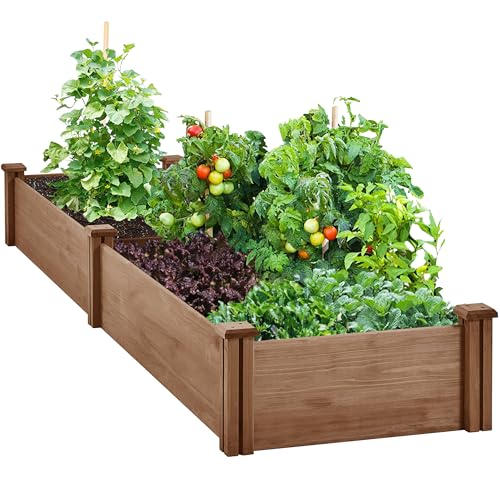
This 8×2-foot bed is designed for modular planning. The bed can be divided into two growing zones or combined for a larger planting area by removing the internal baffle. The upgraded corner posts allow flexible joining of multiple beds for expansive garden layouts. It’s ideal for homeowners who want to trial different crop arrangements or scale up gradually. A potential limitation is that the partition may need adjustment to ensure drainage and soil distribution remain even after assembly.
Who this is best for: Gardeners who want a customizable layout and the ability to expand their system with future beds. Choose this if you plan to grow diverse crops in distinct sections. Caution: Ensure proper drainage alignment when combining multiple sections to prevent soil pooling.
ScienGarden Planter Box 47.24″

ScienGarden’s planter bed provides a long, slender footprint suitable for lining walls, fences, or railing-side spaces. The fir wood is finished with a water-based coating, helping moderate odor and offering a degree of weather resistance. Reinforced base and raised feet improve airflow and reduce ground moisture contact, supporting soil health and longevity. This bed suits gardeners who want a compact, elongated option that still delivers adequate depth for root growth.
Who this is best for: Those seeking a durable, space-efficient option for narrow spaces or decorative borders. Best for wall-adjacent setups. Caution: The finish, while water-based, may require occasional upkeep in humid climates to prevent weathering at joints.
VIVOSUN 3.6×1.3Ft Raised Bed (Single)

The VIVOSUN unit offers a deep, 14-inch planting area with a sturdy fir wood frame and a liner. It includes practical drainage features and can support a broad range of crops from vegetables to flowers. The included liner is helpful for soil retention and easier cleanup. It’s well-suited for patios or balconies where a robust, weather-resistant bed is needed, and it’s available as a two-pack for larger container garden designs.
Who this is best for: Balcony or patio gardeners needing a rugged, long-lasting bed with reliable drainage. Opt for the two-pack if you want matching beds for parallel crops. Caution: Ensure the liner is correctly placed to maximize drainage and soil retention.
NatraHedge Hampton Classic Planter

The Hampton Classic planter from NatraHedge emphasizes all-season usability. Raised feet and a slatted base, plus an insulated and perforated interior liner, support drainage and climate resilience. This design aims at continuous outdoor use, making it a practical choice for gardens that experience temperature fluctuations. It’s a straightforward option for those who want reliable performance without frequent maintenance.
Who this is best for: Gardeners looking for a durable, year-round planter with solid drainage and a simple setup. Best for all-season planting in patios or yards. Caution: Cedar-like visuals appeal to traditional aesthetics but may require periodic refinishing for color retention depending on climate.
Shine Company Cedar Raised Bed

The Shine Company Cedar bed uses 100% authentic cedar wood, known for its natural durability and resistance to outdoor wear. Kiln-drying helps prevent cracking and warping, enhancing longevity. The bed includes prebuilt drainage-focused floor panels to promote aeration and reduce rot risk. This option balances longevity with a lighter color aesthetic, making it a favorable choice for those who want a classic, natural look with predictable performance.
Who this is best for: Gardeners who prefer a traditional cedar look and want a durable, low-maintenance exterior. Best for those valuing natural material and improved drainage. Caution: Cedar color and grain may vary; refinishing could be needed for long-term color uniformity.
Buying Guide: Key Considerations for Redwood-Style Planter Box Kits
- Size and layout: Measure your space to determine whether a single large bed, multiple smaller beds, or a modular system best fits your garden plan. Consider whether you want beds along walls, in corners, or freestanding in open spaces.
- Wood type and finish: Look for durable woods like fir and cedar, with weather-resistant finishes. Water-based finishes are preferable for indoor-air quality and easier cleanup, especially in greenhouses or living spaces.
- Drainage and soil depth: A bed with proper drainage holes and a deeper planting area supports healthier root growth. If the bed lacks drainage, plan on adding a liner or drain adjustments after setup.
- Assembly and modularity: If you anticipate expanding your garden, choose beds with modular features or easy-to-connect corners. A divisible bed can adapt to changing planting needs.
- Maintenance: Consider wood treatment needs (recoating, sealing) and how often you’ll perform routine upkeep. Cedar beds often require less maintenance, while fir may need periodic refinishing depending on climate.
- Durability and load: Larger beds should have reinforced bases and stable legs to handle soil weight and weather exposure. Check weight capacity recommendations when planning vegetable crops with dense soil.
Frequently Asked Questions
- What is the best wood for outdoor planter boxes?
– Cedar and fir are common choices for outdoor planters due to natural resistance to decay and sturdy construction. Cedar typically lasts longer with less maintenance in outdoor conditions. - Do planter boxes need liners?
– Liners help protect wood from soil moisture and extend the life of the box. They also aid in soil containment and drainage management. - How do I maintain a wooden planter bed?
– Clean periodically, monitor for signs of cracking or warping, and reapply exterior-grade sealant or stain as needed based on climate and sun exposure. - Can I use these beds indoors?
– Yes, many wooden planter beds work well indoors in sunrooms or greenhouses, provided there is adequate light and moisture control to prevent mold and wood damage. - Are adjustable or divisible beds worth it?
– Divisible or modular beds offer flexibility for crop rotation and space management, especially in smaller setups or evolving gardens. - How deep should planter boxes be for vegetables?
– About 12–14 inches depth supports most common vegetables; deeper beds suit deep-root crops and larger root systems.