Grass burrs and other annual weeds can invade lawns when soil temperatures favor germination. Pre-emergent herbicides create a protective barrier that stops weed seeds from germinating, reducing future mowing, weeding, and broadleaf competition. This guide highlights five highly effective pre-emergent options available on Amazon, focusing on products that work well in common American turf grasses. All selections are geared toward preventing grassy and broadleaf weeds such as crabgrass, Poa annua, and similar invaders that complicate lawn care.
Summary table of selected products
| Product | Brand | Key Benefit | Application Notes |
|---|---|---|---|
| Syngenta Barricade 4FL | Syngenta | Long-lasting pre-emergent for 30+ species | Apply before soil temps reach 55°F for 3-day average in spring; after 50°F in fall before freeze |
| Prodiamine 65 WDG | Quali-Pro | Broad-spectrum pre-emergent for grasses and many weeds | For established turf; follow label for pests and seasons |
| Scotts WeedEx Prevent with Halts | Scotts | Season-long crabgrass prevention | Apply in early spring or fall; protects against listed annuals |
| Scotts Turf Builder Halts Crabgrass Preventer | Scotts | Crabgrass prevention plus lawn nutrition | Pre-emergent plus fertilizer; apply before 80°F temps |
| Bonide Crabgrass and Weed Preventer | Bonide | Long-lasting pre-emergent for turf and beds | Ready-to-use; treat up to 5,000 sq ft |
Syngenta Barricade 4FL Herbicide

Syngenta Barricade 4FL Herbicide is a long-lasting pre-emergent designed to prevent a broad spectrum of weeds in lawns, turf, and ornamentals. Its primary action is to halt weed development before germination, making it suitable for both residential and landscape uses. The label emphasizes application timing tied to soil temperature, with recommended windows in spring and fall to maximize season-long protection. As a broad-spectrum option, Barricade targets many common turf weeds, including crabgrass and Poa annua, while being suitable for a variety of turf species when used as directed. The product’s longevity reduces the need for frequent reapplication, offering consistent protection when applied properly.
The product is particularly effective when soil temperatures align with the specified thresholds. Users should monitor local conditions and follow the label guidance for timing to ensure a season-long barrier. Barricade 4FL is best used as part of an integrated lawn plan, especially in areas where weed pressure is high or where multiple weed species are common. For those managing ornamental beds or landscape trees, the label notes suitability beyond lawns, but precise application guidelines should be checked to avoid unintended impacts on desirable plantings.
Prodiamine 65 Wdg 5lbs Pre-emergent Grass Broadleaf Weeds

Prodiamine 65 WDG provides pre-emergent control for grasses and broadleaf weeds. This product is often marketed as a generic equivalent to Barricade, with a target list that includes several annual grasses and common broadleaf species. It is designed for established turf and landscape ornamentals, containers, and perennials, making it a versatile option for homeowners and professionals alike. The label details several pests and application contexts, suggesting that it can be used across diverse landscapes when applied according to directions. For best results, align application timing with local soil temperatures to maximize the temperature-dependent germination window control.
Users should be mindful of turf type restrictions and seasonal timing. While Prodiamine 65 WDG offers broad efficacy, performance can vary with turf species and environmental conditions. Following the label for dilution, spraying method, and reapplication intervals is essential to avoid resistance and ensure effective weed prevention across multiple weed cycles in a given season.
Scotts WeedEx Prevent with Halts

Scotts WeedEx Prevent with Halts combines pre-emergent action with ongoing preventative benefits for grassy weeds. Its stain-free formulation supports season-long crabgrass prevention when applied in early spring or fall, aligning with typical germination periods. The product’s Halts component is described as providing long-lasting protection against a range of annual weeds known to invade lawns. As with any pre-emergent, timing is critical; applying too late after seed germination reduces effectiveness. This option is popular for its straightforward use and compatibility with typical home lawn care routines.
For best outcomes, pair WeedEx Prevent with proper irrigation and mowing practices. Ensure application occurs on dry turf as per label, then water according to local rainfall to activate the barrier. This helps maximize control across preventable species like crabgrass and Poa annua within the targeted season. It is suitable for many warm-season and cool-season grasses, but always confirm compatibility with your specific turf species and local climate conditions.
Scotts Turf Builder Halts Crabgrass Preventer
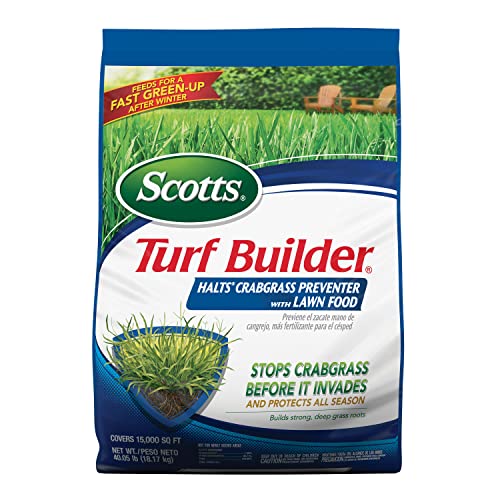
Scotts Turf Builder Halts Crabgrass Preventer is designed to stop crabgrass before it invades and to provide lawn nutrition with its fertilizer component. This combination makes it a practical choice for homeowners seeking both weed prevention and lawn feeding in a single step. The label emphasizes application timing in early spring, ideally when soil temperatures are rising but before regular mowing begins. The product is positioned for broad usage across common cool and warm-season turfgrasses, offering a balance of preventive action and lawn health support.
As with any granular product, thorough watering after application helps activate the barrier. For best results, apply across evenly and avoid applying to stressed or drought-affected lawns. Regularly reseed or overseed as needed to maintain uniform grass density, which itself helps reduce weed germination opportunities. The product’s fertilizer component can contribute to a healthier lawn, supporting resilience against weed establishment in subsequent seasons.
Bonide Crabgrass and Weed Preventer

Bonide Crabgrass and Weed Preventer is a durable, ready-to-use pre-emergent that targets crabgrass and other common weeds in turf and ornamental beds. The product is designed to provide up to four months of control, with coverage suitable for both cool-season and warm-season turfgrass types. It is described as easy to apply and ready to use, which helps simplify the weed prevention routine for homeowners who prefer a straightforward approach. The label suggests applying in spring, before weed germination, to maximize efficacy across the season.
When using Bonide, follow the label’s application rates to achieve even distribution across the treated area. The product’s granular form allows for precise placement in lawns and garden beds alike. For best performance, maintain adequate moisture after application and avoid disturbing the soil surface too soon after treatment. Pairing this product with proper lawn care practices—such as mowing, irrigation, and fertilization schedules—can enhance overall weed prevention and turf health.
Buying Guide: Key Purchase Considerations for Pre-Emergents
Choosing the right pre-emergent requires understanding your lawn’s needs, climate, and weed pressure. Below are important considerations to help you compare products and make an informed decision.
- Weed target and spectrum: Some pre-emergents target specific weeds (like crabgrass) more effectively, while others provide broader protection across dozens of species. Review the label to see which weeds are listed and ensure they align with your local weed problem.
- Turf compatibility: Not all pre-emergents suit every lawn type. Check compatibility with your grass species (cool-season vs warm-season) and any ornamental beds or landscape plants near the treated area.
- Timing and soil temperature: Pre-emergents must be applied at the correct soil temperatures to prevent weed germination. Spring and fall windows vary by product; adhere to the label’s temperature guidance for best results.
- Longevity: Some products offer season-long protection with a single application, while others require reapplication. Consider your local climate and weed cycle when selecting a product with longer residual activity.
- Formulation and application method: Granular, liquid, and ready-to-use formats exist. Choose based on your comfort level with application tools and the size of the area to treat. Some products also combine fertilizer with pre-emergent.
- Security and safety: Always read the label for safety precautions, protected plants, and pets. Keep children and pets away during application and until the product is dry or the recommended re-entry time has passed.
- Label guidance and restrictions: Many products have specific restrictions for use around ornamentals, vegetables, or lawns with particular turf types. Follow all label directions to avoid phytotoxicity or reduced effectiveness.
- Cost and coverage: Compare coverage per bag or per bottle, and calculate cost per square foot to determine the best value for your lawn size and budget.
- Integrated lawn care: Pre-emergents work best as part of a broader program including mowing height management, proper irrigation, and timely fertilization. Consider how the product fits into your annual plan.
Frequently Asked Questions
What is a pre-emergent, and how does it work? A pre-emergent forms a chemical barrier in the top layer of soil that prevents weed seeds from germinating. It does not kill established weeds and must be reapplied each season for continued protection, depending on the product and climate.
When should I apply a pre-emergent for grass burrs? Timing depends on soil temperature and local climate. Spring applications typically occur when soil temperatures are consistently rising and before weed seeds germinate, while fall applications target winter annuals. Check the product label for precise timing guidelines.
Can I use a pre-emergent on ornamental beds as well as lawns? Many pre-emergents are suitable for both lawns and ornamentals, but always check the label for restrictions and application methods around non-grass plants to prevent phytotoxicity.
Additional Considerations for Grass Burr Prevention
Grass burrs, and similar grass-specific weed invaders, often germinate when warm-season grasses start to grow in spring or early summer. A well-timed pre-emergent helps establish a barrier early in the season, reducing future weed establishment. In areas with heavy weed pressure, consider rotation of active ingredients to minimize weed resistance and maintain long-term effectiveness. Always integrate with mowing height adjustments, irrigation practices, and timely fertilization to support healthy lawn growth that resists weed invasion.
How To Apply Pre-Emergents For Optimal Results
Follow these practical steps to maximize the effectiveness of your selected pre-emergent:
- Read the product label and identify the recommended application window based on soil temperature.
- Prepare a clean, level lawn by removing debris and ensuring even soil contact for granular products.
- Apply evenly according to the label’s rate per square foot. Avoid heavy clumps that can hinder coverage.
- Water lightly after application if the label requires activation by moisture. Some products rely on rainfall to activate the barrier.
- Avoid mechanical disturbance in treated areas for the time recommended by the label to allow the barrier to form.
- Reseed or overseed as needed in subsequent seasons to maintain a dense turf that further reduces weed establishment.
By selecting a product that matches your local climate and lawn type, and by applying it according to the label, you can significantly reduce grass burrs and other weed pressures. The five products highlighted above offer a mix of long-lasting protection, broad weed coverage, and convenient application formats to fit different lawn care routines.