Answering the essential question for homeowners and groundskeepers: which power lawn plug aerator delivers reliable core aeration and robust coverage? This guide highlights five top options that balance depth, width, and ease of use. The choices range from tow-behind models for tractors to compact manual tools for small yards. Ideal users include large-lot owners needing fast coverage, DIY lawn enthusiasts seeking improved soil breathing, and seasonal tinkerers wanting durable, long-lasting equipment. The table below summarizes the featured products to help you compare at a glance.
| Product | Best For | Key Benefit |
|---|---|---|
| Agri-Fab 45-0299 48″ Tow-Behind | Large lawns with tractors | Deep 3″ core penetration with 32 knives |
| YINTATECH 40″ Tow Behind | Efficient, mid-size lawns | 24 cores; 2″ soil aeration plus enhanced material build |
| PPOLB 48″ Lawn Aerator Tow Behind | Wide-area coverage | 32 heat-treated tines; up to 3″ penetration |
| EliteEdge 40″ Tow Behind | Hard soil and variable terrain | Up to 3″ core depth; 150-lb weight tray for customization |
| VELPAX 52″ Tow Behind | Heavy-duty lawns and large landscapes | 8-tine design; up to 2″ penetration; heavy-duty build |
Agri-Fab 48″ Tow Behind Lawn Plug Aerator
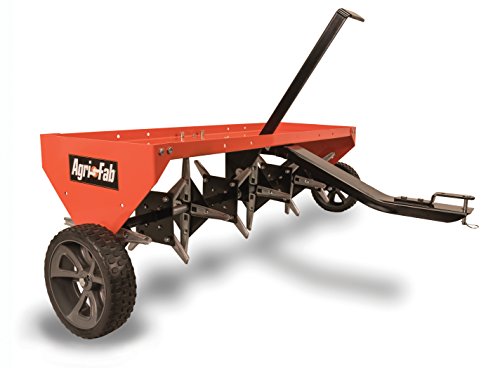
Best for: Homeowners with mid-to-large lawns who own a lawn tractor and want deep-core aeration. This model pulls 32 galvanized knives to penetrate the soil and creates 3-inch deep plugs, aiding thicker, healthier turf. It is positioned for frequent use and robust performance in sustained lawn care routines.
- Pros: Deep core penetration, USA-made with durable galvanized knives, strong pulling capability.
- Cons: Requires a suitable lawn tractor hitch; heavier setup may be unwieldy for smaller landscapes.
YINTATECH 40in Tow Behind Aerator

Best for: Lawn owners seeking efficient coverage with a balance of core count and maneuverability. This aerator provides 24 cores with 2-inch effective depth, aided by eight steel spike disks that help air, water, and nutrients reach the root zone.
- Pros: Moderate width for quick passes, robust galvanized components, effective for medium-to-large yards.
- Cons: Maximum depth of around 2″—not ideal for very compacted soils needing deeper aeration.
PPOLB 48″ Lawn Aerator Tow Behind

Best for: Large yards that need fast coverage and strong soil penetration. The 48″ width with 32 heat-treated steel tines penetrates up to 3 inches, helping water, seed, and fertilizer reach the roots more effectively.
- Pros: Wide working width, strong tines for deep aeration, universal hitch compatibility with many tractors.
- Cons: Heavier than smaller models; assembly and setup may take longer.
EliteEdge 40″ Tow Behind Aerator
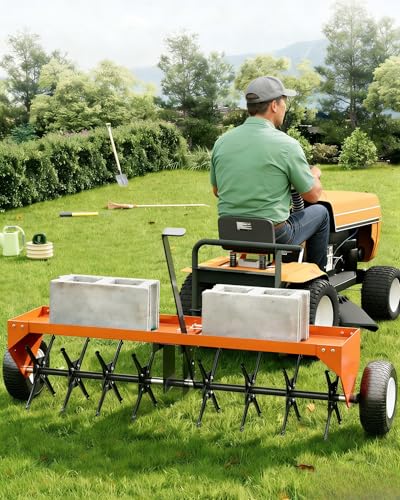
Best for: Lawns requiring customizable aeration with heavy-duty construction. The EliteEdge model uses 24 steel tines that reach up to 3 inches, and a 150-lb weight tray lets you tailor depth and effort to soil conditions.
- Pros: Durable all-steel frame, galvanized finish resists corrosion, adjustable weight tray for variable soil conditions.
- Cons: Heavier, may require careful handling on sloped terrain.
VELPAX 52″ Tow Behind Plug Aerator

Best for: Professionals and serious enthusiasts with large landscapes who need robust mass passing capabilities. The 52″ width accommodates big yards, with eight tines penetrating up to 2 inches and a strong galvanized build for durability.
- Pros: Large coverage width, sturdy construction, simple assembly and operation.
- Cons: Slightly shallower core depth compared to some 3″ models; choose for speed or compacted-but-not-extremely-dense soils.
Buying Guide
What is the right aeration depth for your lawn?
Core depth options vary from about 2″ to 3″. Deeper aeration helps lawn roots access air, water, and nutrients in compacted soils. If your soil is heavily compacted, prioritize models with 3″ depth capability or the option to add weight for deeper penetration.
How wide should your aerator be?
Wider models cover more ground per pass, reducing total mowing time on large lawns. Narrow units are easier to maneuver in tight spaces or smaller yards. Compare widths from 40″ to 52″ to match your lawn size and equipment compatibility.
What hitch and compatibility matter?
Universal hitch compatibility increases flexibility. Ensure the aerator can attach to your lawn tractor, ATV, or ZTR. Verify frame construction and weight distribution to maintain stability during operation.
What material and build quality matter?
Galvanized components resist rust and corrosion, extending service life. All-steel frames and trays with weight capacity (for example, 125–150 lbs) enable deeper penetration and stable operation on uneven terrain.
Manual vs. tow-behind considerations
Manual aerators are cheaper and great for small lawns, but tow-behinds save time on larger properties. For sizable yards, prefer models with strong cores, reliable depth, and straightforward hitching.
Weight and portability considerations
Weight trays allow extra ballast to power through hard soils. Make sure the added weight is easy to manage and safely removable for transport and storage.
Frequently Asked Questions
- What is plug aeration and why is it needed? It creates soil cores that improve air, water, and nutrient movement to the root zone, promoting healthier grass.
- Can I use plug aerators on all grass types? Most cool-season and warm-season grasses respond well; avoid extremely wet soil during aeration to prevent compaction from weight.
- Is deeper always better? Deeper cores help where soil is heavily compacted, but extremely hard soil may require added weight or multiple passes at varying depths.
- How often should I aerate? For most lawns, once per year is sufficient; high-traffic or clay-heavy soils might benefit from twice-yearly aeration.
- Do aerators require maintenance? Yes. Regularly inspect tines, lubricate moving parts if needed, and keep the galvanized components clean and dry between uses.
- What safety steps should I take? Use proper hitching to avoid swaying, keep bystanders away during operation, and disengage the machine before adjustments.