Powder chlorine is a fast, effective way to sanitize and shock both above-ground and in-ground pools. This guide highlights five strong options, explaining who each product is best for and why. Use this to compare typical dosing, dissolution, and stabilization considerations so you can keep water clear and safe all season.
| Product | Best For | Key Benefit |
|---|---|---|
| HTH 52031 Swimming Pool Care Shock | Weekly shock treatments for problem water | Cal Hypo formula, fast-dissolving, no CYA buildup |
| CLOROX Pool&Spa All-in-One XtraBlue Granules | All-in-one sanitation and algae control | Fast-acting, stabilized for longer sanitizer life |
| In The Swim Pool Shock – 68% Cal-Hypo (12 x 1 lb) | Routine maintenance for crystal-clear water | 65% available chlorine, versatile use |
| Clorox® Pool&Spa™ Shock Clear (6-Pack) | Quick cloud-clear and ready-to-swim | 4-in-1 formula, 15-minute swim-readiness |
| Leslie’s Power Powder Pro Granular Pool Shock | High-strength shock for aggressive cleaning | 73% calcium hypochlorite, fast-dissolving |
Introduction: Powder chlorine is a staple for pool care, delivering rapid sanitization and algae control. The products below are chosen for reliability, easy use, and practical dosing guidance. This list targets homeowners and pool managers seeking quick results, especially during season spikes, algae blooms, or routine maintenance.
HTH 52031 Swimming Pool Care Shock

Contains Cal Hypo, offering a fast-acting shock treatment that sanitizes, clarifies, and helps prevent bacteria and algae. Best for weekly maintenance and for users who want a Cal Hypo-based shock without adding cyanuric acid (CYA). It is particularly suitable for pools experiencing cloudy water or minor bacterial challenges after heavy use.
Who it’s for: Homeowners needing a quick, non-stabilized shock that dissolves rapidly and reduces the risk of chlorine lock. Caveat: Cal Hypo can raise calcium levels, so monitor pool water balance after use.
CLOROX Pool&Spa All-in-One XtraBlue Chlorinating Granules
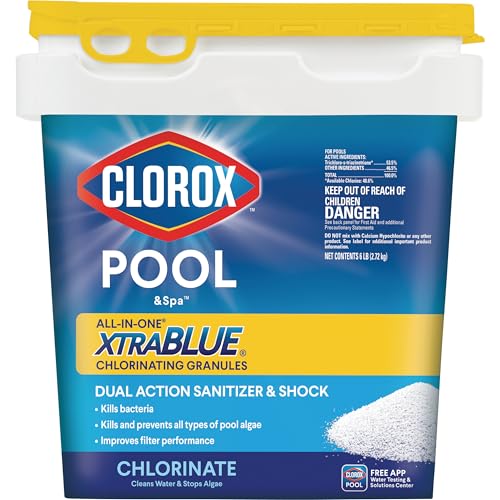
This product combines sanitizing, shocking, and algae prevention in one step. It is designed to provide a stable sanitizer residual by resisting sunlight burn-off, helping to keep water clean longer. Best for: households seeking a simple, all-in-one solution with fewer steps.
Caution: Quick-dissolving granules can increase chlorine levels rapidly; maintain routine testing to avoid oversaturation. Best for: pools needing fast, comprehensive treatment with reduced odor and irritation.
In The Swim Pool Shock – 68% Cal-Hypo (12 x 1 lb)

Cal-Hypo formula with 65% available chlorine provides strong sanitization for crystal-clear water. Best for: both above-ground and in-ground pools needing robust, fast-acting chlorine shock. Useful for pre-dissolving to avoid liner bleaching.
Limitation: Non-stabilized chlorine shocks can raise free chlorine quickly and may affect total alkalinity; test and balance afterward.
Leslie’s Power Powder Pro Granular Pool Shock

Contains 73% calcium hypochlorite and 70% available chlorine, delivering a high-strength shock that fights bacteria and algae. Best for: aggressive cleaning or after extended pool use; fast-dissolving with low residue makes it suitable for routine maintenance as well.
Limitation: Higher calcium can affect water hardness; follow with balanced calcium and pH management to prevent scaling or cloudiness.
Buying Guide: Powder Chlorine For Pools
- Form and Concentration: Look for high-calcium hypochlorite or stabilized dichlor options. Cal-Hypo provides strong shock but can raise calcium; dichlor is pH-neutral and dissolves quickly but may require more frequent dosing.
- Stability vs. Quick Dissolution: Stabilized granules resist sunlight, extending sanitizer life, while fast-dissolving products are ideal for immediate treatment without long dissolution times.
- Application Size: Match product size to pool volume. Smaller 1-lb packs fit quick shock cycles, while larger 25–50 lb bags suit ongoing maintenance for bigger pools.
- Impact on Water Chemistry: Check whether the formula affects pH, total alkalinity, and calcium hardness. Choose a product that aligns with your current water chemistry and testing routine.
- Compatibility: Ensure the product works with your pool surface (vinyl, plaster, fiberglass, tile) and with any existing algaecides or clarifiers you use.
- Safety and Handling: Use protective gear when handling powders, and follow label directions for dosing, pre-dissolving, and storage away from moisture.
FAQ
- What is the difference between Cal-Hypo and Dichlor? Cal-Hypo is a strong, non-stabilized chlorine shock that raises calcium hardness; Dichlor is more pH-neutral and stabilizes in the water, reducing pH shifts but often requires more frequent dosing.
- How often should I shock with pool powder chlorine? It depends on usage, water balance, and algae risk. Common practice is weekly or after heavy rainfall, high bather load, or suspected contamination.
- Can I use chlorine granules in all pool types? Most granules are suitable for above-ground and in-ground pools, but always confirm compatibility with pool surface and equipment.
- How do I prevent cloudy water after shocking? Run the filter, maintain proper pH (7.2–7.8), and ensure adequate chlorine residual. If cloudiness persists, test for metals or high stabilized chlorine demand.
- Is it safe to swim after using powder chlorine? Some products advertise swim-readiness in minutes; always verify the label’s recommended wait time and test the water before entering.