Choosing the right potting soil is essential for Peace Lilies (Spathiphyllum). The ideal mix should provide balanced nutrients, good drainage, and steady moisture without becoming soggy. This guide highlights five top-rated options and explains how to evaluate soil blends for indoor Peace Lilies, ensuring vibrant foliage and long-lasting blooms.
Summary of selected products
| Product | Brand | Key Benefit |
|---|---|---|
| Peace Lily Potting Soil Mix (8 Quarts) | Soil Sunrise | Natural blend with nutrient retention and balanced pH |
| Professional Peace Lily Soil | Leaves and Soul | Ready-to-use mix with strong aeration and drainage |
| Organic Peace Lily Potting Soil | PERFECT PLANTS | Organic, loamy mix with pine bark and coir |
| Miracle-Gro Houseplant Potting Mix | Miracle-Gro | Fertilized mix designed to reduce gnats and support growth |
| Gardenera Professional Grade Potting Mix | Gardenera | Premium blend with peat, bark, perlite, charcoal, and moss |
Peace Lily Potting Soil Mix (8 Quarts) By Soil Sunrise
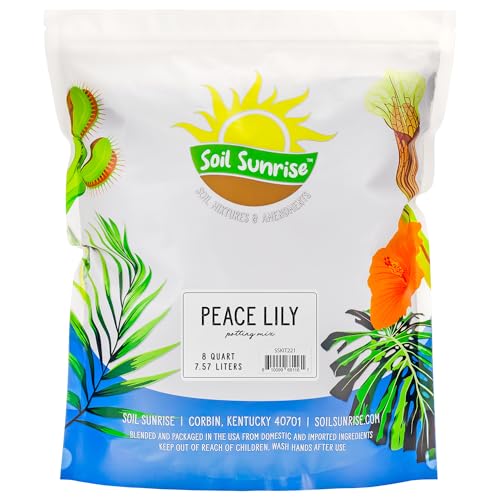
Designed specifically for Spathiphyllum, this 100% natural potting blend excludes artificial fertilizers. It aims to improve nutrient retention, aeration, and soil pH balance to support Peace Lilies both indoors and outdoors. The formulation emphasizes organic matter to foster healthy roots and robust foliage growth.
Professional Peace Lily Soil

This ready-to-use soil blend is crafted to support growth in Peace Lilies and other Spathiphyllum varieties. It emphasizes strong root aeration and improved fertilizer absorption, while promoting optimum drainage to prevent over-watering in indoor containers.
Organic Peace Lily Potting Soil

Organic Premium Mix from Perfect Plants blends composted pine bark, peat moss, perlite, coconut coir, granite sand, and dolomite lime. It’s hand-mixed in the USA and offered in 4 quart and 8 quart bags. The chunky loam texture supports indoor repotting and is well-suited for peace lilies and other semi-aquatic houseplants.
Miracle-Gro Houseplant Potting Mix

Miracle-Gro’s formula is tailored for indoor houseplants, combining essential nutrients with perlite and sphagnum to support growth while reducing common gnats. It’s suitable for a wide range of varieties, including Peace Lilies, pothos, spiders, and philodendrons, and is designed to keep moisture balanced for steady root development.
Gardenera Professional Grade Potting Mix

Gardenera’s 2-quart bag provides a premium blend designed for peace lilies and other indoor plants. It features Canadian peat moss, New Zealand bark, perlite, horticultural bamboo charcoal, and Sphagnum moss to balance moisture retention with aeration. The blend aims to support healthy roots and steady growth in indoor environments.
Buying Guide: Key Purchase Considerations For Peace Lilies
When selecting potting soil for Peace Lilies, consider these aspects to optimize growth and bloom potential:
- Moisture retention vs. drainage: Peace Lilies prefer evenly moist soil but hate soggy roots. Look for mixes with organic matter (peat, coir) combined with perlite or bark for balanced drainage.
- Aeration: Good aeration supports root oxygen uptake, reducing root rot risk. Coarse-textured ingredients and perlite help keep air spaces in the root zone.
- pH range: Peace Lilies thrive in slightly acidic to neutral soil (roughly pH 5.5–7). Choose blends that state pH balance or include lime or dolomite to stabilize pH.
- Nutrient content: Some blends are pre-fertilized. If not, plan for a light, balanced fertilizer schedule to support flowering without burning roots.
- Organic vs. synthetic: Organic mixes promote long-term soil health and slow nutrient release; synthetic-fertilized blends provide quicker nutrition but may require more careful timing.
- Container size and frequency of repotting: Larger pots require larger quantities of soil with adequate bulk to support root expansion over time.
- Reusability and bag quality: Resealable bags or moisture-resistant packaging help preserve quality between uses, especially for smaller repotting projects.
- Region and availability: Some blends suit indoor settings better, while others are marketed for outdoor use. Consider indoor humidity and temperature when choosing.
Practical guidance for use:
- AlwaysInspect soil moisture before watering. If the top inch feels dry, it’s usually time to water.
- For repotting, gently loosen the root ball and place plant with root ball at the same depth as before.
- Avoid overwatering, which Peace Lilies are particularly sensitive to. A pot with proper drainage holes helps prevent waterlogged roots.
In selecting a soil mix, prioritize a formulation that aligns with your Peace Lily’s growth stage, whether it’s a young plant establishing roots or a mature plant blooming indoors. Matching the soil’s drainage and nutrient profile to the plant’s needs supports healthy foliage and longer-lasting blooms.