Introduction
Choosing the right potting mix is essential for Peace Lily health, growth, and vibrant foliage. The following selections are specially formulated to balance moisture retention, drainage, and nutrients for Spathiphyllum. Each option emphasizes organic matter and pH balance to support thriving indoor plants, whether you’re repotting or starting fresh.
| Product | Brand | Size | |
|---|---|---|---|
| Peace Lily Potting Soil Mix (8 Quarts) | Soil Sunrise | 8 Quarts | Naturally balanced, nutrient retention, good aeration, pH balance |
| Organic Peace Lily Potting Soil | PERFECT PLANTS | 4 Quarts | Chunky loam mix, composted pine bark, peat moss, perlite, coconut coir, dolomite lime |
| Gardenera Professional Grade Potting Mix | Gardenera | 2 Quarts | Premium blend with peat moss, bark, perlite, charcoal, Sphagnum Moss |
| Doter Organic Peace Lily Soil Mix | Doter | 2 Quarts | Optimized nutrition, balanced pH, supports strong root development |
| Jessi Mae Slightly Acidic Organic Mix | Jessi Mae | 4 Quarts | Light, airy texture; perlite; slightly acidic; good drainage |
Peace Lily Potting Soil Mix (8 Quarts) by Soil Sunrise
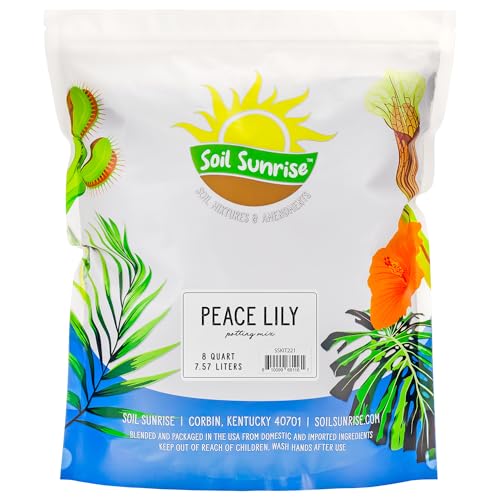
Soil Sunrise offers a 100% natural potting blend designed specifically for Spathiphyllum. This mix avoids chemicals and artificial fertilizers, focusing on nutrient retention and aeration to support healthy root systems. It aims to balance pH and add organic matter, making it a suitable choice for both indoor and outdoor Peace Lilies in containers.
Organic Peace Lily Potting Soil by Perfect Plants

Perfect Plants uses a premium, plant-loving mix featuring composted pine bark, peat moss, perlite, coconut coir, granite sand, and dolomite lime. The chunky, loamy texture aims to improve drainage while providing steady moisture for Peace Lilies. The family-run operation emphasizes decades of horticultural experience and USA-handcrafted blends, suitable for indoor repotting.
Gardenera Professional Grade Potting Mix for Peace Lilies

Gardenera’s 2-quart bag is crafted to deliver a perfect indoor growing environment. The blend includes Canadian peat moss, New Zealand bark, perlite, horticultural bamboo charcoal, and Sphagnum moss to balance moisture retention with aeration. The mix targets healthy root development and stability for Peace Lilies in confined spaces.
Doter Organic Peace Lily Soil Mix

Doter’s 2-quart organic mix is designed to meet the Peace Lily’s nutritional needs, supporting strong roots and vibrant foliage. The formulation emphasizes balanced pH to optimize nutrient absorption and bloom potential, helping Peace Lilies thrive in home environments with consistent moisture management.
Jessi Mae Slightly Acidic Organic Potting Soil

Jessi Mae’s slightly acidic mix focuses on a light, airy texture with perlite and organic materials. The blend is designed for Peace Lilies and other common houseplants such as pothos and parlor palm. It promotes good drainage and nutrient retention for consistent growth in indoor settings.
Buying Guide
Key factors to consider when selecting a Peace Lily potting mix include drainage, moisture retention, pH balance, and organic content. Peace Lilies prefer a slightly acidic to neutral pH, with a mix that drains well but retains enough moisture to prevent root rot. Look for blends that contain peat or coconut coir for moisture retention, along with perlite or vermiculite for aeration. Organic matter, such as pine bark or compost, helps with slow-release nutrients and soil structure. Avoid mixes with high fertilizer content if you want to control feeding carefully.
- Drainage vs. moisture retention: Balance is key. Too much retention can cause root rot; too little leads to drought stress.
- pH compatibility: Peace Lilies prefer a slightly acidic to neutral range for optimal nutrient uptake.
- Organic matter: Choose blends with compost, bark, or coir-based components for structure and microbial activity.
- Size and reuse: Larger bags are cost-effective and reduce frequent repotting. Resealable bags help maintain quality between uses.
- Source and certifications: OMRI-listed blends are preferred for those seeking organic options.
For best results, evaluate plant growth after repotting and adjust watering schedules to match the new soil’s drainage and moisture characteristics. If symptoms like yellowing leaves or drooping persist, recheck pH and consider supplementing with a balanced, plant-safe fertilizer according to product guidelines.