Choosing the right potassium-focused lawn fertilizer supports root strength, stress tolerance, and overall turf vigor. Potassium helps lawns endure heat, cold, drought, and disease by improving cell walls, carbohydrate formation, and photosynthesis. The following selections emphasize high potassium content, ease of use, and suitability for various grasses across the U.S. This guide compares top options, highlighting coverage, application methods, and key benefits to help you pick the best fit for your lawn’s needs.
| Product | Brand | Form | Key Benefit |
|---|---|---|---|
| Simple Lawn Solutions High Potassium Lawn Food | Simple Lawn Solutions | Stress resilience, summer/fall care | |
| The Andersons Professional Potassium Fertilizer | The Andersons | Granular 0-0-25 | Potassium deficiency support |
| 0-0-62 Muriate of Potash Plant & Lawn Fertilizer | Lawn Synergy | Granular 0-0-62 | Strong cell walls, broad use |
| Easy Peasy All-Natural Muriate of Potash | Easy Peasy | Granular 0-0-60 | Indoor/outdoor versatility, root growth |
| Scotts Turf Builder WinterGuard Fall Lawn Fertilizer | Scotts | Granular with potassium | Fall feeding for next season |
Simple Lawn Solutions High Potassium Lawn Food (32 oz)
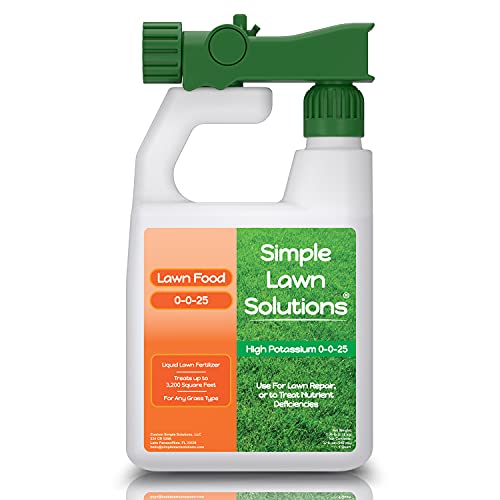
The product provides a 0-0-25 nutrient ratio focused on potassium. It supports turf hardiness, helping lawns endure temperature changes and stress. The formula targets potassium-deficient lawns and contributes to carbohydrate formation, photosynthesis, enzyme activation, and protein synthesis. An attached hose-end sprayer delivers the precise ratio for lawn applications, covering up to 3,200 square feet when used with the sprayer. Users should expect improved stress tolerance even if visible growth is not immediately dramatic.
The Andersons Professional Potassium Fertilizer 0-0-25

This 0-0-25 product is designed for lawns with potassium deficiencies, supplementing existing programs. It is suitable for use any time during the growing season. The formulation focuses on improving overall plant resilience, helping lawns withstand adverse conditions. It complements other fertilizers by ensuring potassium availability for critical processes like root development and stress response. While highly effective as a supplement, it is typically used alongside a complete feeding plan for best results.
0-0-62 Muriate Of Potash Plant & Lawn Fertilizer

This product delivers a concentrated dose of potassium (K) to support flowering, fruiting (where applicable), and overall plant resilience. It is versatile for lawn, landscape, garden, and vegetable applications, making it a flexible option for multi-area care. Potassium helps strengthen cell walls and aids nutrient absorption, contributing to disease resistance. For lawns with moderate to high potassium needs, this product can be a powerful, single-application option, though careful measurement is essential to avoid over-application on sensitive grasses.
Easy Peasy All-Natural Muriate Of Potash

Easy Peasy offers a 0-0-60 mineral mix designed for indoor and outdoor plants, including lawns and trees. The product emphasizes potassium-rich fertilization to promote robust root growth and healthy foliage. It is described as suitable for various environments, with a focus on natural and broad usability. As with many muriate-based products, uniform distribution is important to maximize effectiveness and prevent scorching in drought-prone regions.
Scotts Turf Builder WinterGuard Fall Lawn Fertilizer
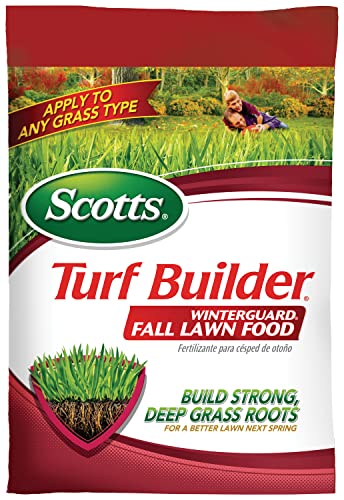
Scotts Turf Builder WinterGuard Fall Lawn Fertilizer is designed for autumn feeding to support spring recovery. It includes potassium as part of its nutrient profile, aiding in root development and stress resilience during seasonal transitions. The product is suitable for all grass types and can be applied to either wet or dry lawns in fall, preparing the turf for harsher conditions ahead. For those seeking a seasonal potassium boost paired with late-season conditioning, this option provides a practical solution.
Buying Guide
Key purchase considerations when evaluating potassium-focused lawn fertilizers include application method, coverage, and compatibility with your grass type. Liquid formulas (such as hose-end products) offer quick, uniform distribution and convenient use for large areas, while granular options allow longer-term nutrient release and broader soil penetration. Consider your lawn size to select the appropriate quantity and coverage per unit.
- Potassium content (the middle number in N-P-K): Higher K values (like 0-0-25 or 0-0-60) indicate stronger potassium delivery, but ensure your lawn needs this level to avoid over-fertilization.
- Formulation: Liquid vs. granular. Liquid products provide quicker uptake; granular products may offer longer-lasting effects and may require soil moisture for efficiency.
- Timing: Potassium helps with stress resistance year-round but is especially beneficial in summer, fall, and seasonal transitions when lawns experience stress.
- Soil and turf type: Some grasses tolerate higher potassium levels better than others. Test soil if possible and follow label directions for your specific grass species.
- Environmental considerations: Avoid runoff by applying on days with favorable weather and using recommended sprayer settings or spreading rates.
For lawn maintenance, potassium supplements are often most effective when used as part of a balanced, ongoing fertilization plan that includes nitrogen and phosphorus as needed for growth and root development. Review label directions for application rates, timing, and storage. If your lawn shows signs of deficiency—such as weak growth or poor stress tolerance—a targeted potassium product can help reinforce resilience without replacing essential nitrogen needs.