Finding the right pool chlorine testing kit helps ensure safe, clear water with accurate readings for chlorine, pH, alkalinity, and other critical parameters. This guide reviews top options that Americans rely on for at-home testing, including liquid reagent kits and user-friendly test strips. Each option is evaluated for accuracy, ease of use, and maintenance needs to help you choose the best fit for your pool or spa.
| Product | Type | Main Parameters | Best For |
|---|---|---|---|
| Taylor K2005 High Range | DPD liquid kit | Free/Total Chlorine, Bromine, Alkalinity, Calcium Hardness, pH | High-range chlorine measurements and comprehensive testing |
| Lupo 3-in-1 Pool Test Kit | Liquid reagents | Total Chlorine, Total Bromine, pH | Simple, quick 3-parameter checks |
| EASYTEST 7-Way Pool Test Strips | Test strips | Bromine, Total Alkalinity, pH, Free Chlorine, Total Hardness, Cyanuric Acid, Total Chlorine | Convenient multi-parameter strip testing |
| All-New 2025 7-in-1 Pool Strips | Test strips | 7 chemicals including pH, chlorine, bromine, alkalinity, hardness, CYA | Compact, quick results with 7 readings |
| Taylor K-1004 DPD 6-in-1 | DPD liquid kit | Free/Total Chlorine, Bromine, pH, Acid Demand, Total Alkalinity | Six-parameter testing with durable USA-made kit |
Taylor K2005 High Range Swimming Pool Test Kit
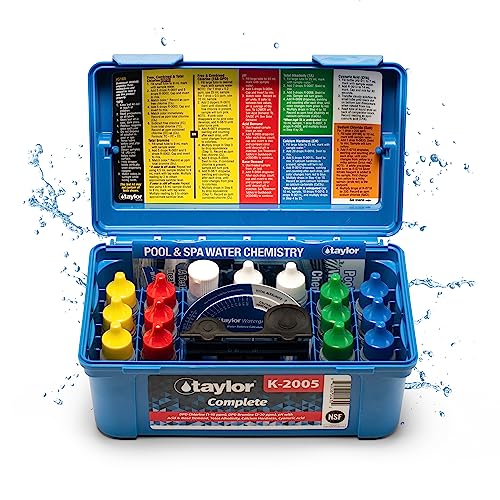
The Taylor K2005 High Range kit is a comprehensive liquid-based testing system designed for precise measurements of free and total chlorine, bromine, pH, and other water chemistry parameters. It includes 0.75 oz reagent bottles and a high-range kit suitable for pools with high sanitizer demands. The kit provides a compact storage case and reagents that are designed for quick, repeatable results, making it a reliable choice for regular maintenance of residential pools and spas.
Taylor K-1004 DPD 6-in-1 Pool Test Kit

Taylor’s K-1004 DPD 6-in-1 kit covers essential metrics for pool and spa care, including free and total chlorine, bromine, pH, acid demand, and total alkalinity. The kit emphasizes quick results with labeled reagents and a user-friendly comparator. Built to last, it includes a durable storage case and reagents that are replaceable, helping to extend the kit’s lifespan across seasons.
Lupo 3-in-1 Pool Test Kit
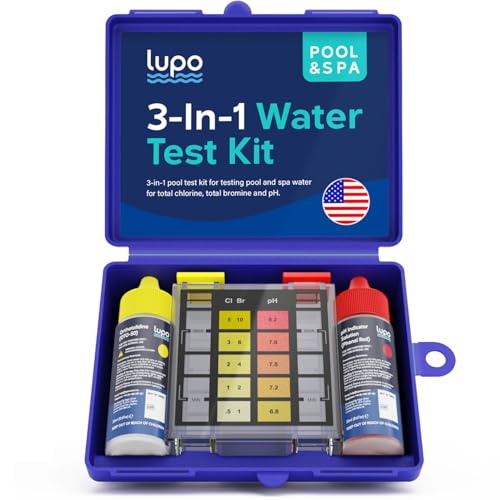
The Lupo 3-in-1 kit provides a straightforward at-home testing experience, measuring total chlorine, total bromine, and pH with a simple comparator system and easy-to-read reagents. It’s designed for residential pools and spas, offering quick results and a non-technical approach that appeals to first-time testers while still delivering reliable data for routine maintenance.
WWD POOL 2-Way Test Kit for Chlorine and pH
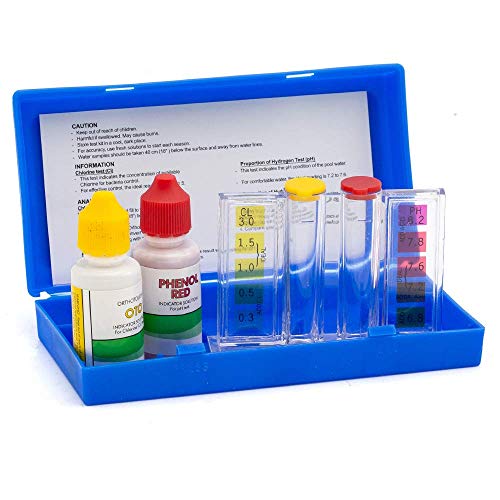
The WWD POOL 2-Way Kit focuses on chlorine and pH with a clear-view testing unit and color-mued readouts for easy interpretation. It comes with two 1/2-ounce bottles for chlorine and pH reagents, a plastic tester, and a carrying case, delivering a compact option for households seeking quick checks without a heavy setup.
Buying Guide
When selecting a pool chlorine testing kit, consider the testing method, parameter coverage, accuracy, ease of use, and ongoing cost. Liquid reagent kits typically offer high accuracy and broad parameter coverage but require careful handling and more steps. Test strips provide speed and convenience, with multiple readings in one strip, yet they can be less precise and influenced by lighting and strip storage. For high-salt or high-chlorine pools, high-range or 7-in-1 formats help capture extreme readings and provide a fuller water profile.
Key purchase considerations include:
- Parameters tested: Most kits measure chlorine (free and total), pH, alkalinity, and sometimes bromine, calcium hardness, and cyanuric acid. Choose based on your pool type (saltwater, chlorinated, or spa).
- Accuracy and range: Liquid-based DP(D) tests often offer higher accuracy across more range. For frequent testing, ensure you have spare reagents and a stable color comparator or digital reader if available.
- Ease of use: Look for clearly labeled reagents, simple instructions, and minimal steps. Strips excel for quick checks, while liquid kits are better for precise dosing guidance.
- Maintenance and replacements: Reagents expire; consider the availability and cost of replacements. Some brands offer replacement reagent sets that extend the kit’s life.
- Compatibility with saltwater systems: If you have a saltwater pool, check that the kit can handle higher chlorine or bromine levels and includes testing for salt or cyanuric acid if needed.
- Storage and portability: A durable case helps protect reagents and strips from light and humidity, preserving accuracy between uses.
- Reading method: Visual color comparison can vary with lighting. Some kits include digital readers or clearer color charts to minimize interpretation errors.
In practice, most homeowners benefit from combining a primary, accurate liquid kit (for detailed testing) with a secondary strip kit (for quick checks). Regular testing frequency (several times per week) and timely reagent replacements ensure consistent water quality. Always follow the manufacturer’s instructions and maintain a log of test results to track trends over time.